The Great Revival of Shimadzu Satsuma Kiriko
The story of Satsuma glass does not begin with art, but with chemistry. In 1846, under the 27th Lord Shimadzu Narioki, the head of the Shimadzu clan, the domain began to manufacture glass for practical use, including chemical flasks and medicine bottles. Narioki established the Seiyakukan, a facility for producing acids such as nitric acid, and invited Kamejiro Yotsumoto, a renowned glass craftsman from Edo, to support the glass manufacturing described above. This investment in a technical foundation laid the groundwork for what followed.
 In 1851, when the 28th Lord Shimadzu Nariakira succeeded his predecessor, the project underwent a dramatic transformation. Nariakira saw the potential for glass to be more than just functional; he envisioned it as a high-art export that could rival international standards. It was during this ambitious era that the iconic Satsuma Kiriko was born.
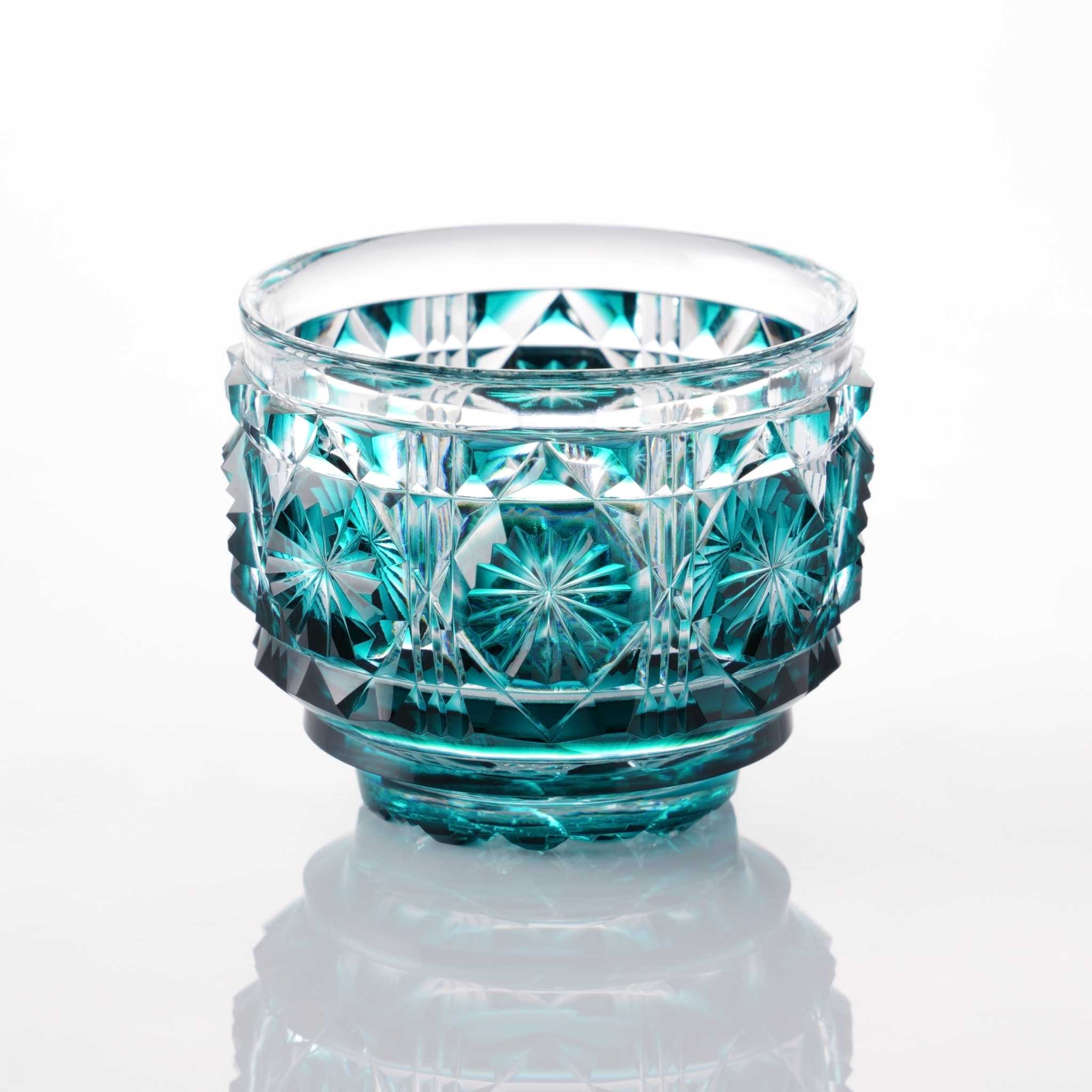
This progress was driven by intensive research conducted at the refinery in Hanazono, located within the grounds of Kagoshima Castle. It was here that artisans mastered the delicate science of colored glass, successfully producing deep hues of indigo, purple, and green.
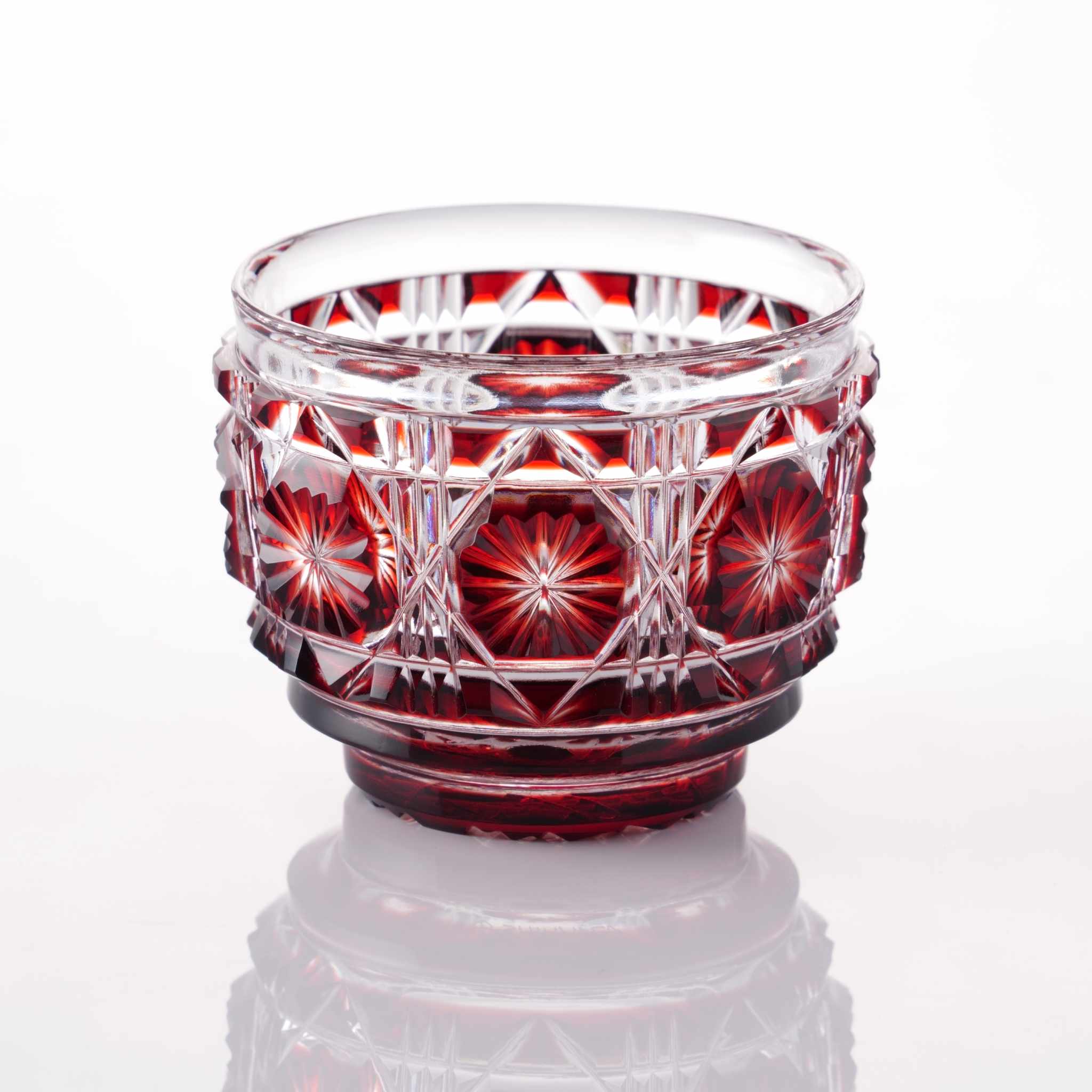
 Most notably, the artisans achieved a feat never before seen in Japan: the creation of a vibrant red glass. This breakthrough became famous nationwide as "Satsuma Red Glass," a color so rare and prized it was celebrated as a pinnacle of Japanese craft. By 1855, production expanded to a new factory at Iso (the site that would become Shuseikan). At its peak, this domain-run enterprise was a massive undertaking, employing over 100 dedicated craftsmen who worked tirelessly to bring Nariakira's vision to life.
A Craft Lost to History
The golden age of Satsuma Kiriko was as brilliant as it was brief. In 1858, only seven years after the craft began its transition into high art, the 28th Lord Shimadzu Nariakira died suddenly. His death marked the beginning of a period of profound instability for the domain and its artisans.
The decline was further accelerated by conflict. In 1863, during the Anglo-Satsuma War, the glass factories at Shuseikan were damaged by shelling, dealing a significant blow to the production infrastructure. Although some manufacturing continued or was briefly resumed in the early Meiji period, it is thought that by the time of the Southwestern War (around 1877), the kiln fires had gone out.
The Century of Silence
For over a century, the kilns remained cold. The formulation of raw materials required for coloring, related production know-how, and techniques for cutting deeply into thick glass were carried by craftsmen to other regions, but in Satsuma, they gradually fell out of use.
Satsuma Kiriko became known only to researchers and collectors, and original pieces from the mid-19th century are extremely rare. This is why the revival by Shimadzu Limited is so significant. They did not merely study the original works; they revived the techniques needed to recreate them, restoring Satsuma Kiriko from a “phantom of the past” into a living art form for the present.
 Reconstructing a Lost World
Bringing Satsuma Kiriko back to life in 1985 was a task of immense technical difficulty. Because the tools and specific methods were not passed down through an unbroken line, the artisans at Shimadzu were forced to reconstruct the craft from the ground up.
 The revival was far more than a technical challenge; it was a reconstruction of a lost culture.
● Working from Shadows: Only a few original pieces could be measured, and most of the designs survived only in drawings or photographs. From these, the shapes of the tools and the angles of the cuts had to be inferred, and countless prototypes were produced through repeated trial and error.
● The Chemistry of Color: The color red proved to be the greatest challenge. It required years of testing and kiln firings, along with the accumulation of know-how in the formulation of raw materials and temperature control, before a red meeting the historical standard could be achieved.
● The Tools of the Past: In many cases, modern industrial tools were too harsh for the delicate gradient look. The artisans frequently had to modify their own equipment to replicate the specific textures and depths found in the original Edo-period works.
 By 1986, the factory was fully operational, and Satsuma Kiriko was revived. Having mastered the traditional palette of red, indigo, green, and purple, Shimadzu went on to rediscover "Gold-Red" in 1988 and "Yellow" in 1989, colors that were described in historical records but had no surviving physical examples at the time.
 Creating a New Tradition
Shimadzu Limited has not only restored traditional colors such as Satsuma Red, Indigo, and Green, but also developed its techniques further. In 2001, they introduced Nishiki-e (Two-Color Overlay), a method that layers two colors to create multi-layered expressions with seasonal motifs inspired by the beauty of nature.
The evolution continued in 2015, the 30th anniversary of the restoration, with the debut of the "Shimuja" series. This collection introduced a monotone world to Shimadzu Satsuma Kiriko.
 Expression of Color: Why No Two Pieces Are the Same
The beauty of a Shimadzu masterpiece lies in the physical depth of the glass itself. While typical cut glass is thin, Shimadzu layers colored glass between 1mm and 5mm thick onto a clear crystal base.
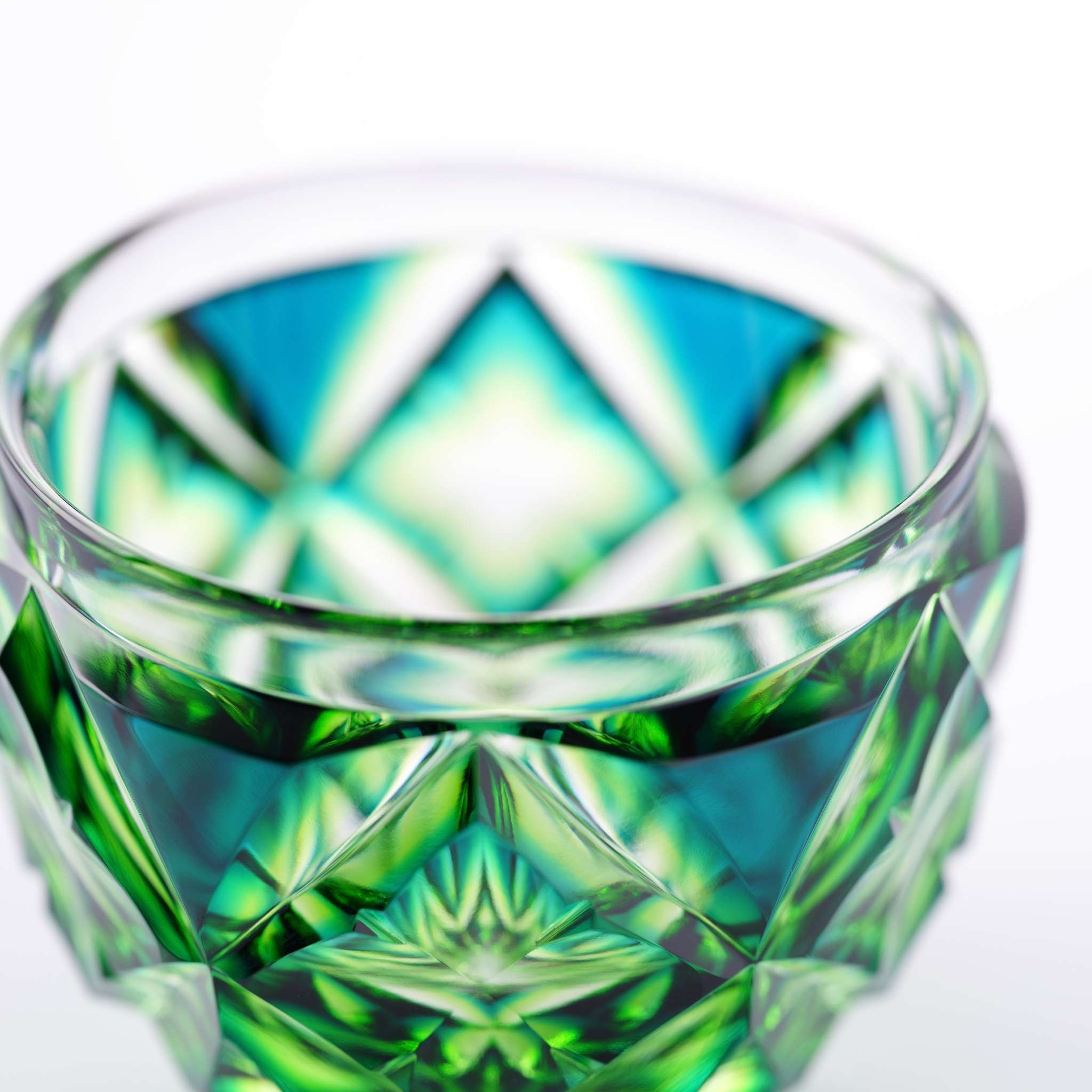
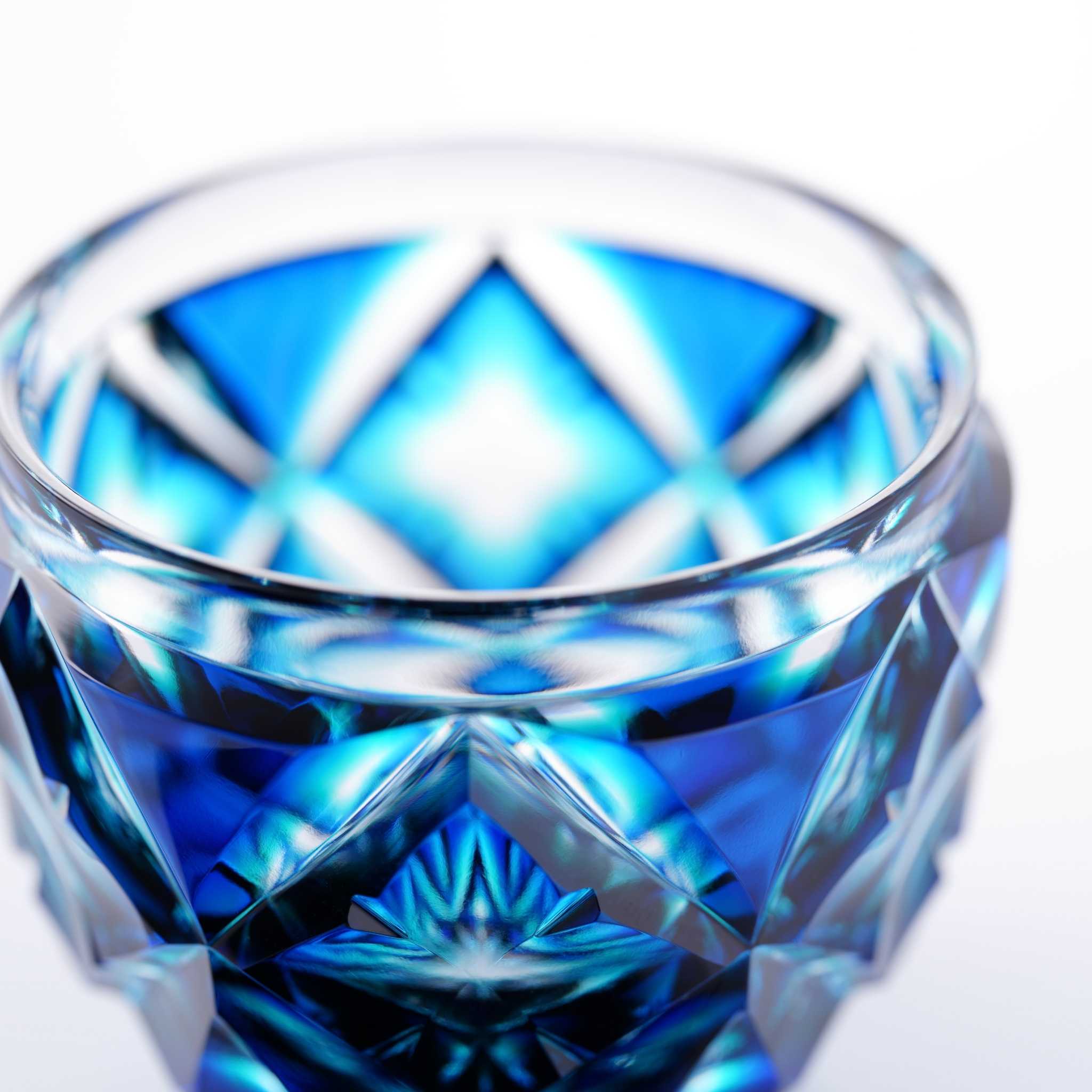
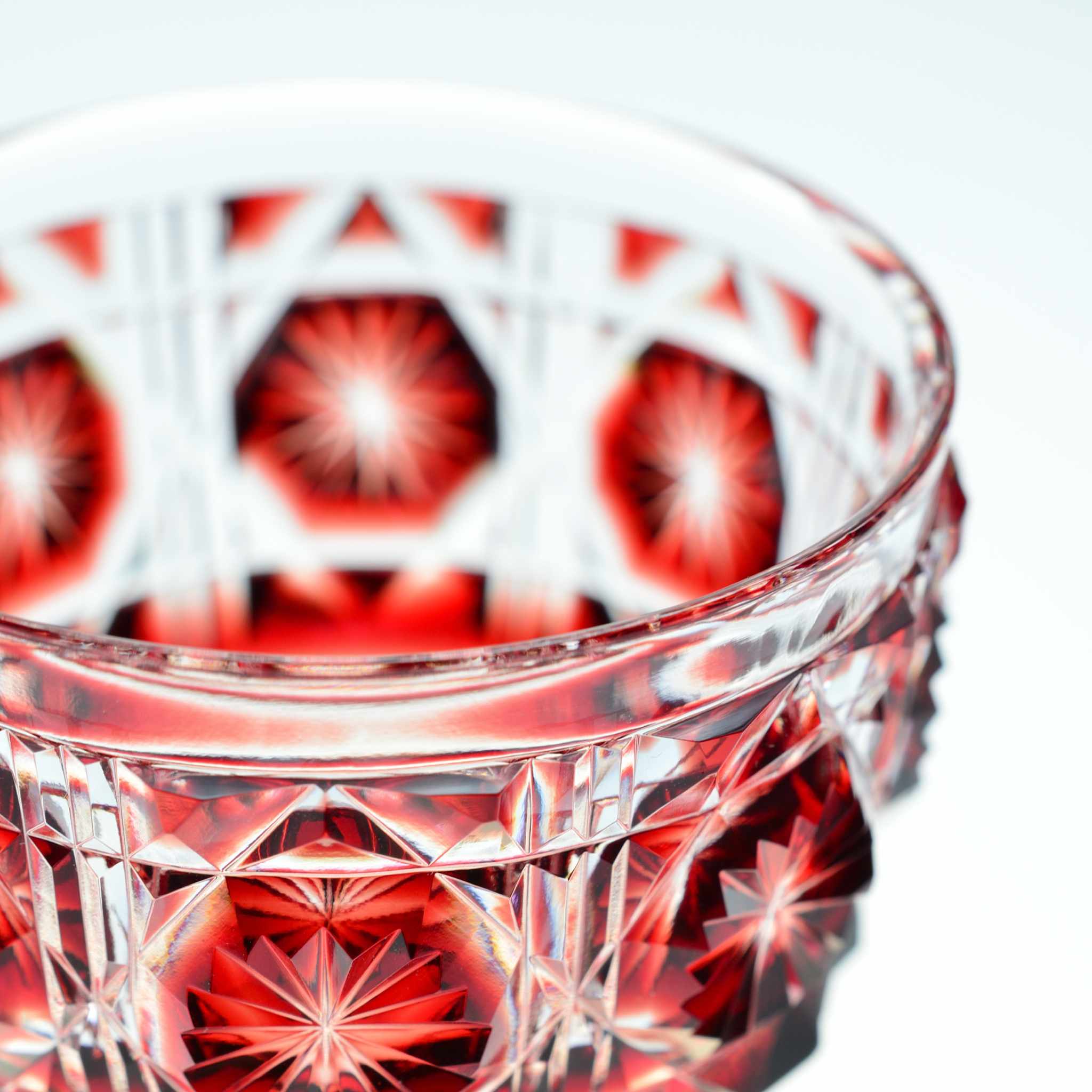
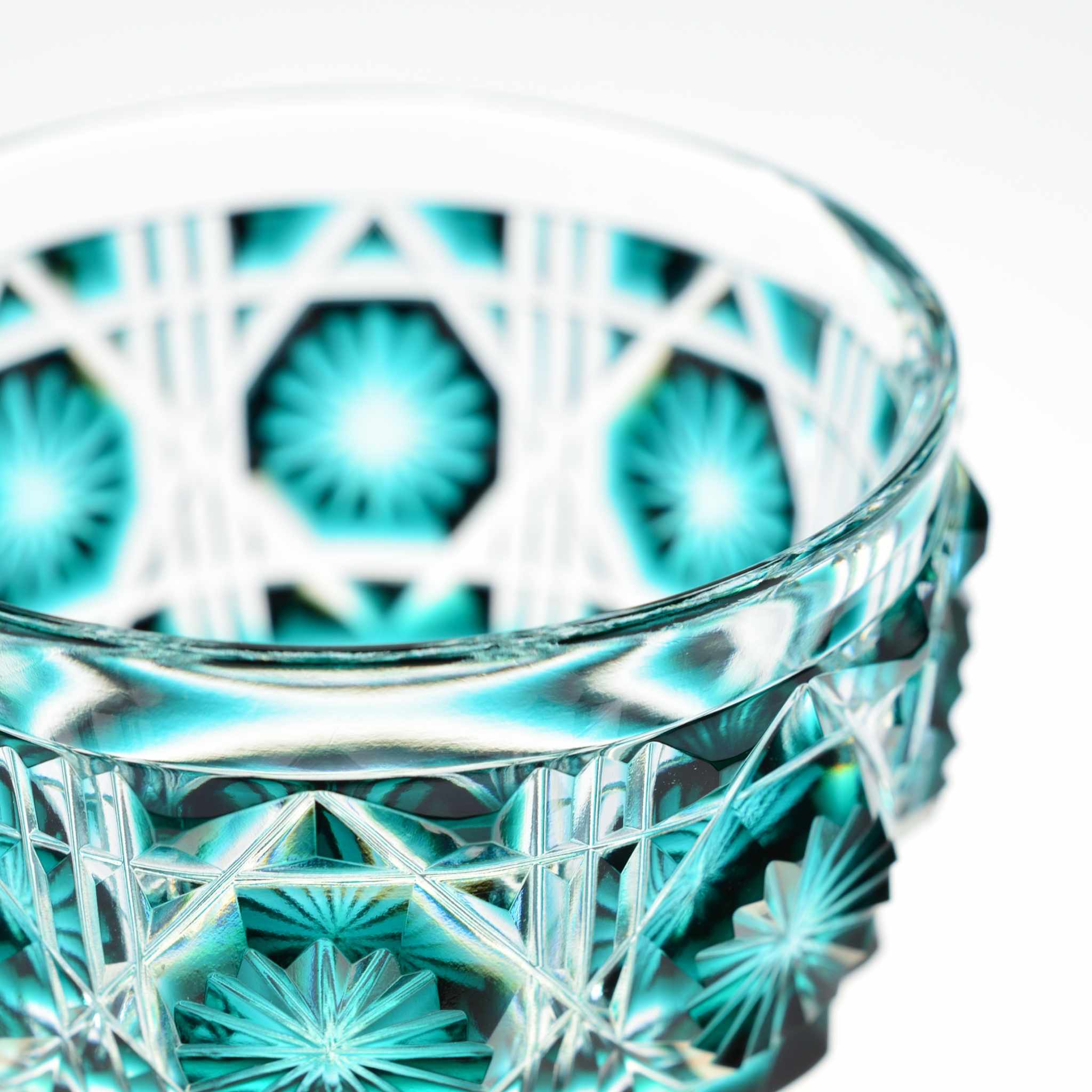
This thickness is what allows for the signature Satsuma Kirko gradation. To achieve this, the artisan must navigate the "threshold" between color and crystal. By carving at varying depths, they create a soft, misty fade where the color appears to melt into the light. The precision required is staggering; a depth difference of just 0.1mm, the thickness of a single human hair, completely changes the color's expression. It is a process so intense that craftsmen often hold their breath to maintain focus during the most critical cuts.
 The Reclaimed Masterpiece in Your Hands
After a century of silence, this resurrected legacy has traveled from the fires of Kagoshima to find its place in the hands of discerning collectors across the globe. To possess a piece is to become a part of a story once lost to time, a bridge between a vanished samurai-era vision and your own modern sanctuary. To own a piece of Shimadzu Satsuma Kiriko is to become part of its living history. We invite you to explore our curated selection, each a resurrected masterpiece ready to travel from Japan to your hands, wherever you are in the world.
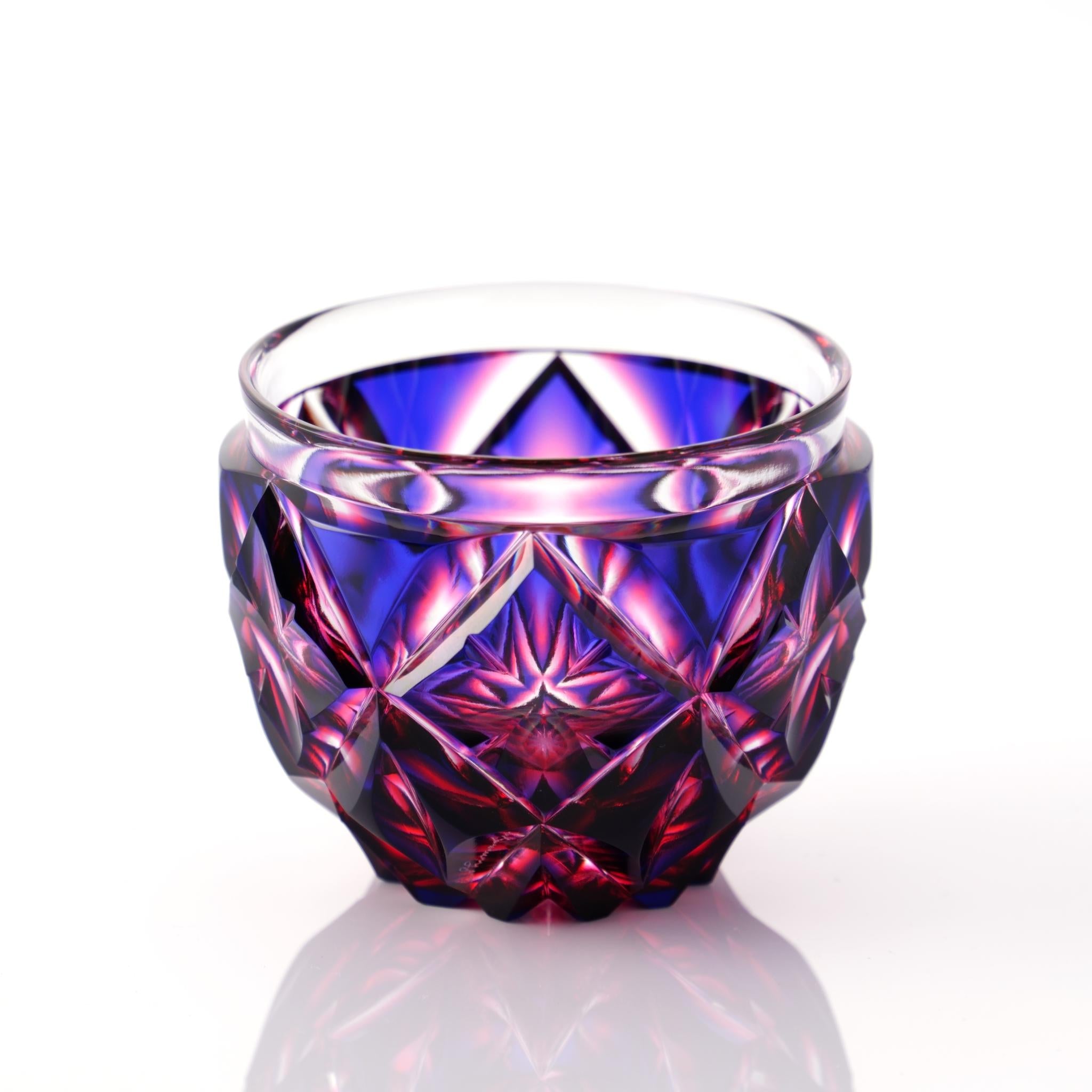
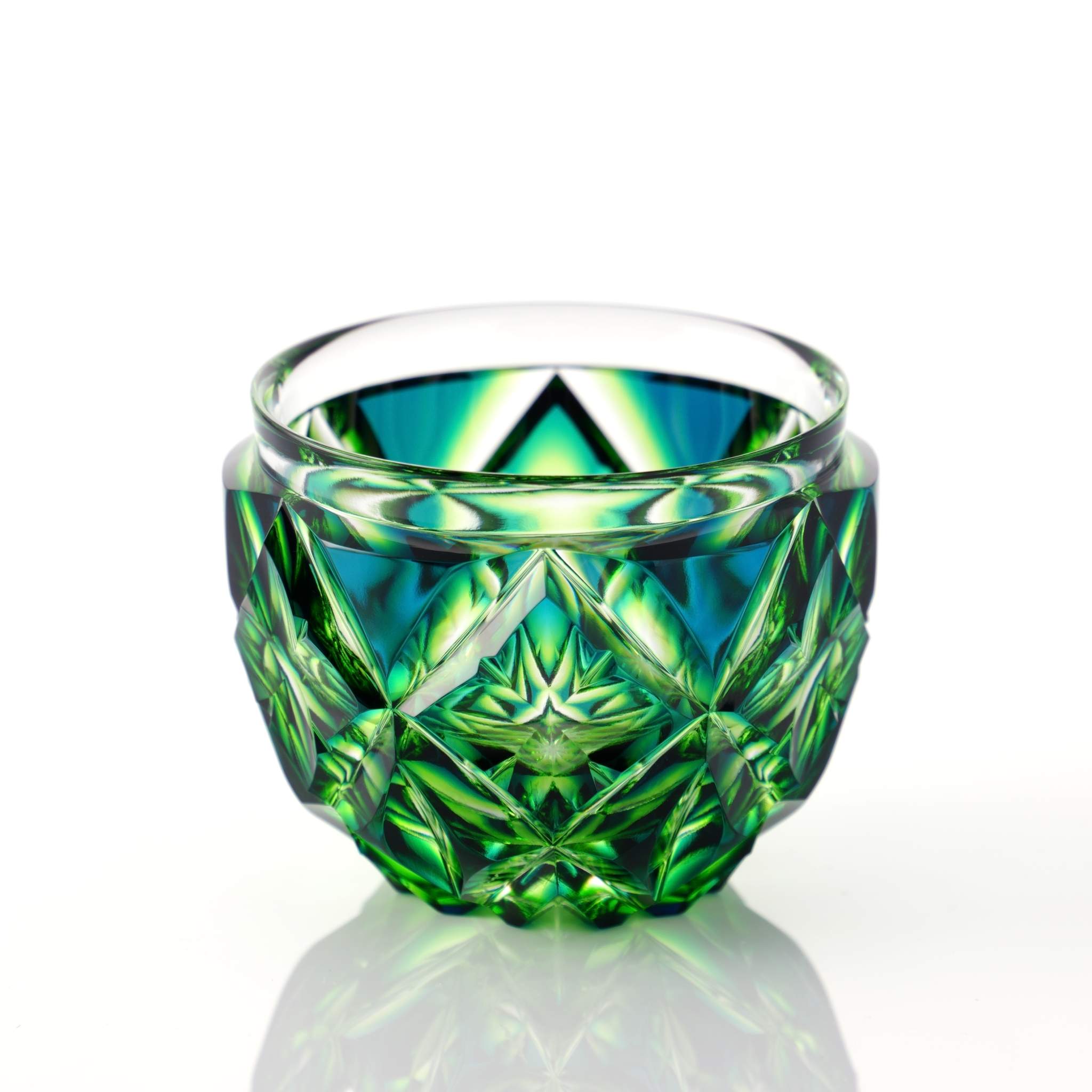
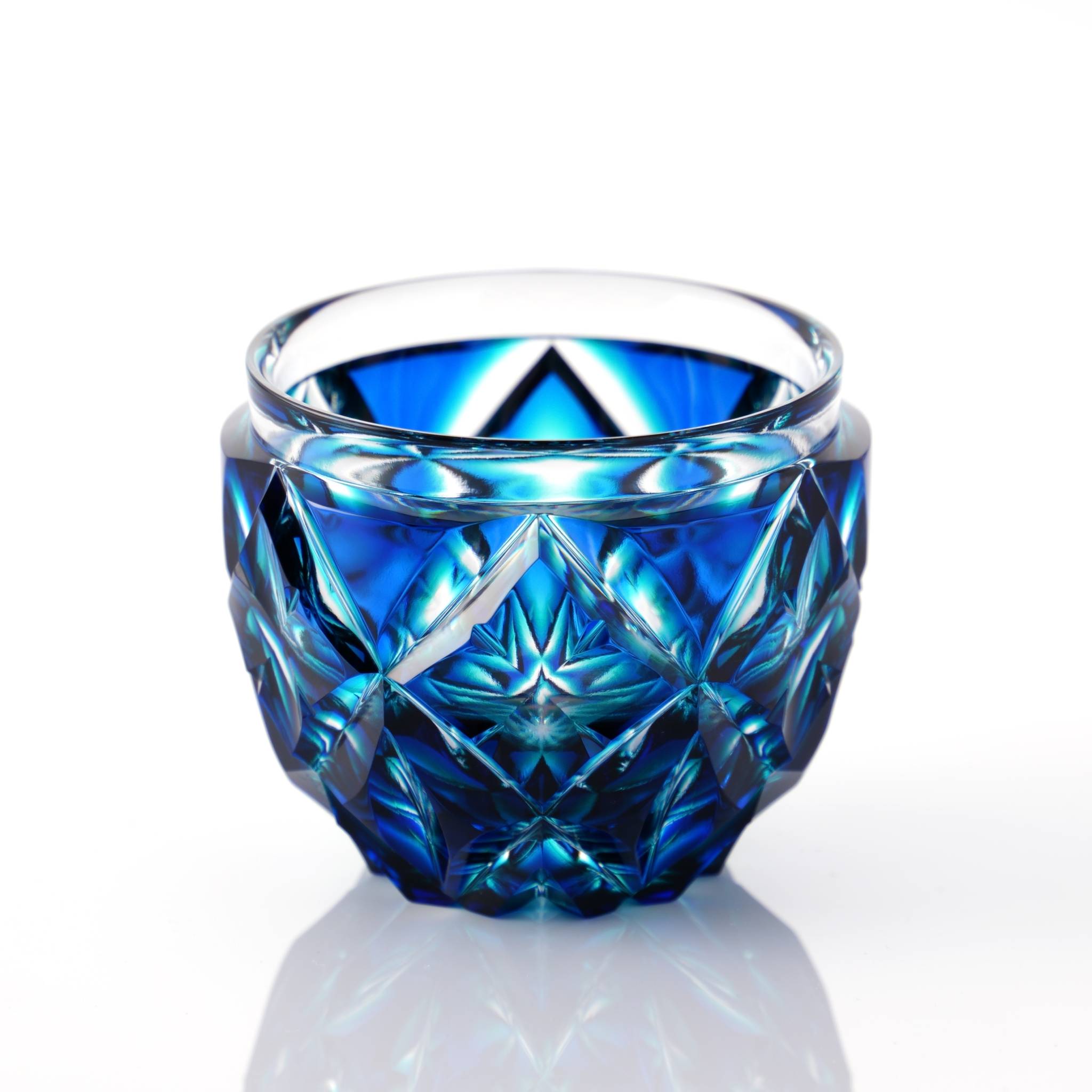
 Satsuma Kiriko Two-Tone Large Sake Cup
Available in Lapis Red, Lapis Green, and Cyan Yellow Green
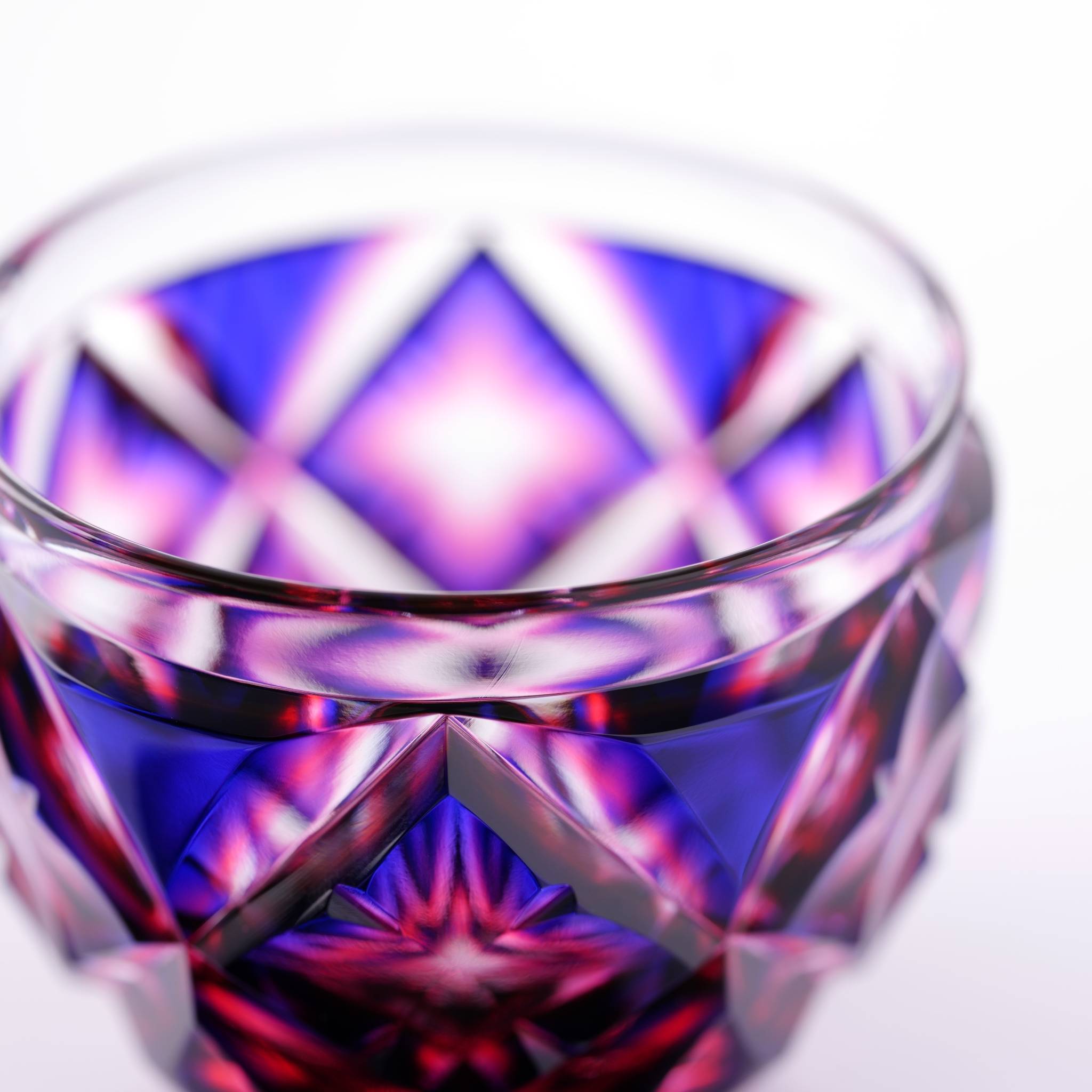
This piece employs the Nishiki-e (Two-Color Overlay) technique to create depth through multiple layers of color. The exterior features a diamond lattice and floral motifs, while the bottom reveals a sparkling, star-like design. The rim is smoothly rounded by hand, providing a gentle, comfortable drinking experience.
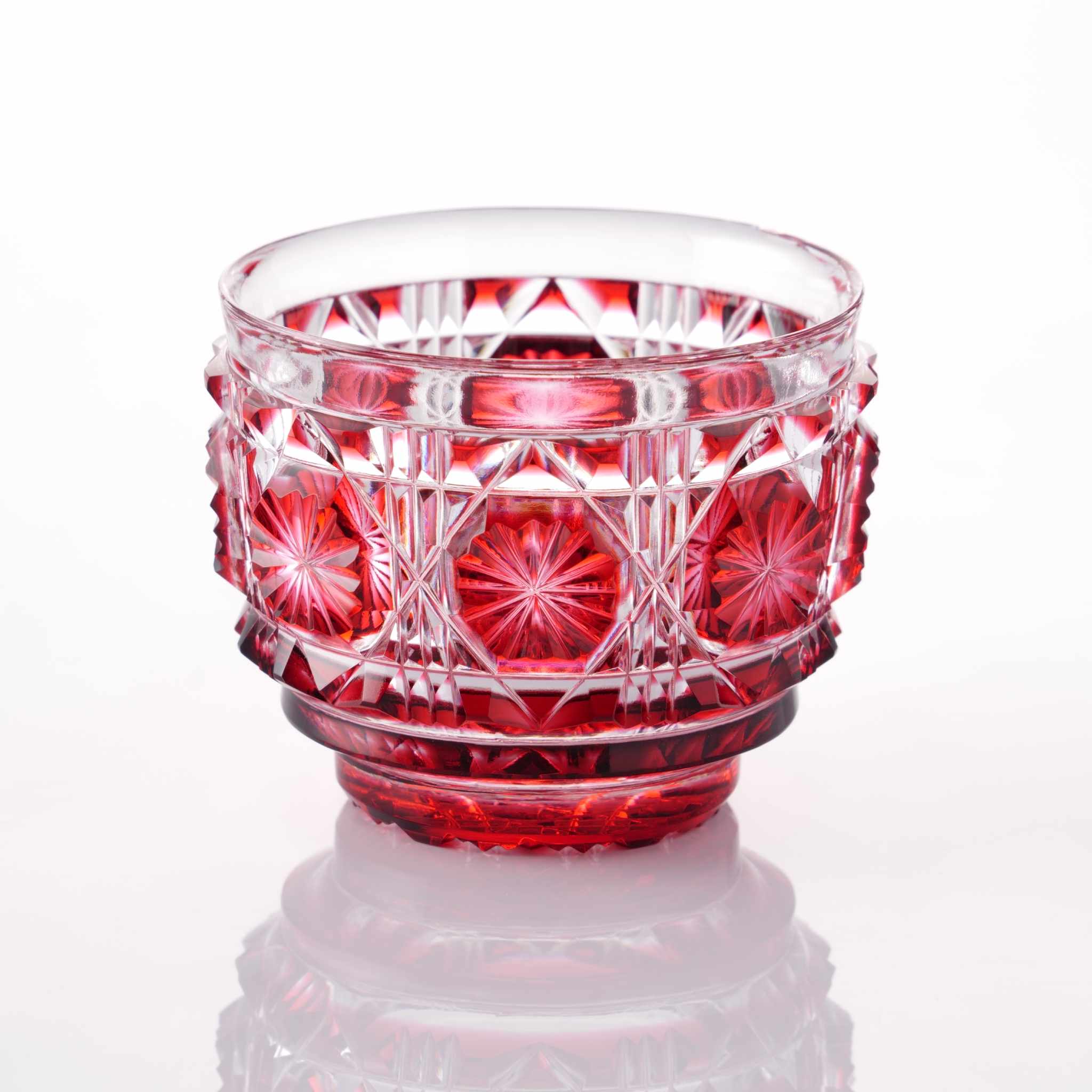
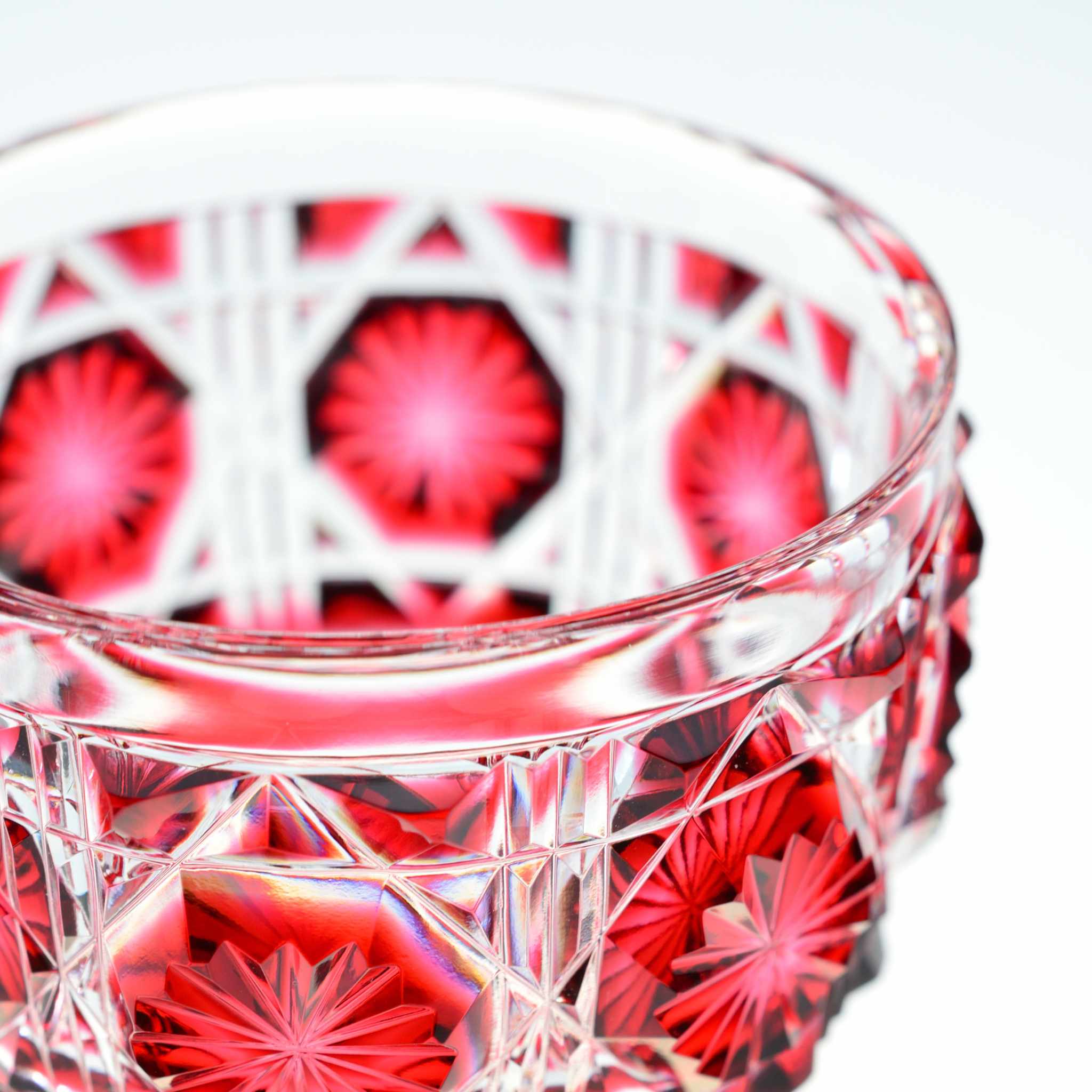
 Satsuma Kiriko Large Sake Cup
Available in Crimson, Green, Indigo, Red, Purple, and Yellow
Deep colors and a precision lattice of chrysanthemum patterns creates a contrast of light and shadow. After shaping, the rim is reheated and softened for a smooth finish. The transparency of high-grade crystal stands out, with each piece possessing its own unique character. Suitable for use as a sake cup, small dish, or vessel for delicacies.
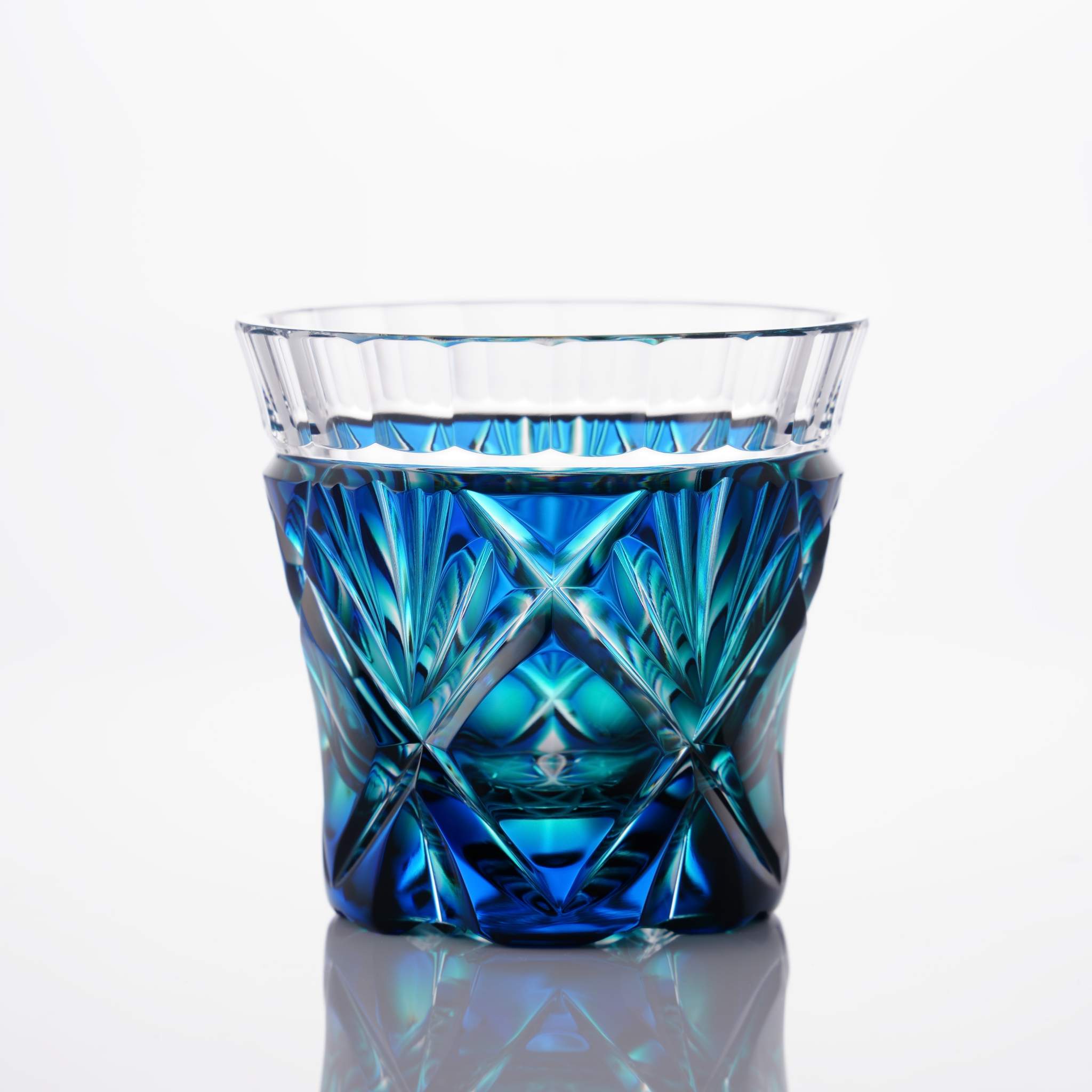
 Satsuma Kiriko Two-Tone Sake Glass
Available in Lapis Red, Lapis Green, and Cyan Yellow Green
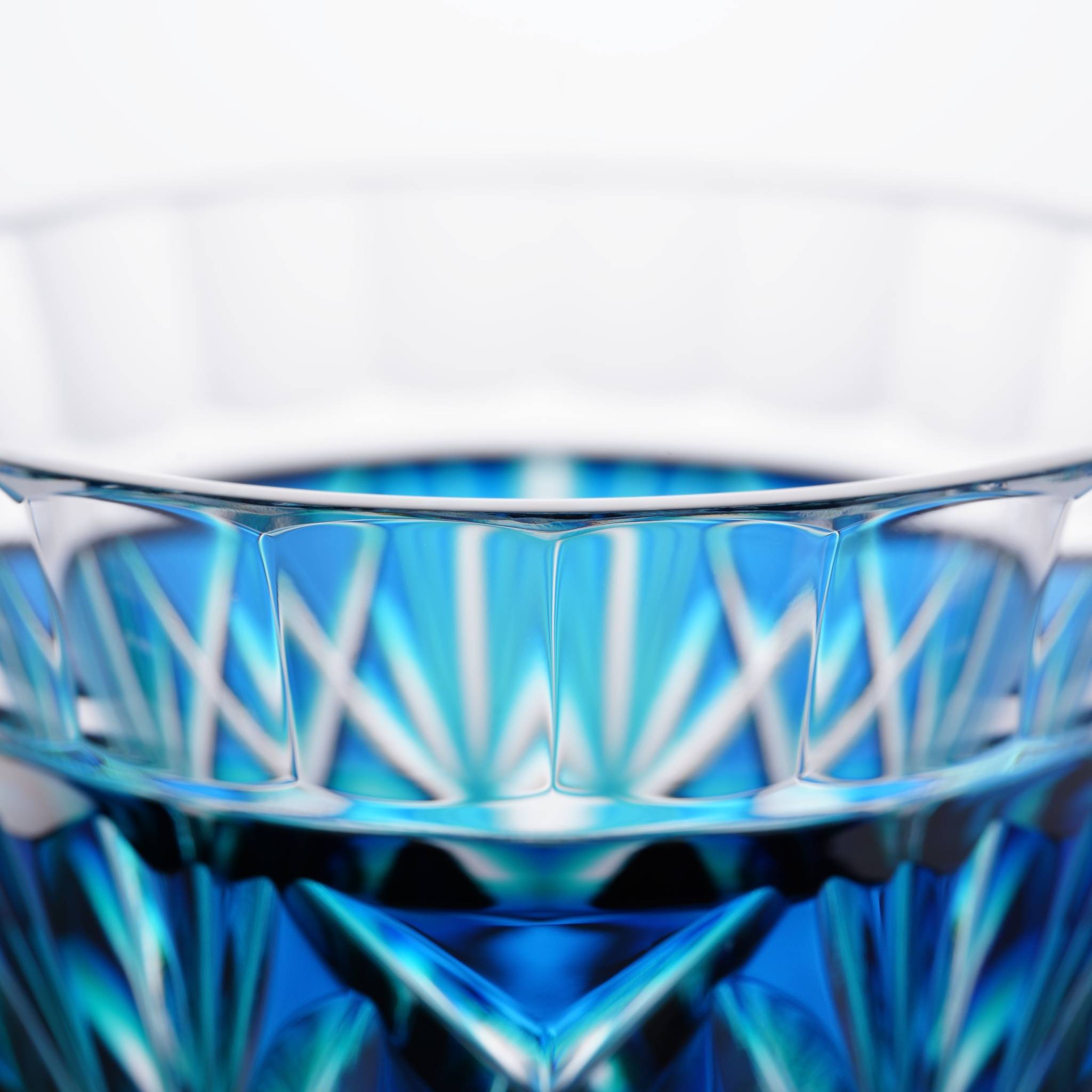
This glass is defined by deep, deliberate cuts that preserve the intensity of the colored glass, creating a profoundly rich gradation. The rim features the classic "Kamaboko" cut, a raised semi-cylindrical finish that lends a festive and dignified air to the piece. Though slightly larger in presence, its form and patterns are designed to fit comfortably in the palm. A versatile masterpiece, its size and weight are perfectly suited for both chilled sake and whiskey.
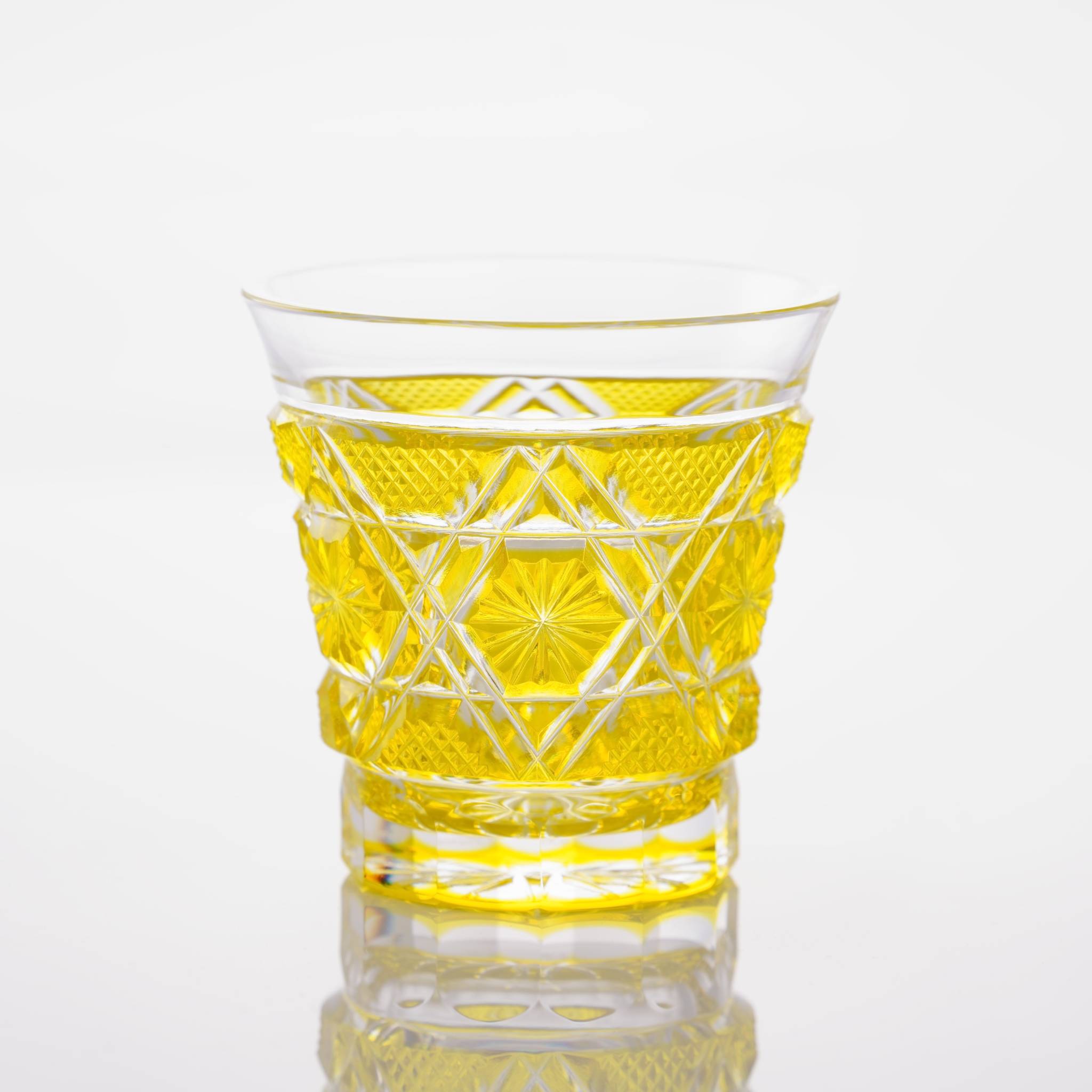
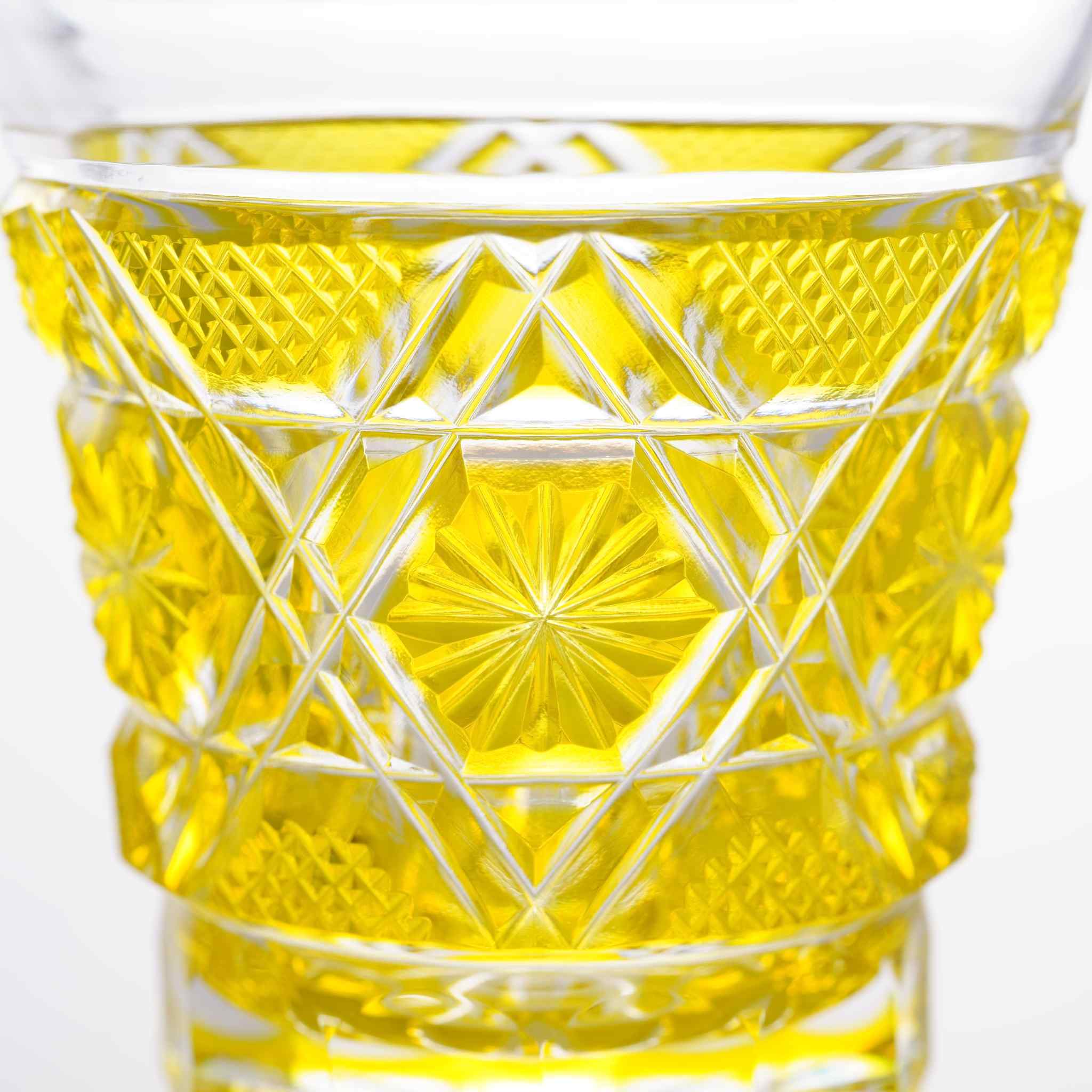
 Satsuma Kiriko Sake Glass
Available in Crimson, Green, Indigo, Red, Purple, and Yellow
The wide, slightly curved rim of this glass is gently reheated and softened after shaping, ensuring a smooth finish that allows sake to flow gently and comfortably. Its base is expertly faceted into twelve planes to amplify the reflection of the chrysanthemum motif engraved on the bottom, creating a stunning visual effect. Sized to fit perfectly in the hand, this versatile vessel is an elegant choice for chilled sake, wine, or even as a sophisticated cup for appetizers and desserts.
 The Living Legacy
The brilliance of Satsuma Kiriko is the culmination of a profound and unwavering commitment to revival. To hold a finished piece today is to witness a miracle of cultural preservation, a craft that emerged from a century of silence only through the relentless dedication of the artisans and scholars behind its resurrection. Understanding the years of study required to reclaim these lost techniques transforms each vessel into a testament to human perseverance. By bringing a piece into your home, you are doing more than acquiring a masterpiece; you are honoring the profound will required to pull this art back from the brink of extinction and ensuring this precious art does not disappear.