You Know Yuzu. You Don't Know the Half of It.
Yuzu is everywhere now. It's in the dressing at the omakase counter, in the cocktail at the natural wine bar, in the glaze on the scallop that arrives looking too beautiful to eat. Ferran Adrià used it at elBulli. Joël Robuchon put it in his sauces. High-end patissiers in Paris built whole dessert menus around it. For most of the world, yuzu has become Japanese citrus, full stop.
In Japan, it's one of three.

The Two Citrus Fruits That Never Left Japan
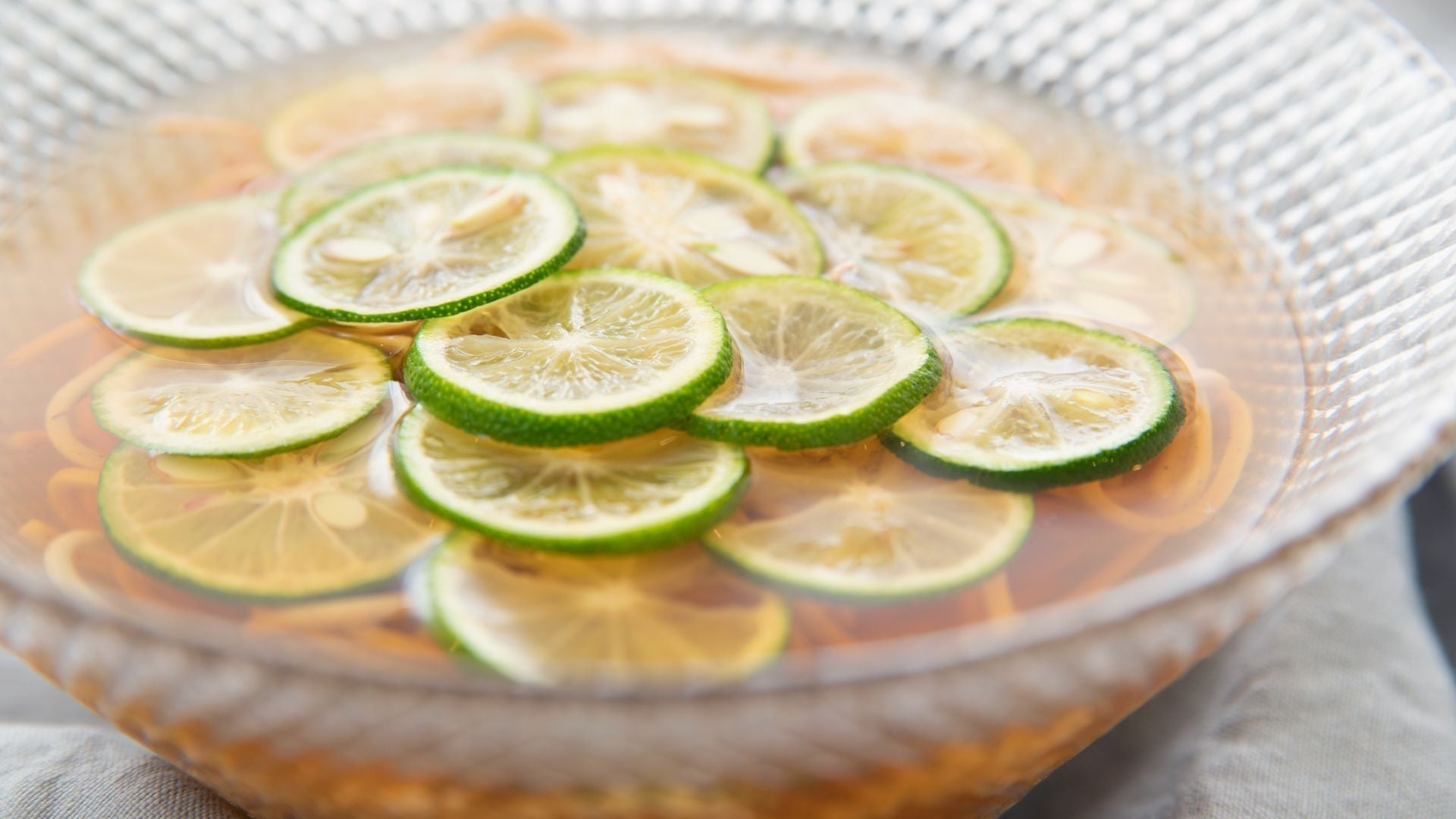
The other two are sudachi and kabosu, and they appear on the Japanese table far more often than yuzu does. They just never made the trip abroad. Sudachi is a small, golf-ball-sized green citrus from Tokushima Prefecture, a mountainous region on the island of Shikoku in western Japan, with a sharp, clean acid that vanishes as quickly as it arrives. Kabosu is bigger, rounder, and softer, grown almost entirely in Oita Prefecture, a quiet agricultural prefecture on the island of Kyushu in southwestern Japan, with enough juice in a single fruit to dress a whole pot of broth. In Japan, choosing between the three is not a matter of preference. Each one has a job.

Sudachi: The One That Gets Out of the Way
Sudachi's job is precision. In autumn, it arrives alongside grilled Pacific saury, alongside matsutake mushroom broth, alongside the kinds of dishes where a single squeeze is the last thing that happens before the food reaches the mouth. You squeeze it, the acid flares for a second, and it's gone, leaving the fish or the mushroom exactly as it was, only sharper. That brevity is not a limitation. It's the whole point. Drop yuzu there instead and the peel's floral complexity pulls focus. The dish stops being about the saury. Sudachi knows not to do that.

Kabosu: The One Built for Volume
Kabosu is built for volume and warmth. The fruit yields far more juice than sudachi, and its acid is mellow enough to work over time, in ponzu stirred into a nabe broth, squeezed over grilled meats, used the way another cook might reach for rice vinegar. In Oita, where virtually the entire Japanese harvest comes from, it is simply part of the meal. There is also kikabosu, the fully ripened yellow form harvested later in autumn, sweeter and softer still, which barely travels beyond the prefecture. Most people outside Oita have never tasted it.

What Yuzu Is Actually For
Yuzu, meanwhile, is doing something different entirely. The fruit is famously stingy with its juice, full of seeds and pith, not particularly worth squeezing for volume. What yuzu actually offers is its peel, which contains yuzu-non, an aromatic compound unique to this citrus and concentrated in the yellow skin's oil glands. A strip of yuzu zest floated on clear soup. A little grated into miso. A thin slice placed on a bowl's rim and removed before eating, there just long enough to leave a trace of fragrance in the steam. That's how yuzu moves through Japanese winter cooking: as scent, as atmosphere, as the thing you notice without quite seeing.
So next time yuzu shows up on a menu, you'll know it's playing a specific role, and that somewhere back in Japan, two other citrus fruits are handling everything else.