Skip to content

Cart

Your cart is empty

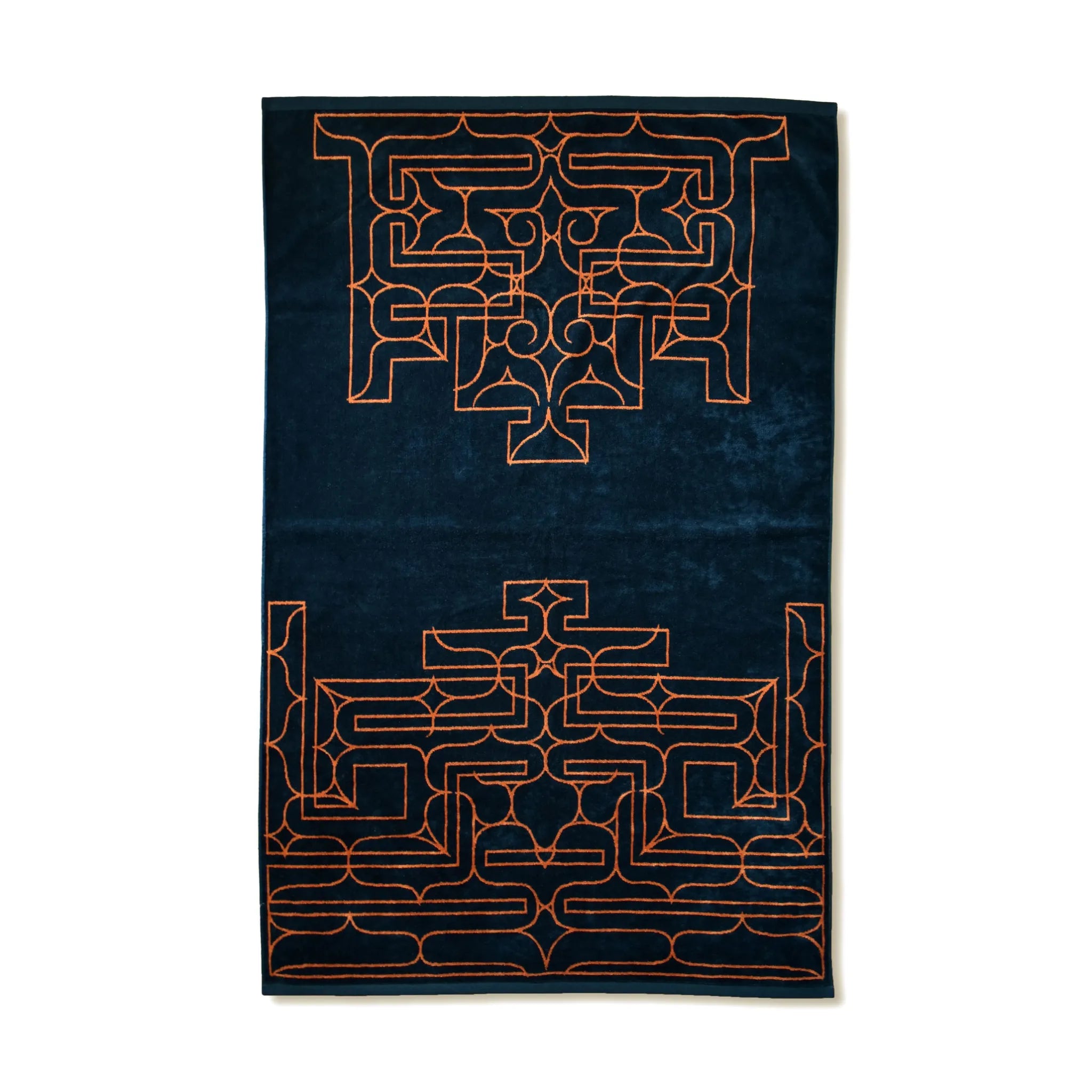
Ainu Pattern Imabari Towel Blanket cikarkarpe Navy and Orange

Sale price$250.00

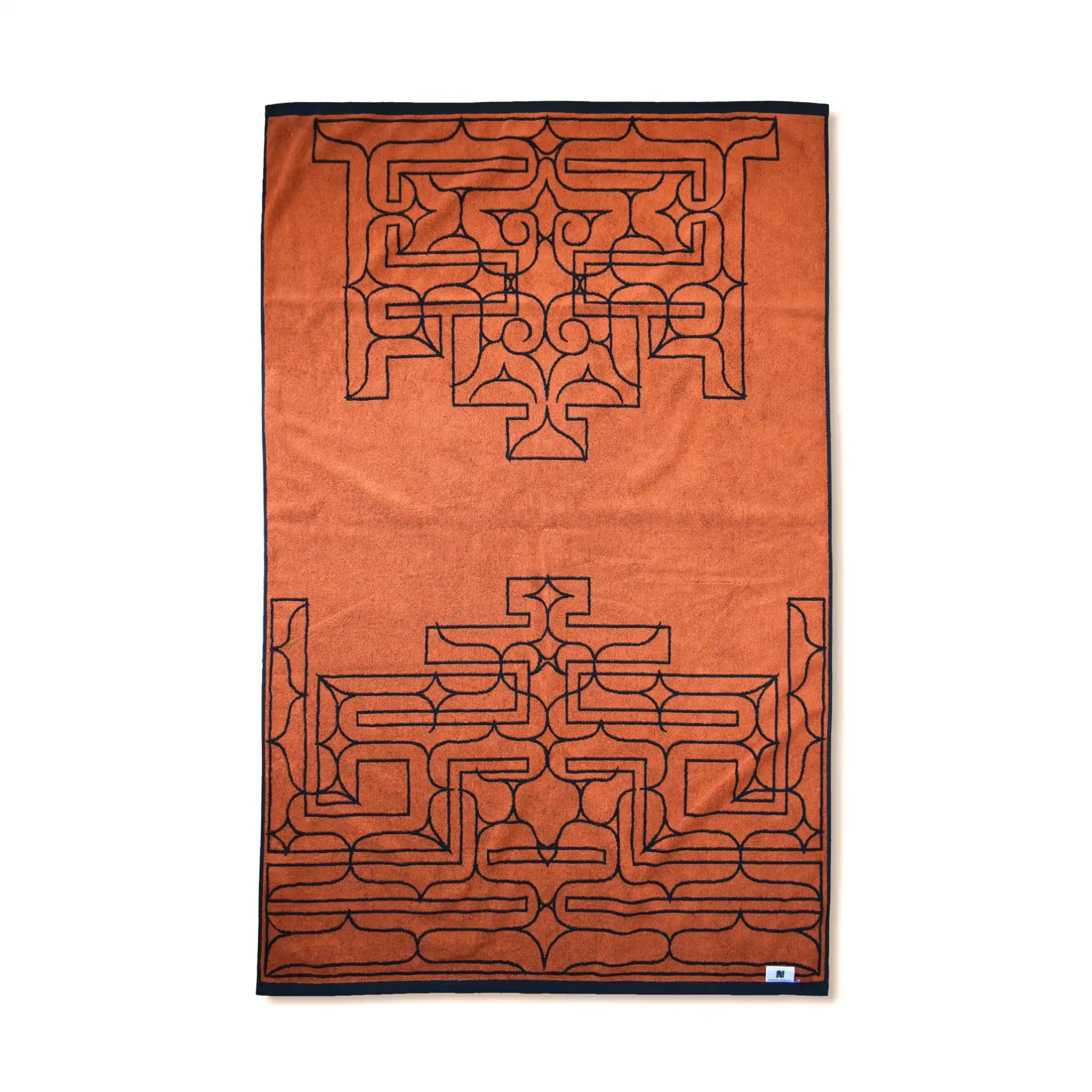
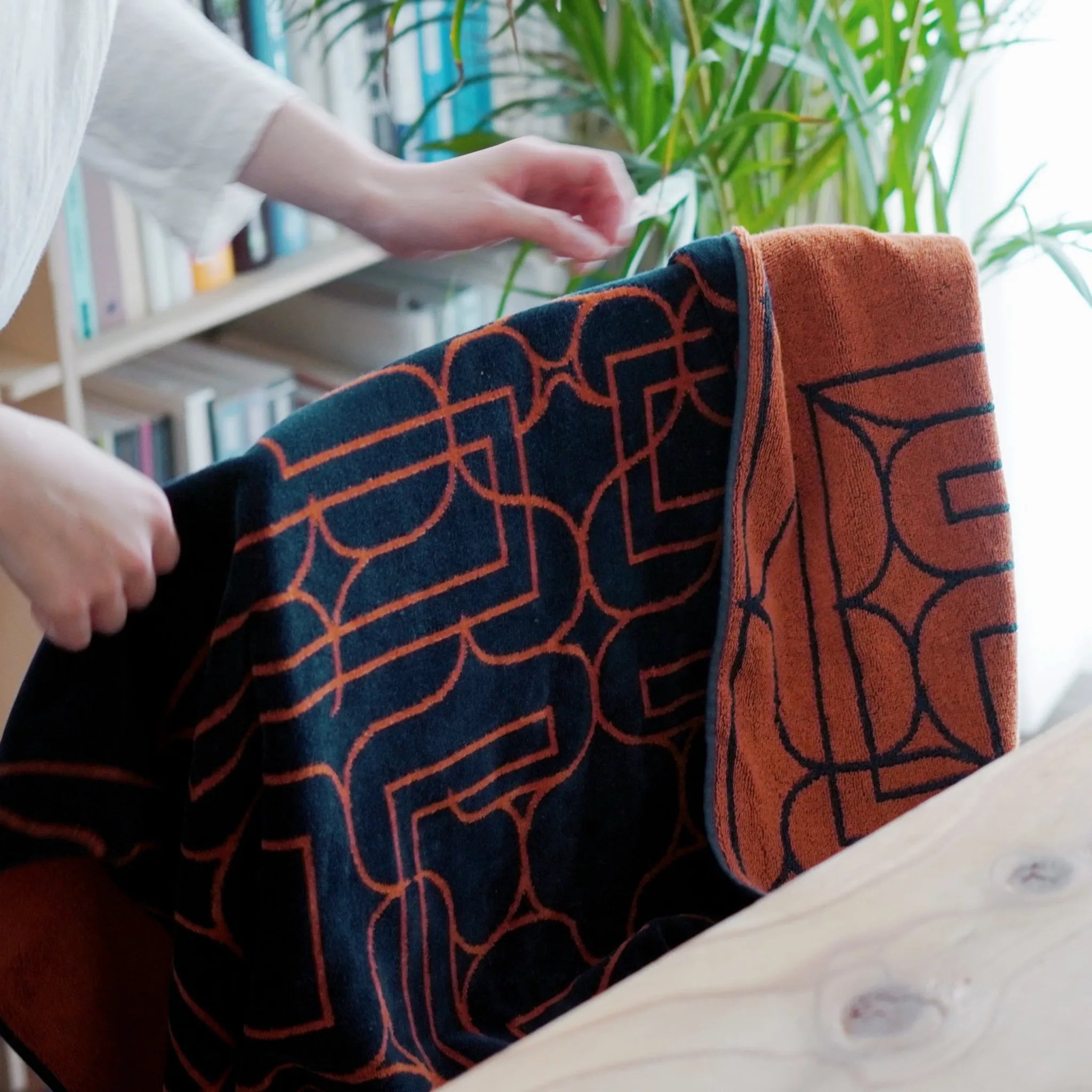
Where the kaparamip pattern fills its field continuously, the cikarkarpe works differently. In traditional Ainu garment-making, the cikarkarpe is constructed by cutting cloth into strips and assembling them into a geometric framework, with embroidery added over the structured ground. The pattern on this blanket reflects that logic: angular forms, symmetrical axes, and linear frameworks built from the center outward, the design opening and closing around a central point rather than repeating across the surface. Nibutani Works, founded by Kayano Kimihiro in Nibutani, Hokkaido, works to keep Ainu craft knowledge in active production — drawing from a tradition in which every pattern carries meaning, made as a form of protection and prayer for the person who would wear it. The blanket is woven in Ehime Prefecture using Imabari cotton, a textile standard held to strict quality criteria in one of Japan's most established weaving regions. The blanket is reversible: navy ground with orange pattern on one side, orange ground with navy pattern on the other.

Navy blue towel with orange geometric Ainu patterns on a white background
Ainu Pattern Imabari Towel Blanket cikarkarpe Navy and Orange Sale price$250.00
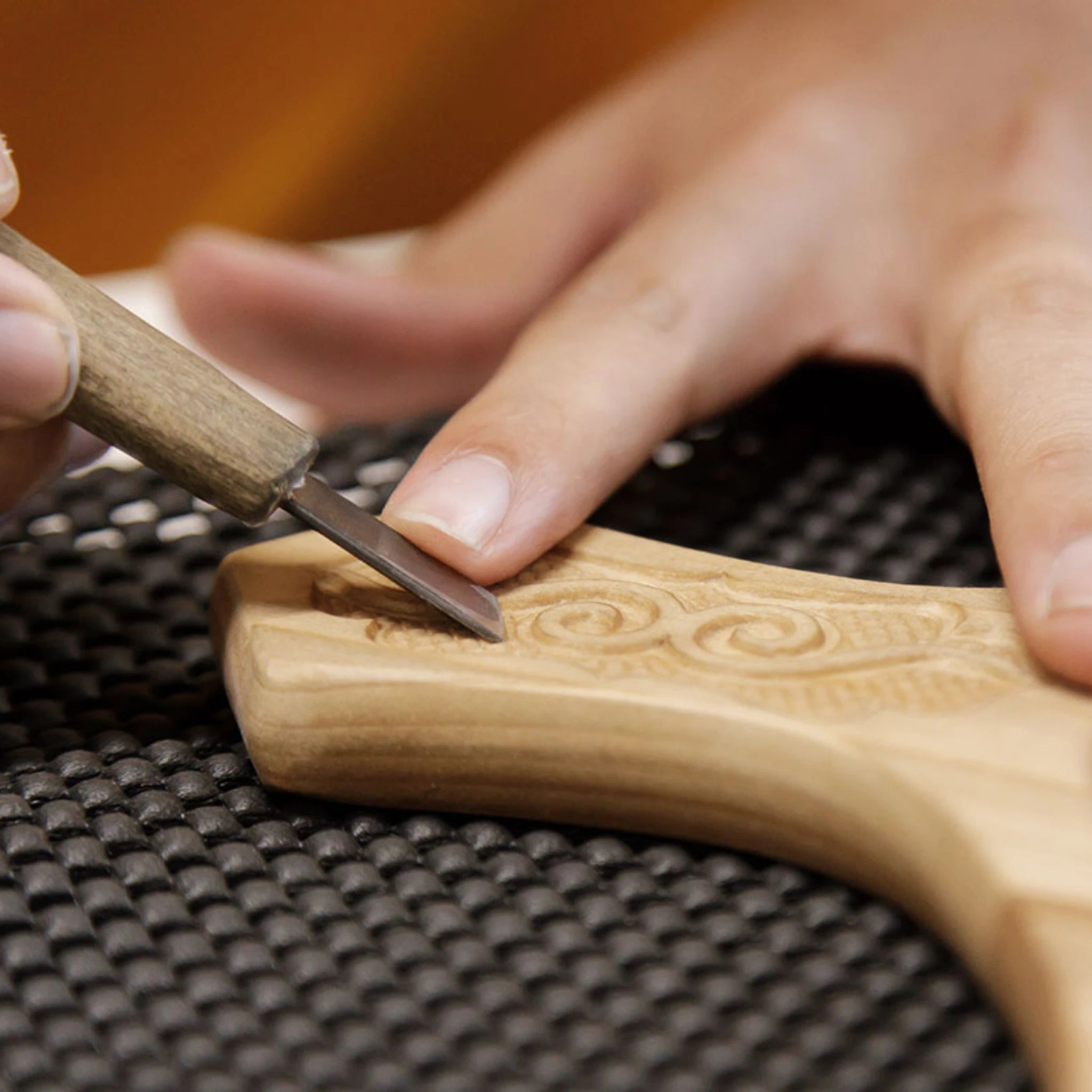
Hand using a small wood carving knife on a wooden object with intricate carvings.

Meet the Artisan

Nibutani Works

Nibutani Works was established in March 2022 in Nibutani, Biratori Town, Hokkaido, formed around a shared concern: that without sustainable work, the next generation of Ainu craftspeople would have no viable path to continue what they had inherited. Wood carving in Nibutani sustained many artisans through the postwar Hokkaido tourism boom, but as that period ended, the number working full time continued to decline. The response of Nibutani Works was not to preserve the tradition as an artifact but to keep it in active use. The company is led by Kayano Kimihiro, born in 1988 in Nibutani and a grandson of Kayano Shigeru, the first Ainu member of the National Diet, who returned to the community in 2013 after working as a mechanical designer in Kanagawa. He established the company nearly a decade later alongside designer Toriumi Saki, who trained in product design at Sapporo City University and spent 6 years in product development before joining the project. Nibutani Works operates 2 lines: NIBUTANI WORKS, covering everyday objects including blankets and household items, and ramgu, focused on wood-carved pieces where the hand of the individual maker is more directly present. The underlying position in both is that culture is not kept alive by being set aside, but by continuing to be used.