What Lasts: A Wedding Gift Guide
There is a particular kind of gift that does not announce itself. It arrives without a bow engineered to impress, without packaging designed to telegraph its own expense. It sits on a shelf or inside a cabinet and waits. Years later, when the couple reaches for it, to set the table for guests they have known a long time, or to mark a quiet evening they have decided to make ceremonial, it is still exactly what it was. The lacquer has deepened. The wood has absorbed something of the light in the room. The porcelain is unchanged, which is its own kind of gift.
The objects below were made by artisans who have spent their working lives learning one specific thing. A Wajima lacquer craftsman in Ishikawa Prefecture. A glass cutter in Tokyo is tracing a pattern through two fused layers of colored glass. A maker in Kyoto working within a form that has not changed since the sixteenth century. None of these people make things quickly, and none of them make things to be replaced. That is the case for giving any of them at a wedding: not that they are beautiful, though they are, but that they were made to last longer than the occasion.

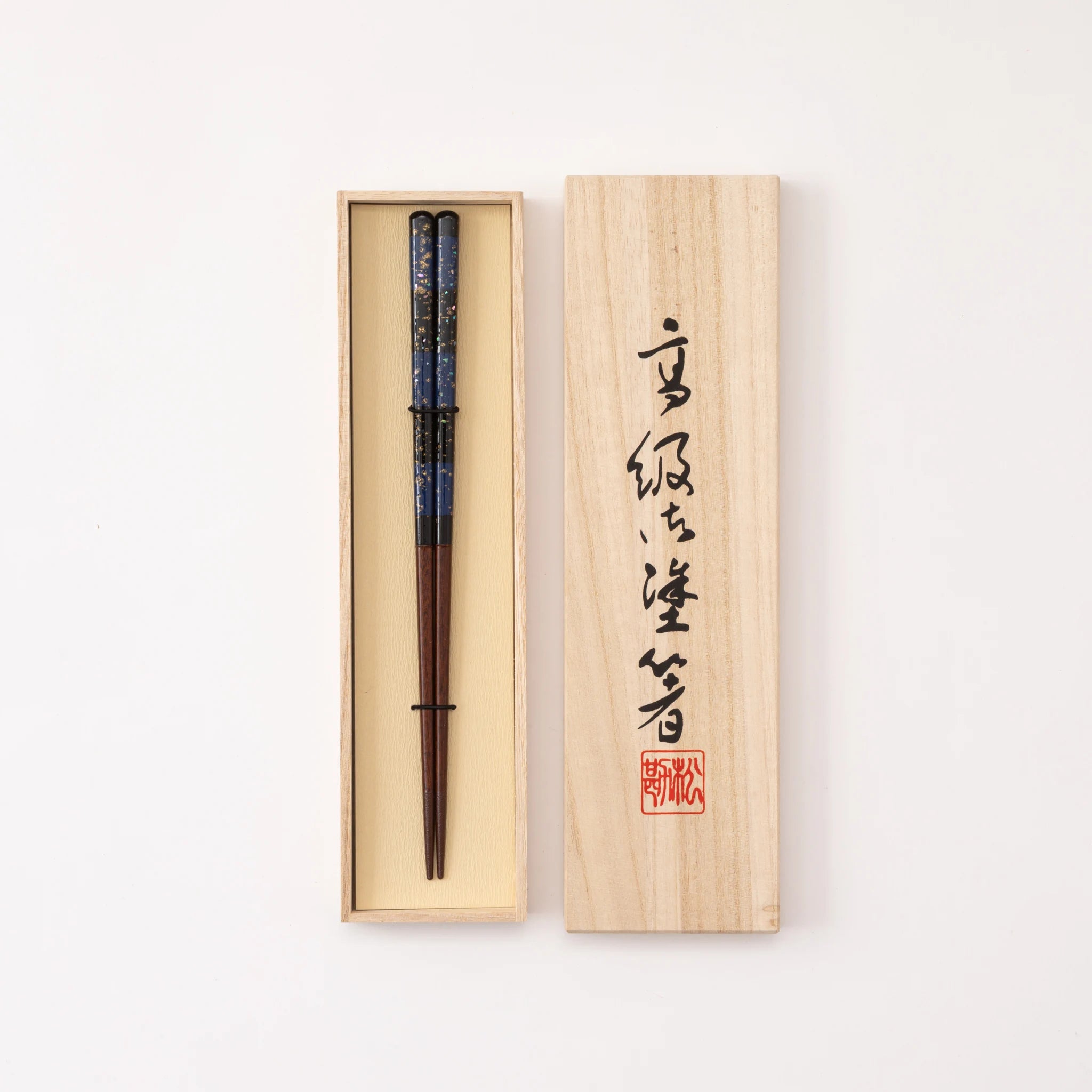
Kaiunmo Chopsticks with Paulownia Gift Box | Matsukan
The Japanese practice of gifting chopsticks at a wedding is not decorative sentiment. Two chopsticks are a pair, inseparable in function, useless apart. The symbolism is not subtle, and it has been understood that way in Japan for a long time.
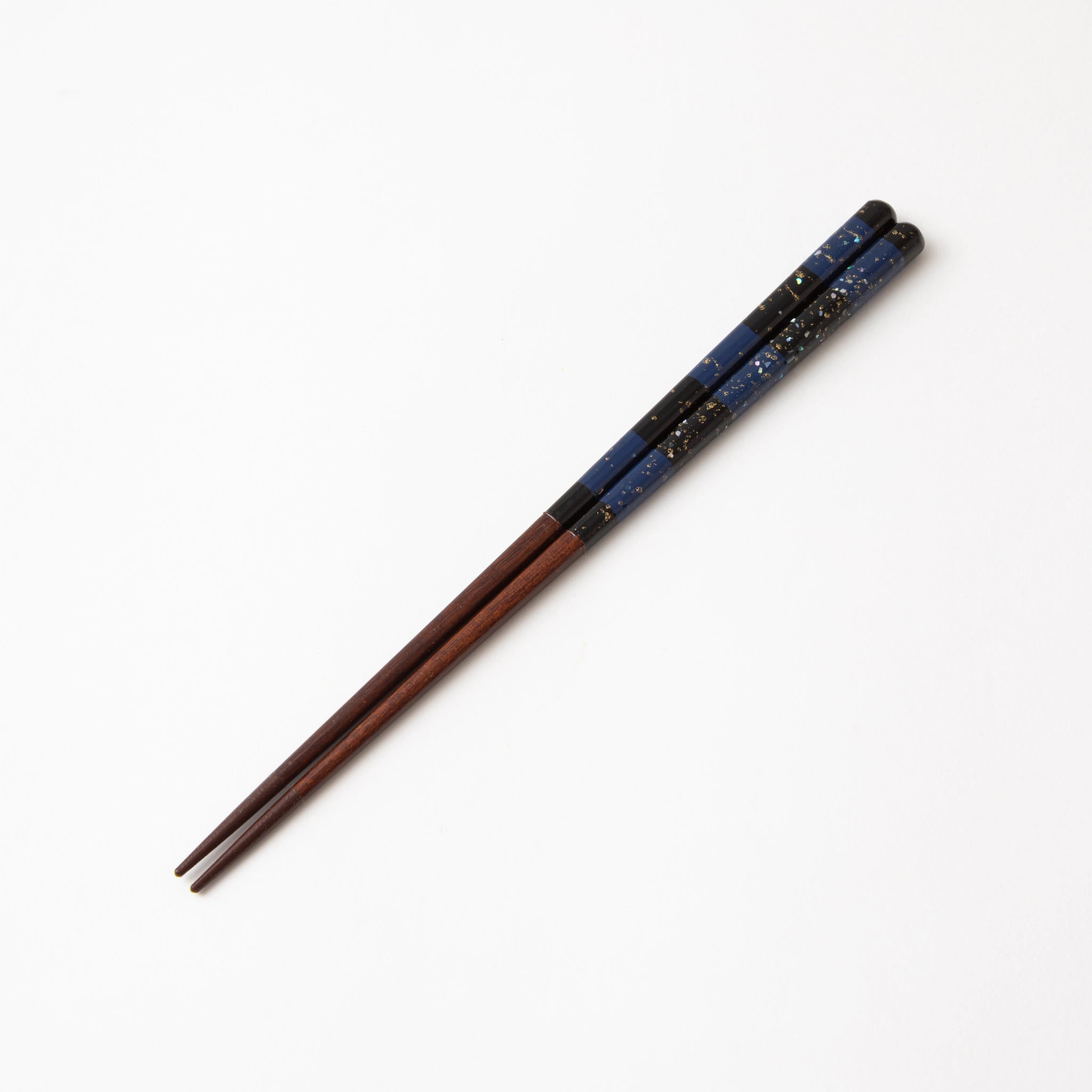
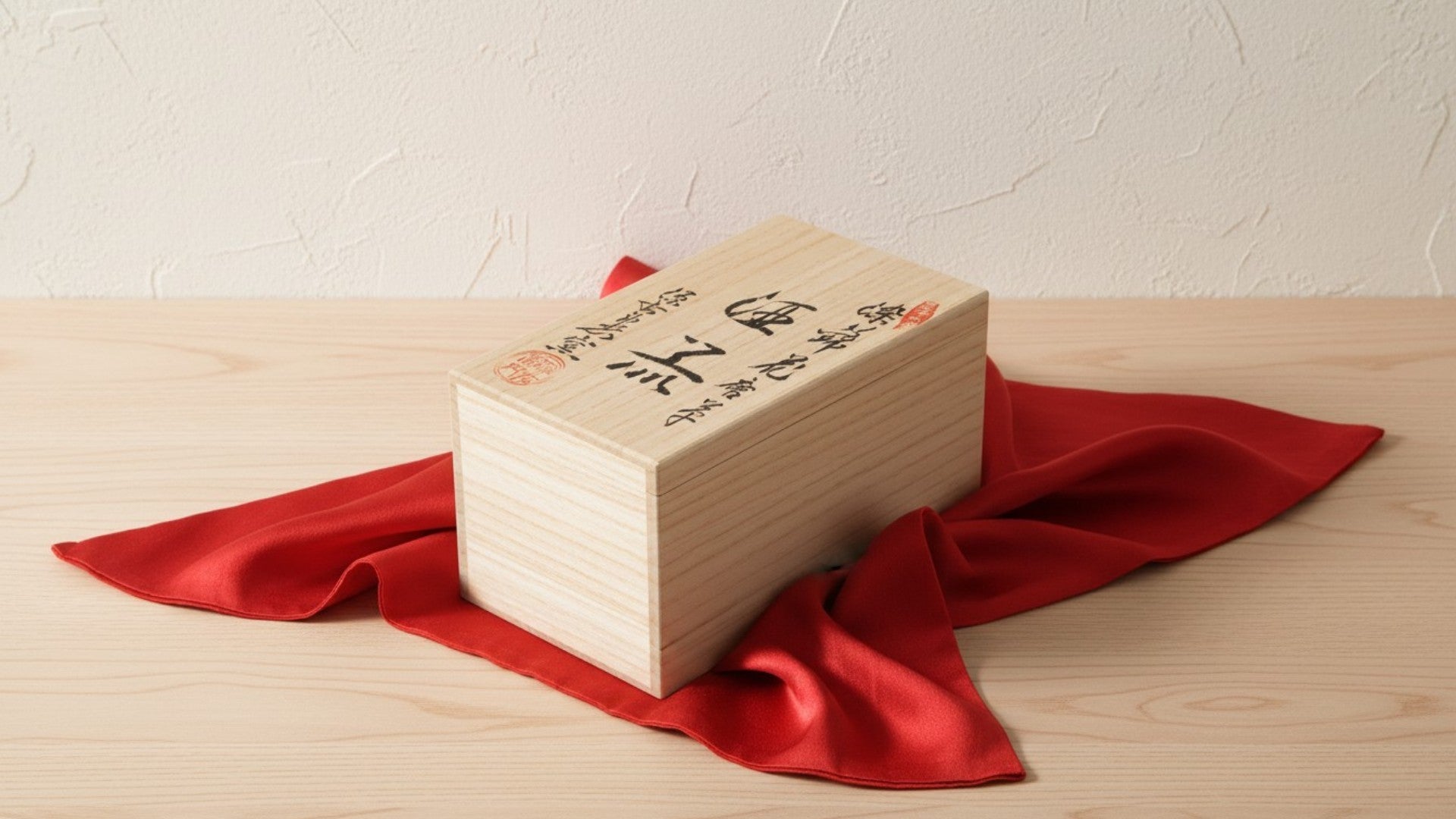
Matsukan has been making lacquered chopsticks in Obama, Fukui Prefecture, in the Wakasa tradition for generations. The Kaiunmo pair is finished in deep indigo and black lacquer, layered by hand and polished to reveal abalone shell and gold flecks suspended in the surface, an iridescent quality that shifts with the light and the angle. The name itself, kaiunmo, carries the meaning of rising fortune. They arrive in a paulownia wood box, the traditional Japanese material for preserving objects of value, with calligraphy on the lid.
These are the most accessible items in this guide. They are also the most quietly resonant.

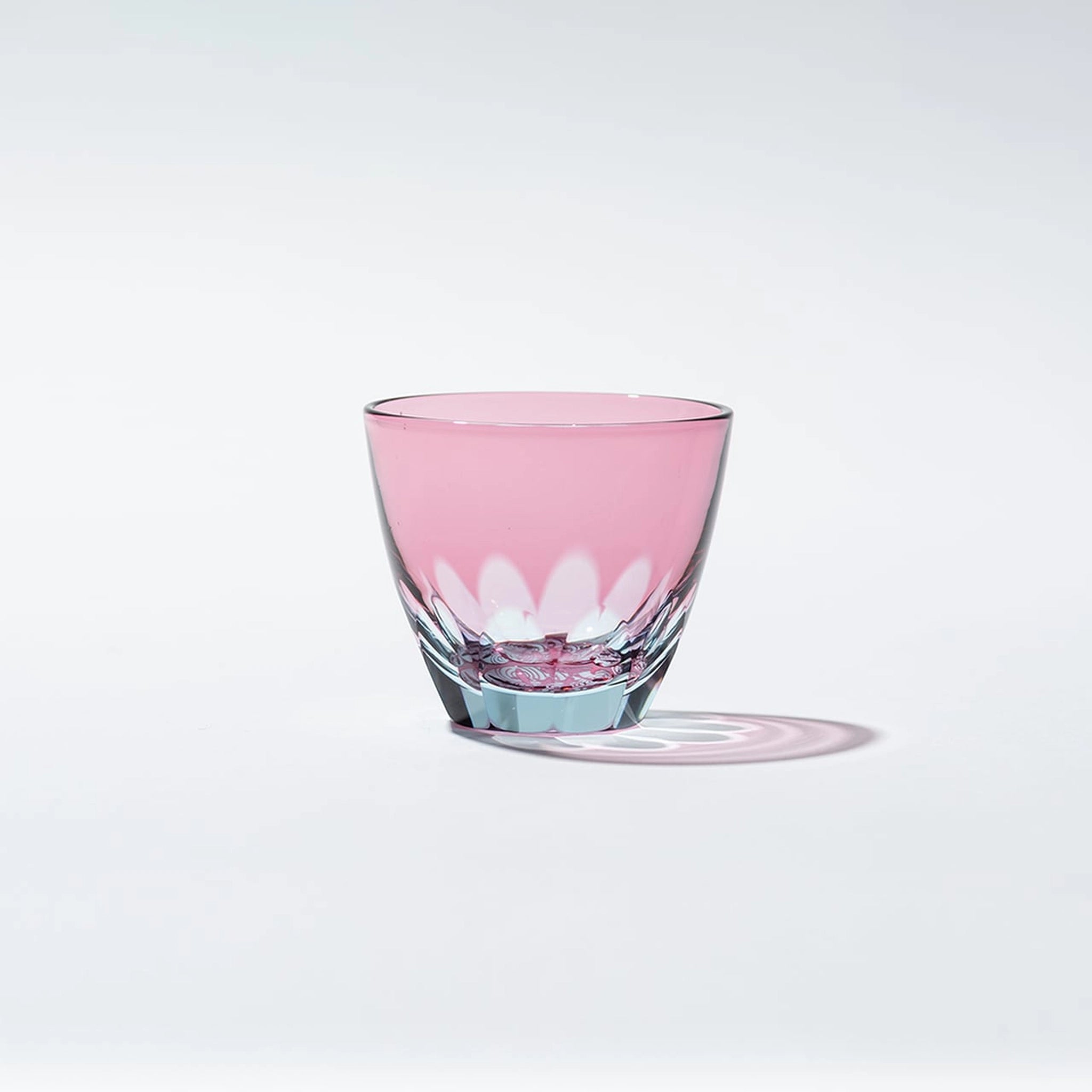
Edo Kiriko Two-Tone Goldfish Sake Cup | Shiina-Kiriko
Edo Kiriko began in Tokyo in the early nineteenth century and was recognized by the Japanese government as a national traditional craft in 2002. The technique involves cutting precise patterns through layered colored glass, the surface carved away to reveal clear glass beneath, the intersection of the two layers producing the depth that makes Kiriko work distinctive.
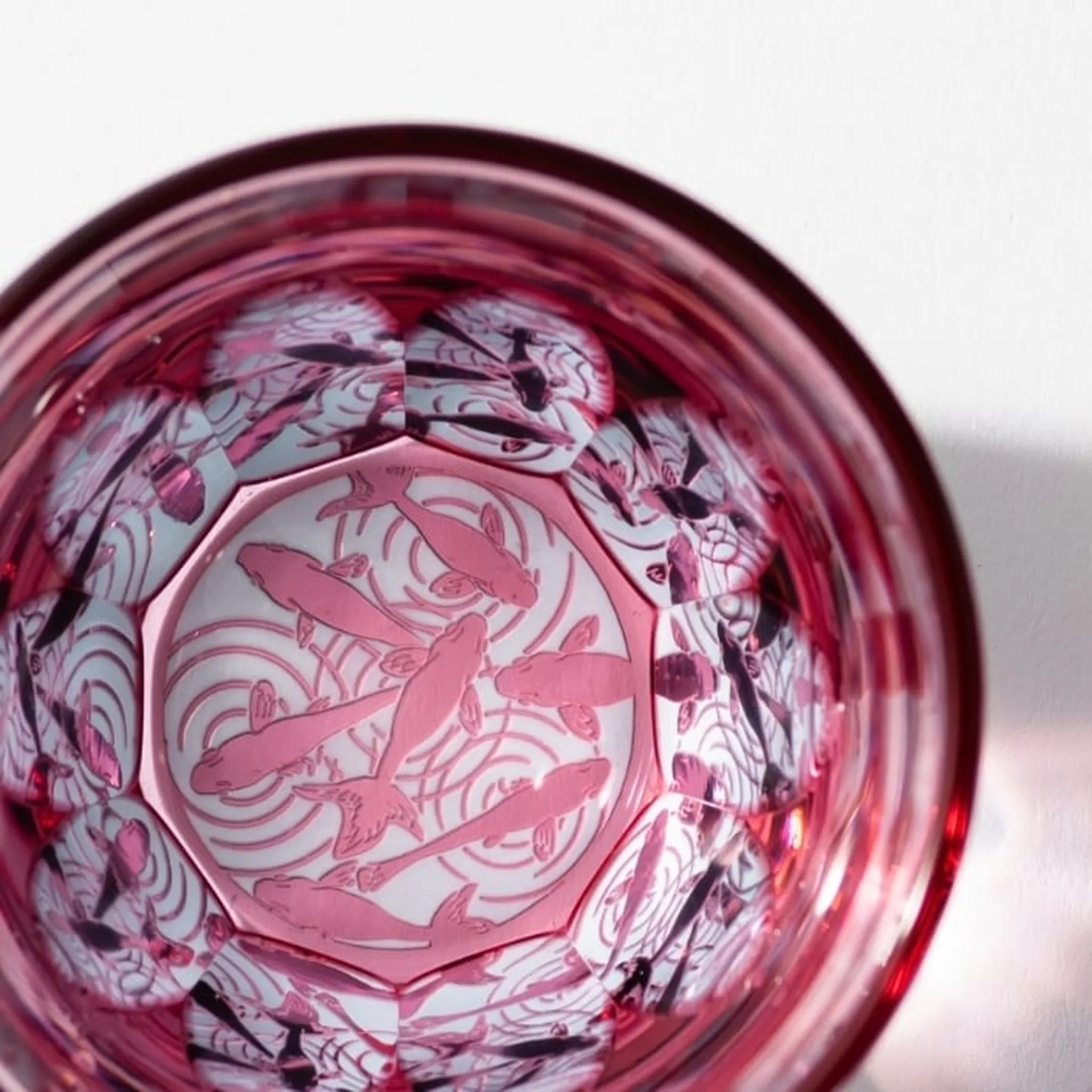
The Goldfish cup by Shiina-Kiriko is cut through soft rose pink glass over clear, the goldfish rendered in relief at the base and around the body with a fluency that does not simplify the subject. Viewed from above, a complete underwater scene: water lines, fish in motion, a composition that shifts as the cup is turned. The rim is clean and unornamented, which lets the lower section do its work.
Sake is traditionally served at Japanese wedding receptions. A cup this precisely made, given to mark that moment, will be the cup the couple reaches for on every anniversary afterward.

Swimming Koi Fish Wajima Lacquerware Sake Cup | Taya Shikkiten
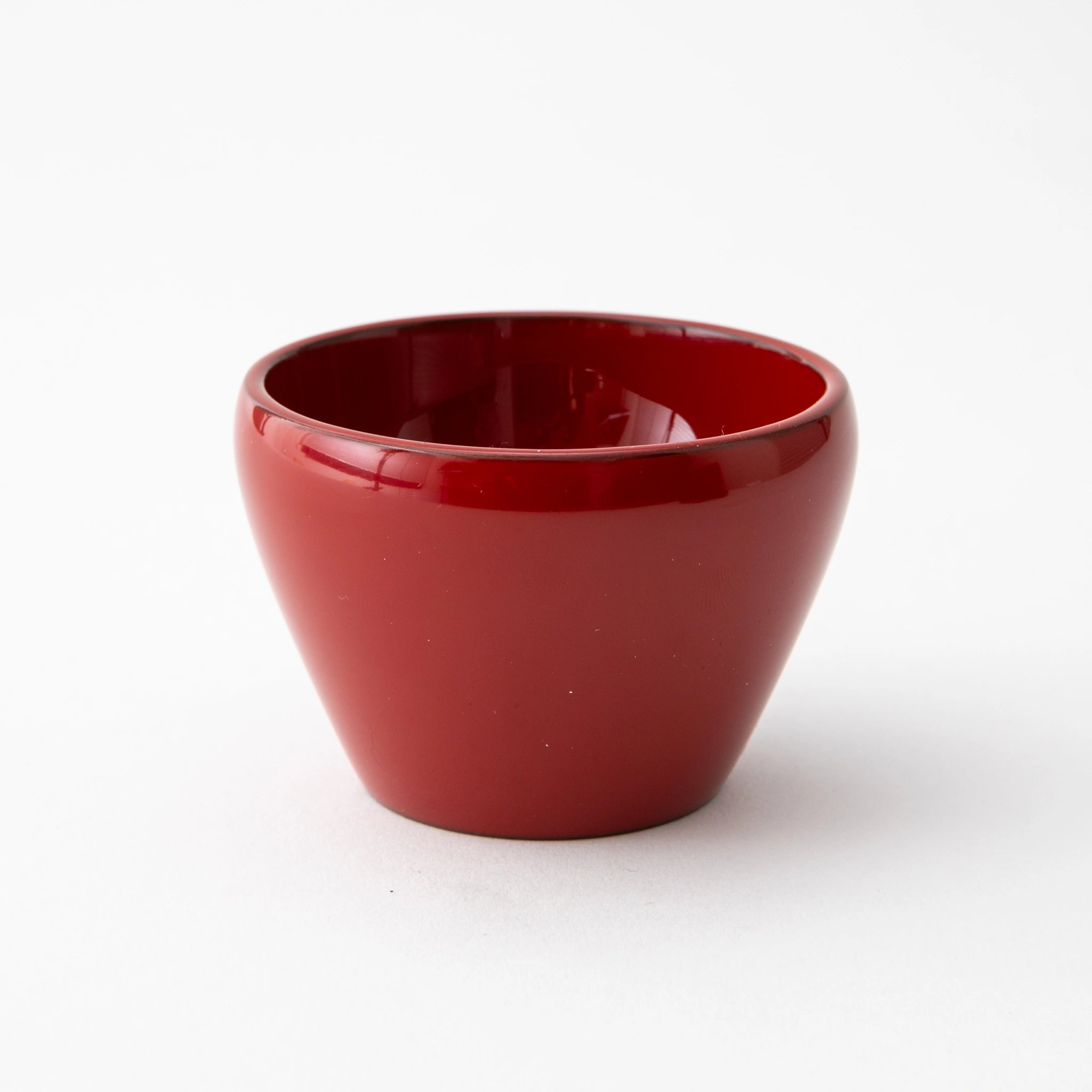
Wajima, on the Noto Peninsula of Ishikawa Prefecture, is the most prestigious origin for Japanese lacquerware. The process is slow by design: multiple layers of urushi lacquer applied and polished in sequence, each layer requiring time to cure before the next is added. The result is a surface with depth that cannot be replicated quickly.
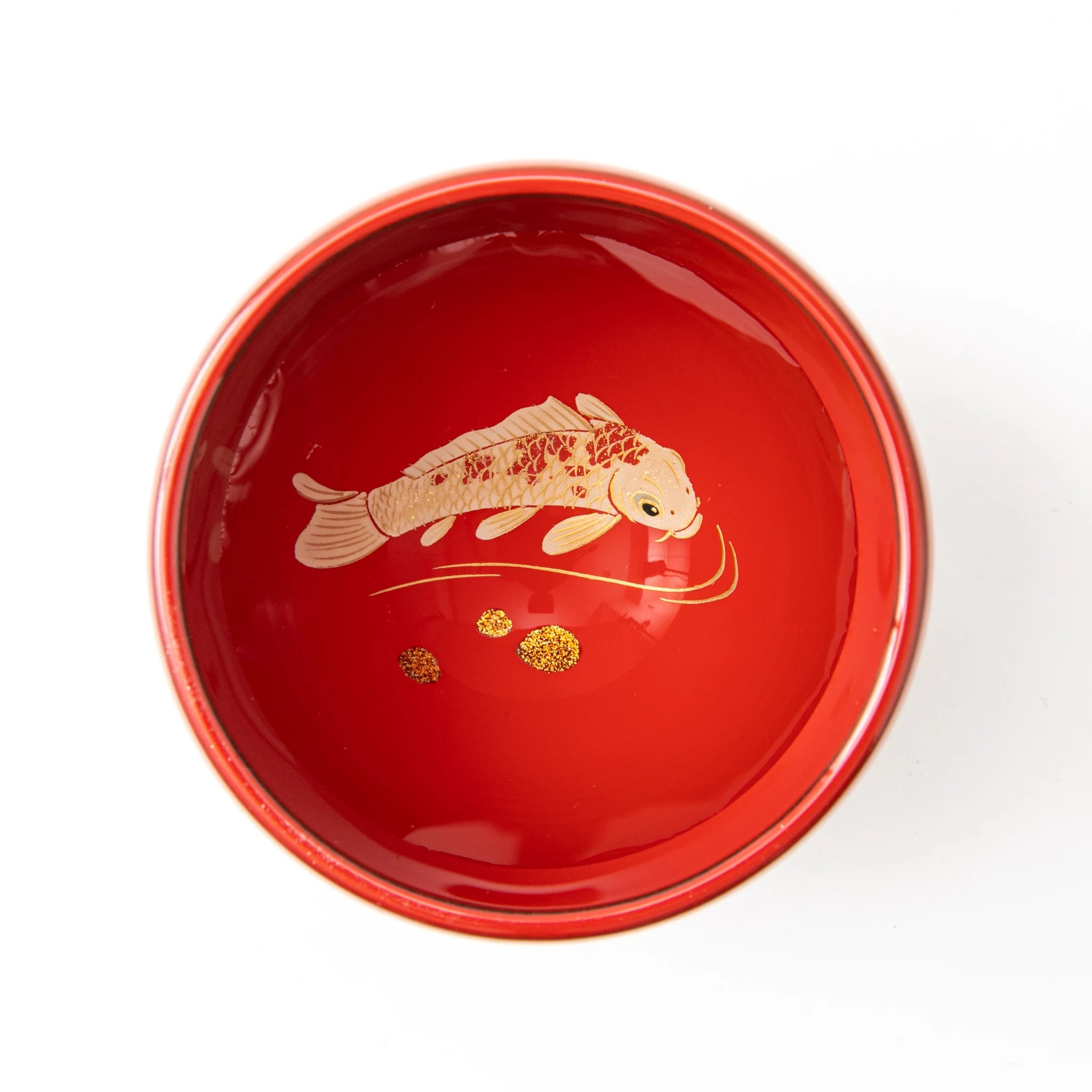
Taya Shikkiten's sake cup carries a gold-leaf koi painted in maki-e at the base, a technique in which lacquer is used as adhesive for powdered gold and silver, the image built up rather than painted on. The koi moves across the interior of the cup with its scales detailed individually, the water rendered in flowing lines that describe both motion and stillness. In Japan, the koi is a symbol of perseverance and good fortune, two qualities worth wishing on a marriage.
The cup is red outside and luminous within. Paired with the Shiina-Kiriko sake cup, they make a set that no department store registry will ever carry.

Chojiro Jirobo Style Red Raku Matcha Bowl | Shoraku Kiln
In the sixteenth century, under the direction of Sen no Rikyu, the tea master who established the principles of the Japanese tea ceremony, a tile maker named Chojiro began producing hand-formed bowls that embodied those principles in clay. No wheel. No glaze applied for decoration. Forms built by hand, fired at low temperature, finished with a surface that absorbed light rather than reflecting it. These became the first Raku bowls, and the Raku family has continued making them in Kyoto across fifteen generations.
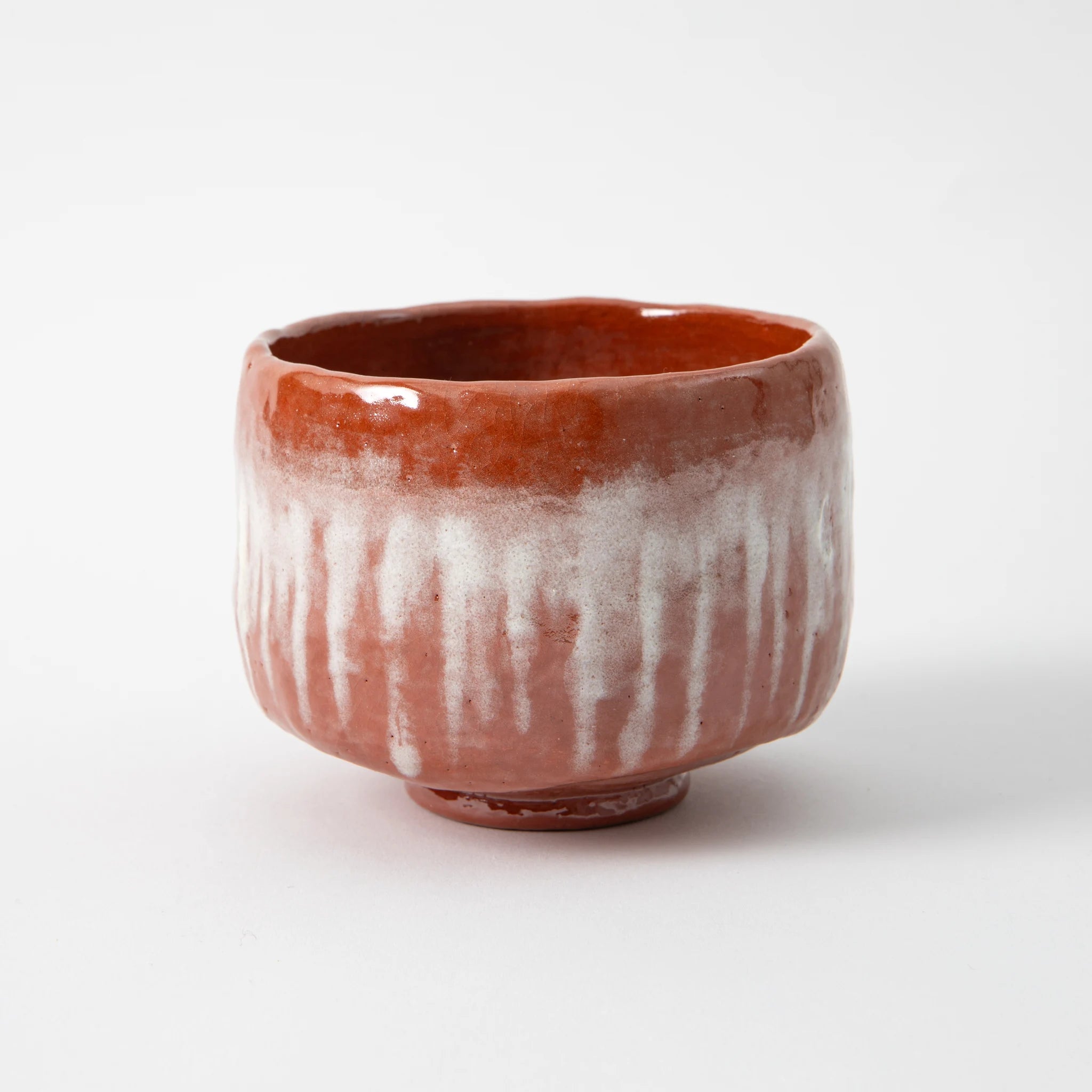
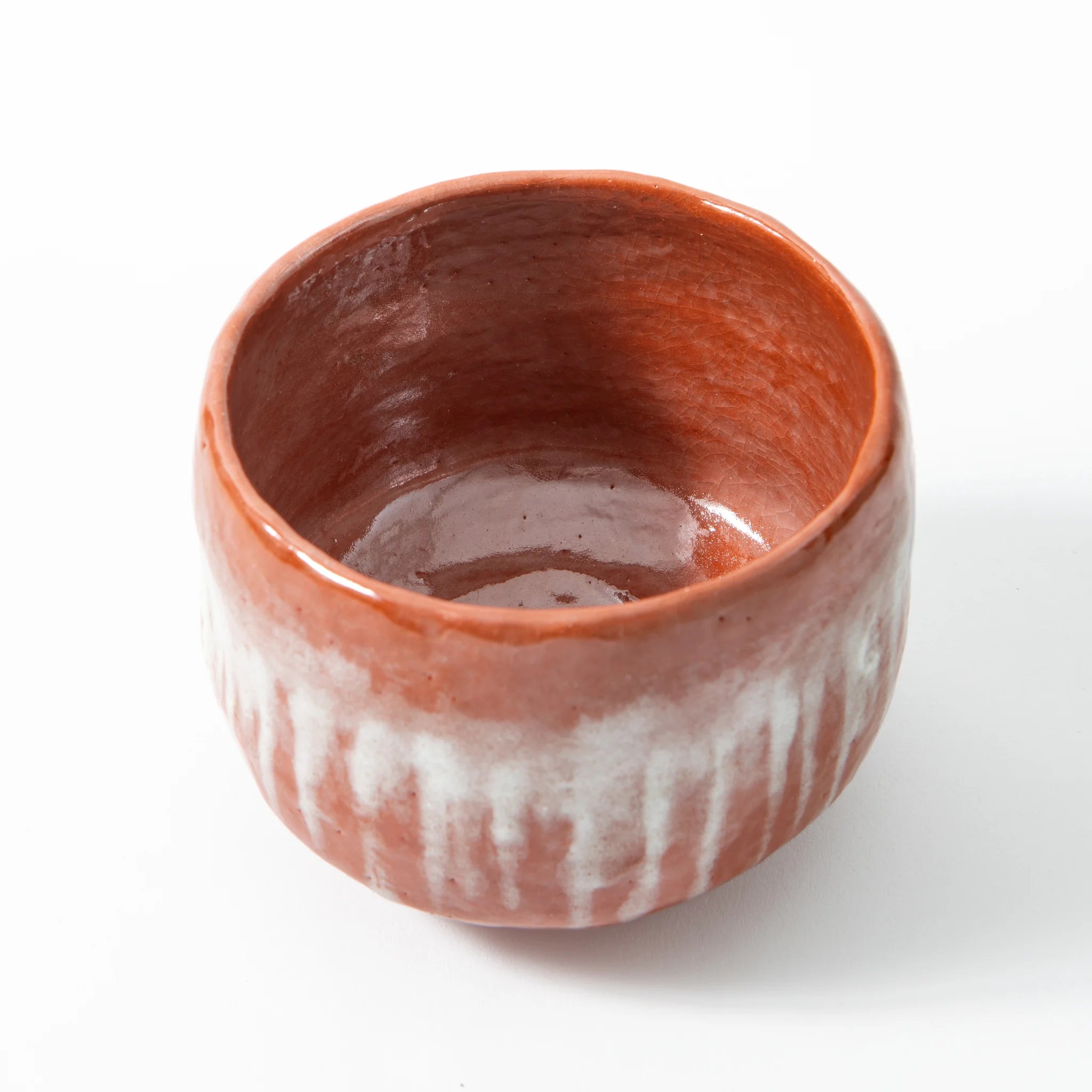
The Shoraku Kiln works within that tradition. The Jirobo bowl is named for one of the original bowls attributed to Chojiro, its form recognized by the asymmetry at the waist and the inward restraint at the rim. The surface is deep terracotta red, with white glaze descending in vertical passages across the exterior. The interior collects the tea in a shallow well at the center.
A matcha bowl at a wedding is not a common gift in the Western tradition. It should be. Few objects ask so directly for the two people to slow down together, to prepare something with attention, and to share it.

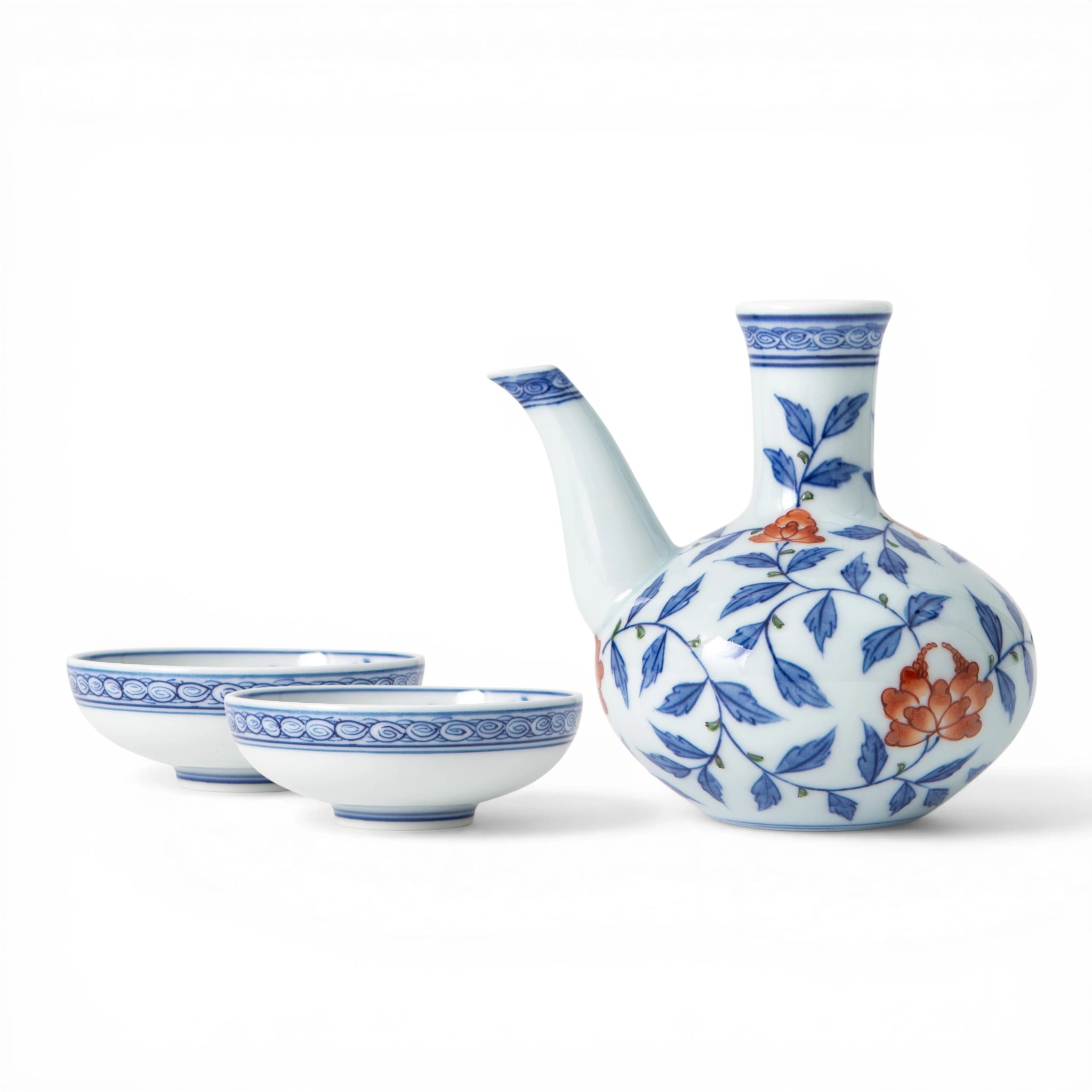
Gen-emon Kiln Arita Flower Karakusa Sake Set | Gen-emon Kiln
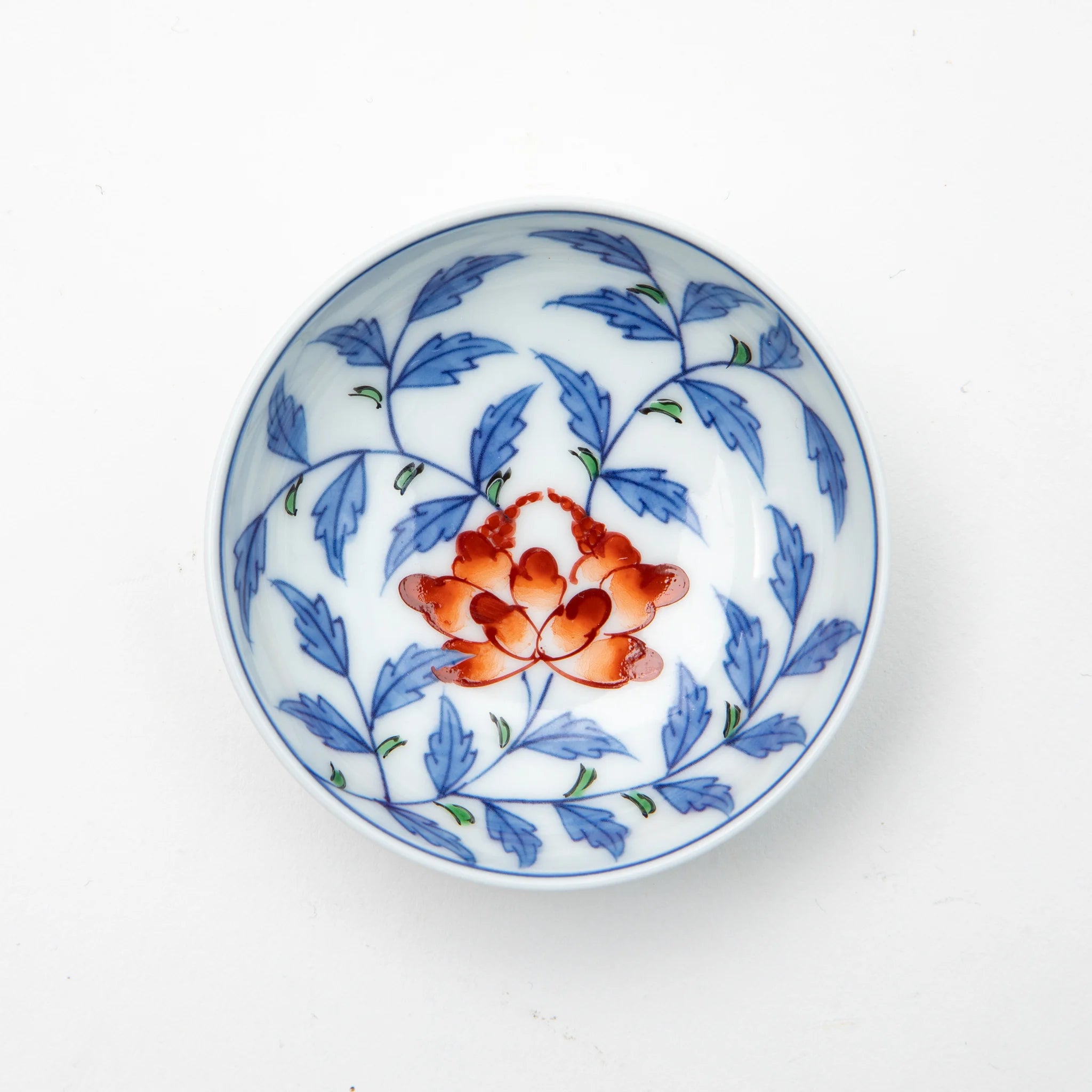
Arita, in Saga Prefecture, was the first place in Japan to produce porcelain, beginning in 1616. Gen-emon Kiln has been working in that tradition for nearly three hundred years, hand-painting each piece in the Ko-Imari style with cobalt blue underglaze and iron red overglaze, a combination that became the visual language of Japanese export porcelain in the seventeenth and eighteenth centuries.
The Flower Karakusa sake set, one tokkuri and two sakazuki, carries the arabesque vine motif continuously across all three surfaces, the pattern never breaking at an edge or repeating mechanically. Iron red flowers interrupt the blue at intervals. A wave scroll borders each rim. The proportions are considered: the tokkuri's rounded body and narrow neck balance against the shallow open form of the sakazuki in a way that makes the act of pouring deliberate rather than incidental.
This is the most complete gift in this guide. Three hundred years of ceramic history, two cups, one vessel, and a tradition of sharing sake that the couple can make their own.

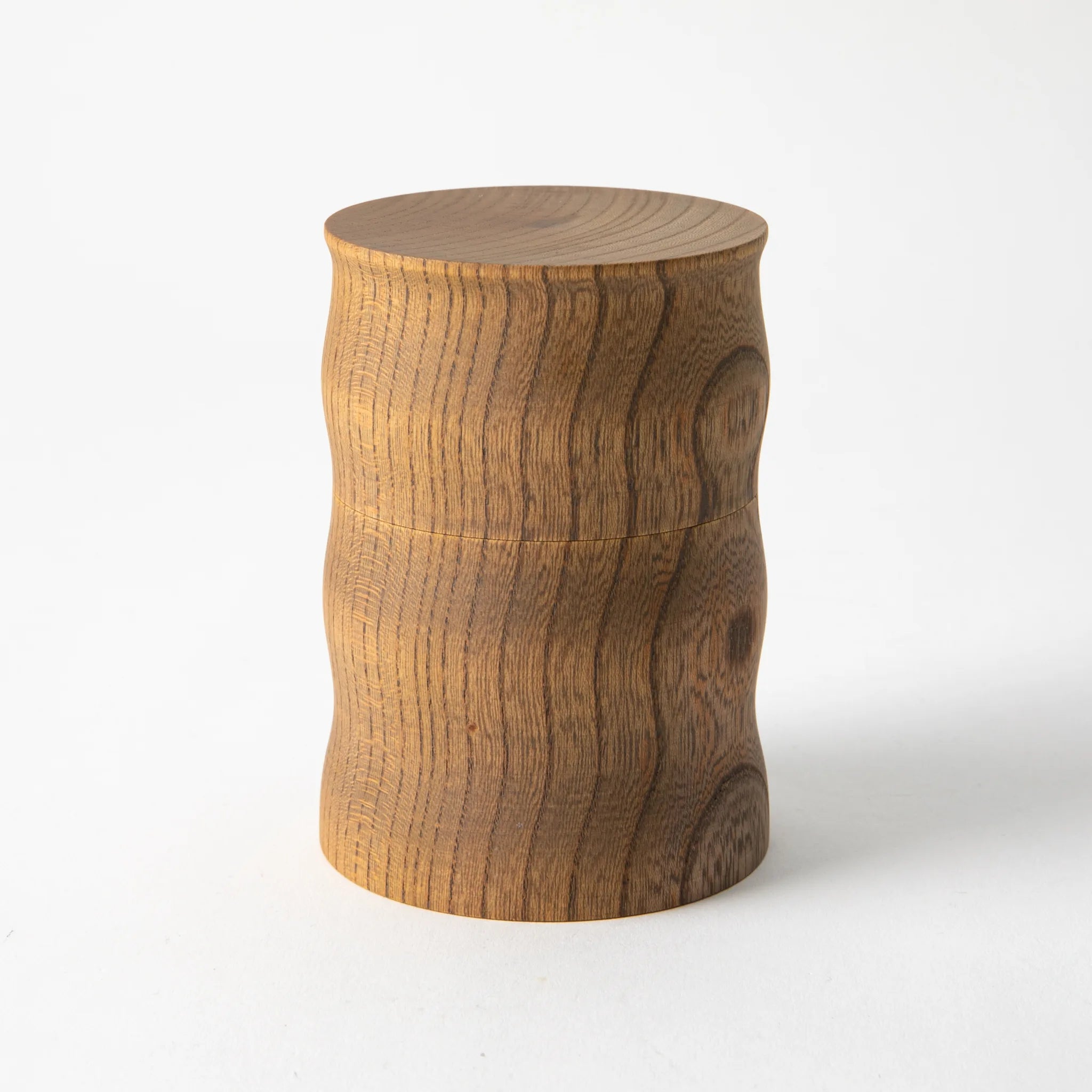
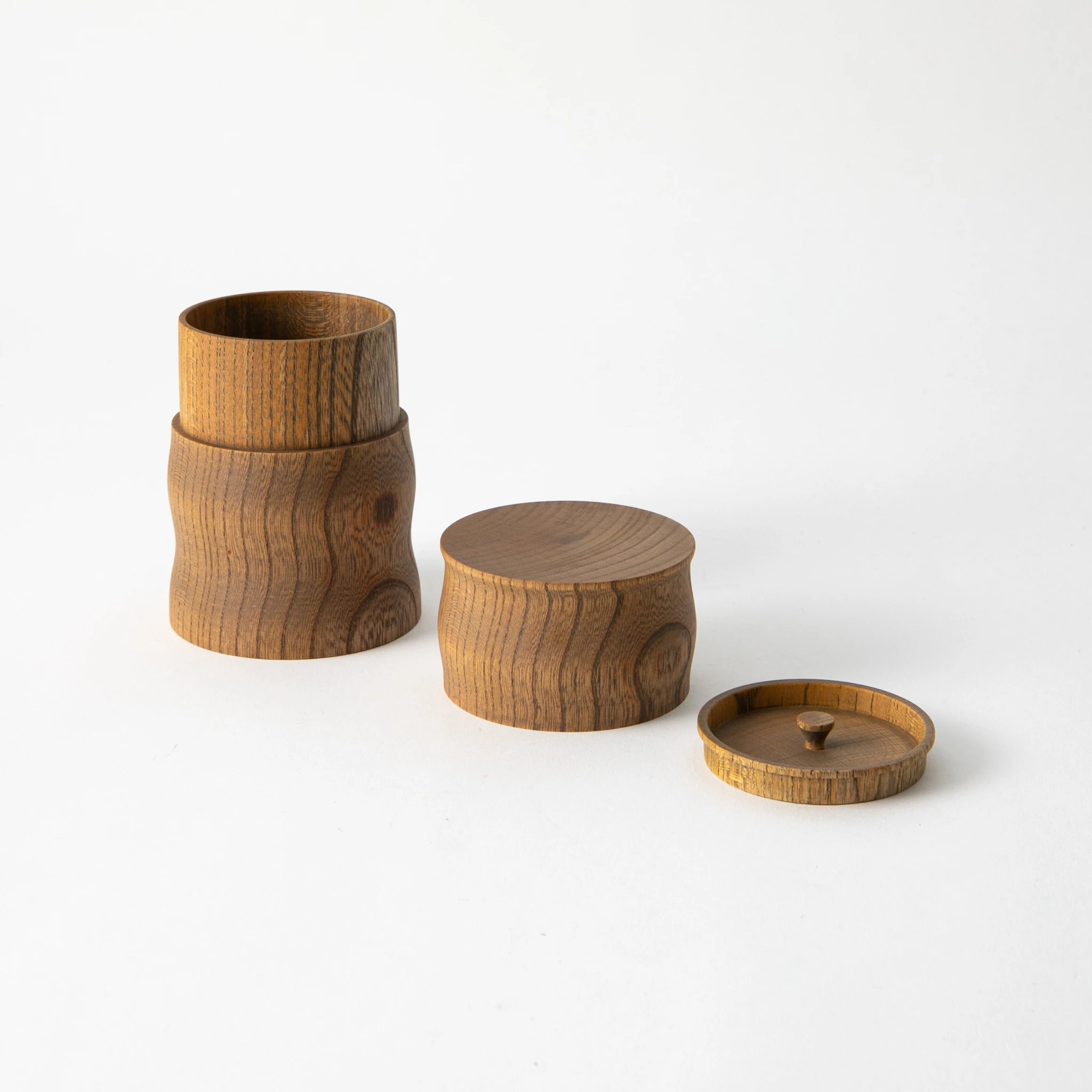
KISEN Tea Canisters | GATOMIKIO
GATOMIKIO works in solid wood at a level of precision that has more in common with instrument making than furniture. The KISEN series takes its name from the Japanese word for the annual growth rings in wood, kisen, and the canister is designed around the idea that those rings should remain continuous from body to lid, the grain uninterrupted across the seam.
Each canister is cut from a single block of zelkova wood. The undulating profile shifts the way light falls across the surface as the piece is turned or handled, the grain traveling through the curves and lines without distortion. The lid fits with a double structure developed exclusively for this series, the kind of engineering detail that is invisible until you hold it and understand that someone thought carefully about what it means to open and close something every day for decades.
A tea canister is not an obviously romantic object. An object made this carefully, from a single piece of wood, designed to be handled daily for the rest of a life, that is.

Honorable Mention: Fuku-iri Daruma | Imai Daruma NAYA
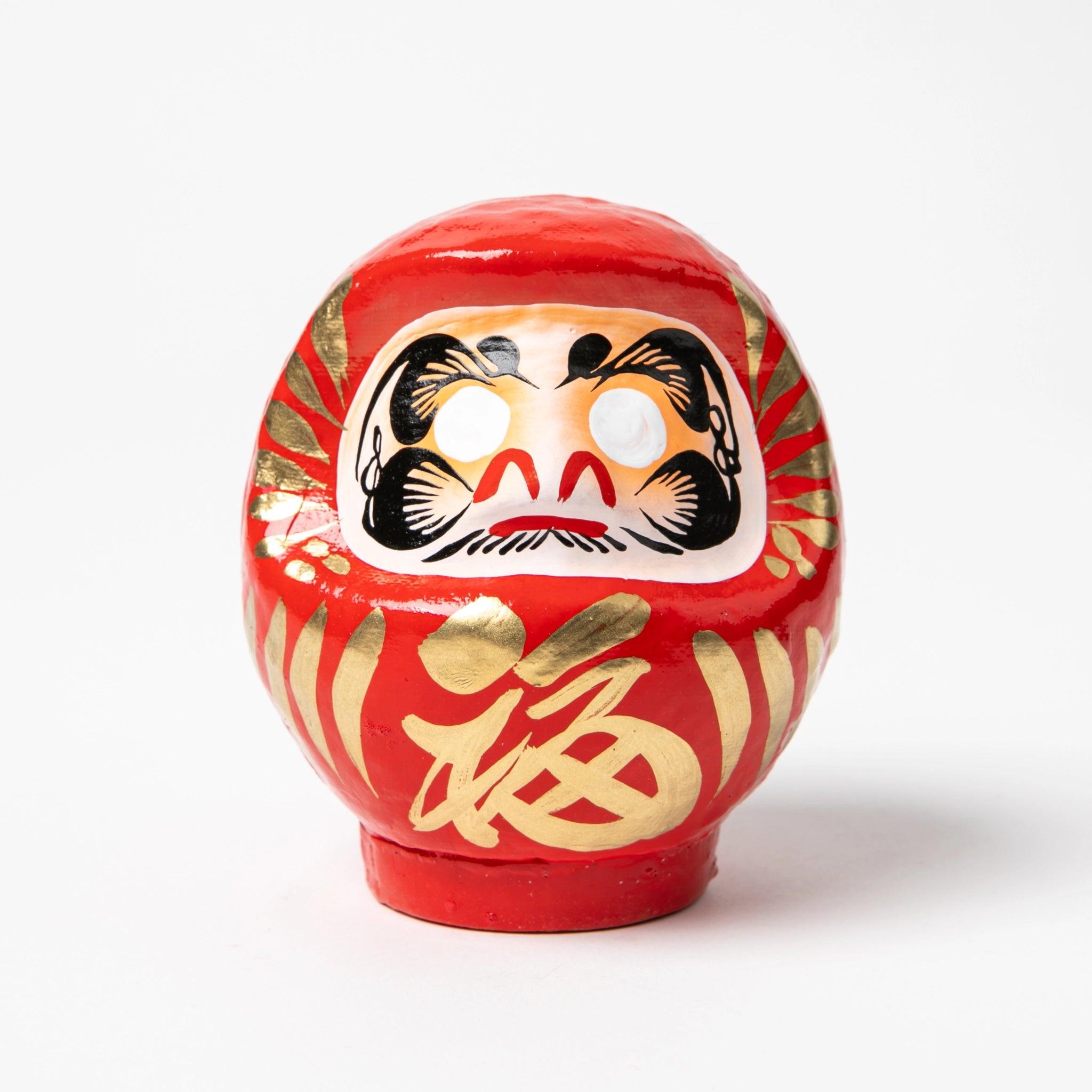
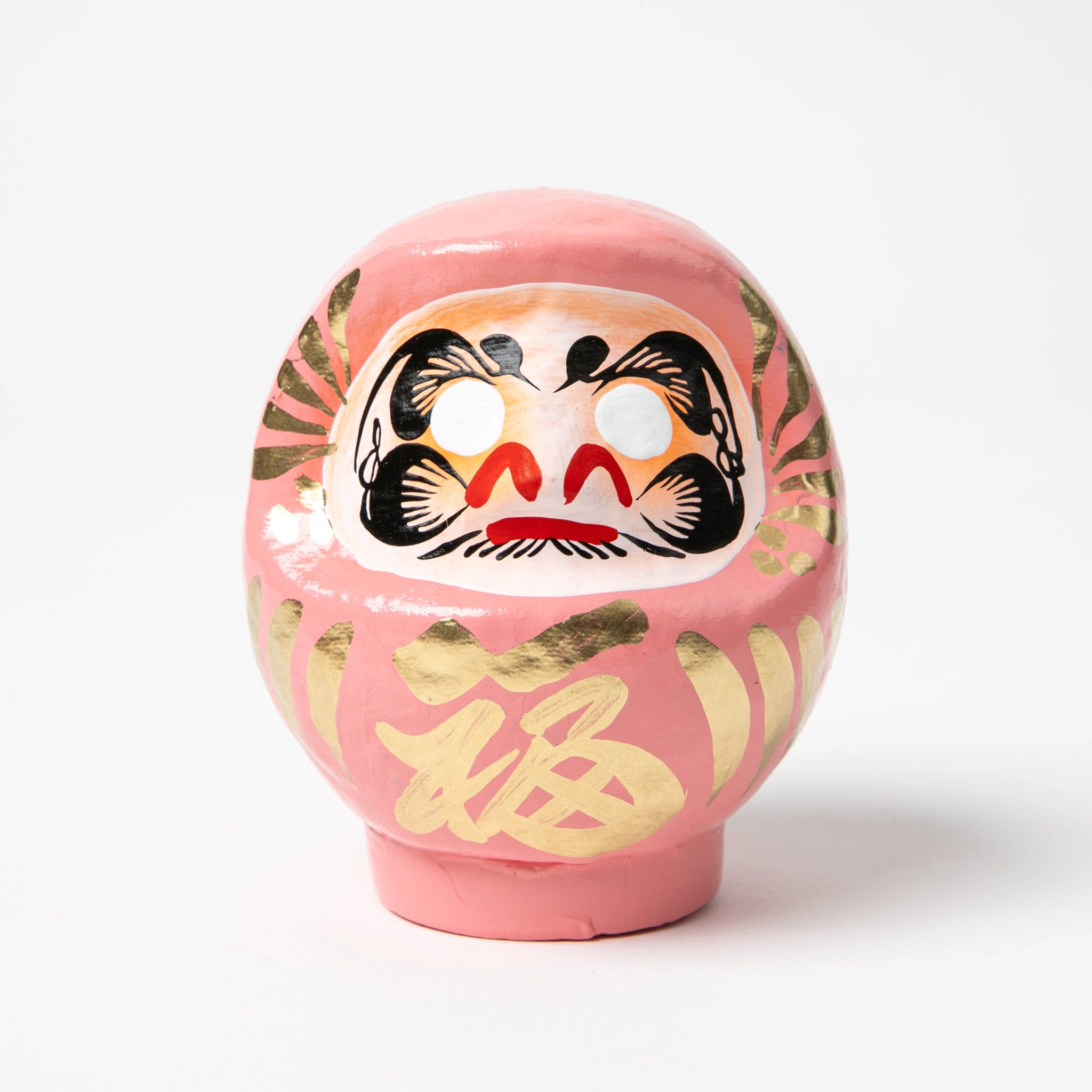
Imai Daruma NAYA has been making Takasaki Daruma by hand in Gunma Prefecture since 1930. Each figure is formed and painted individually; no two are exactly alike. The eyebrows are painted in the form of a crane, the beard in the form of a tortoise, both long-standing symbols of longevity in Japan.
The Daruma ritual is this: when you receive one, both eyes are blank. You fill in one eye when you make a wish, and the second when it comes true. For a wedding, that ritual has an obvious and genuine application.
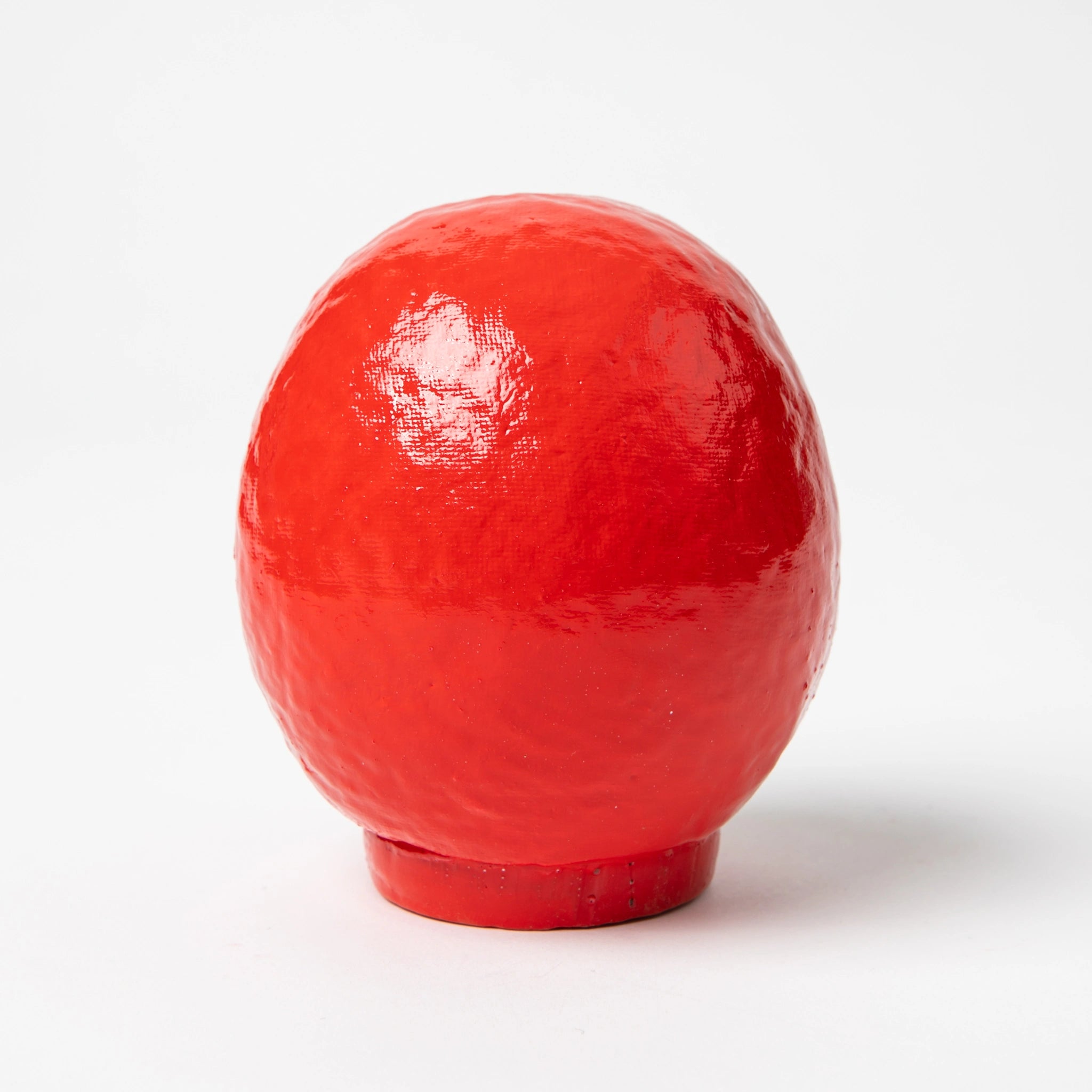
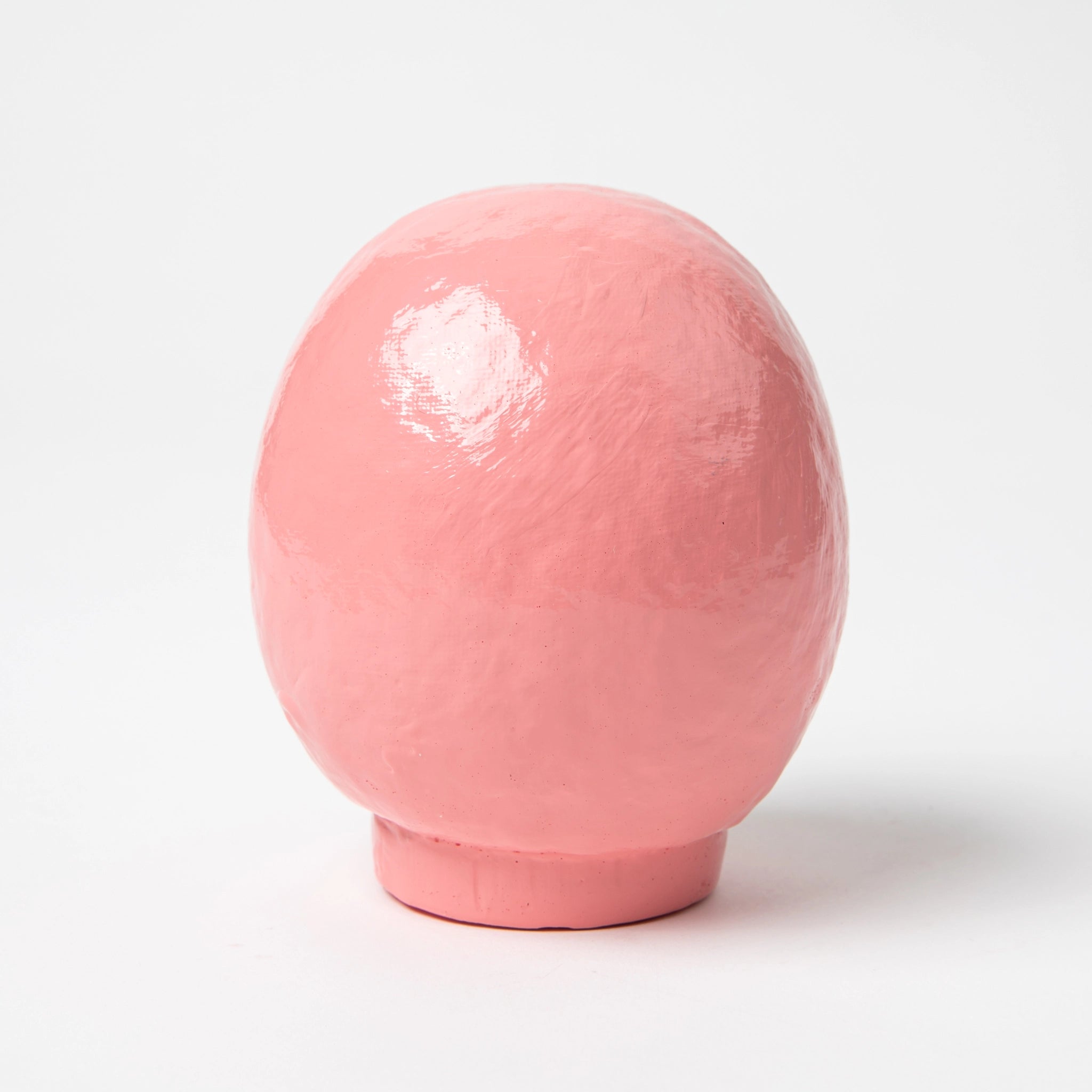
Two colors are particularly suited to the occasion. The Red Daruma carries the meaning of general good fortune and household harmony. The Pink Daruma is specifically associated with love, marriage, and the fulfillment of a relationship. Either is a meaningful gift on its own. Both together, one for each person, carry more intention than most things given at a wedding.
The Daruma does not pretend to be anything other than what it is: a handmade object from a specific place, carrying a specific wish, given at the beginning of something.
The artisans behind these objects are introduced in full on the Omakase Artisans pages.