Skip to content

Cart

Your cart is empty

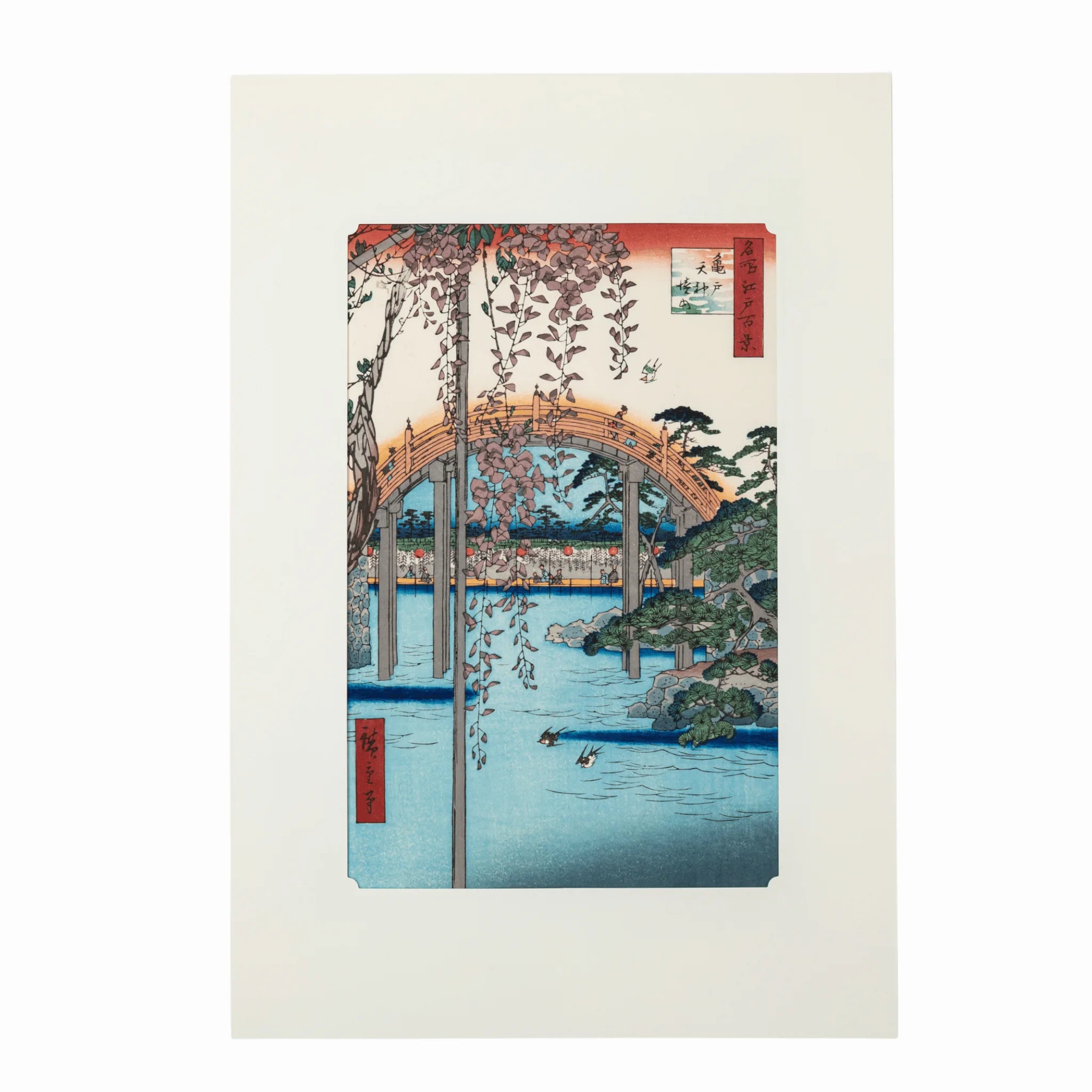
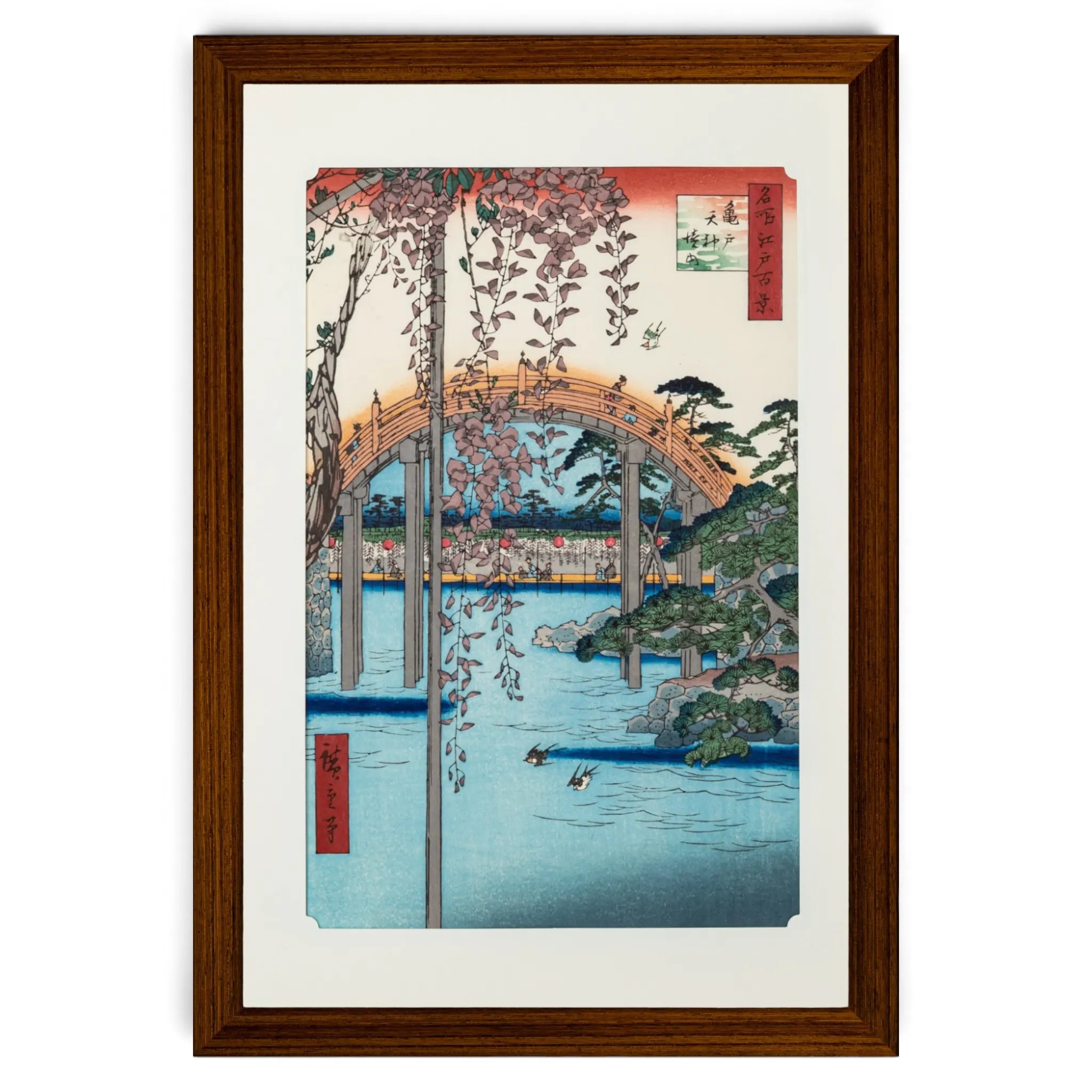
Hiroshige Woodblock Print Kameido Tenjin Shrine (One Hundred Famous Views of Edo)

Sale price$220.00

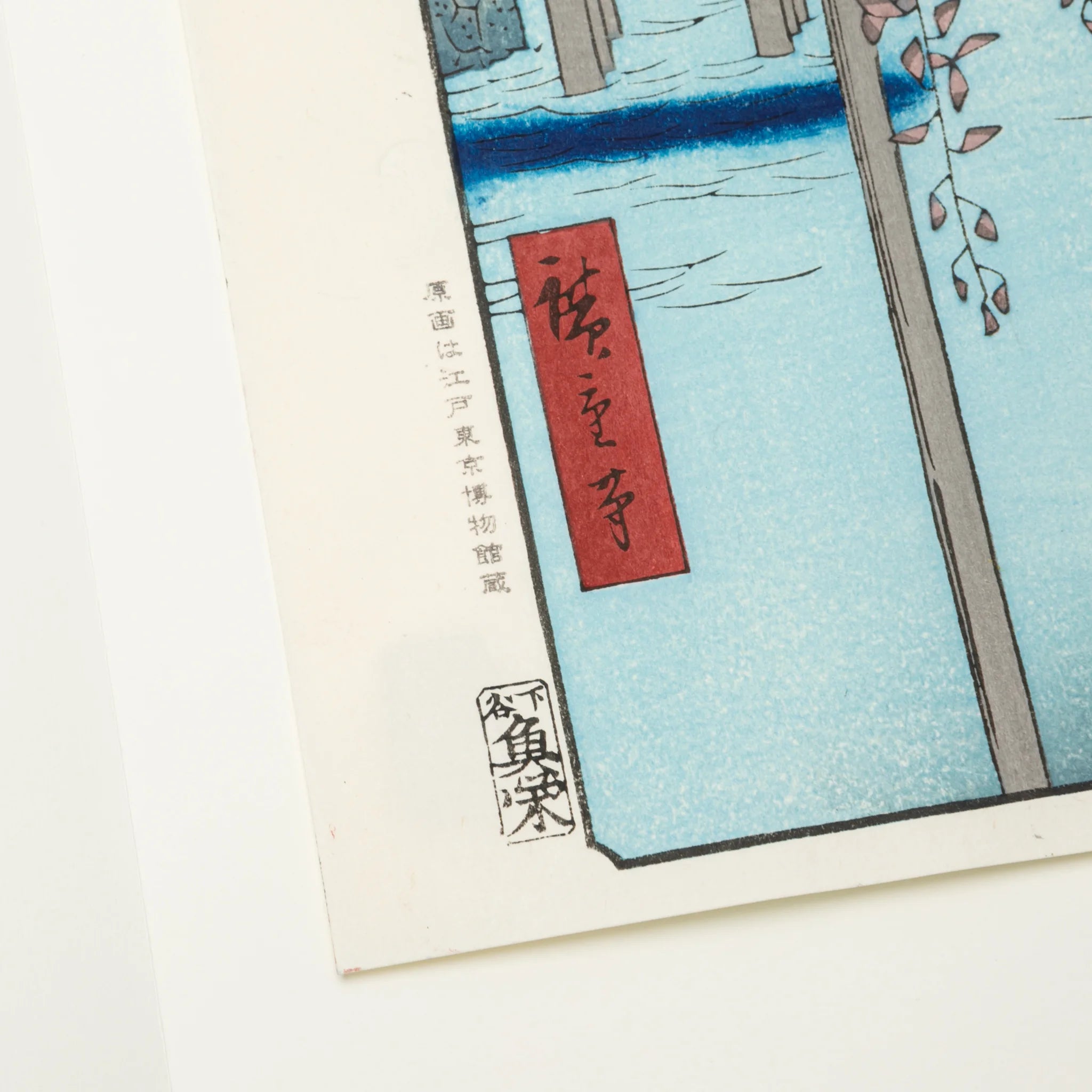
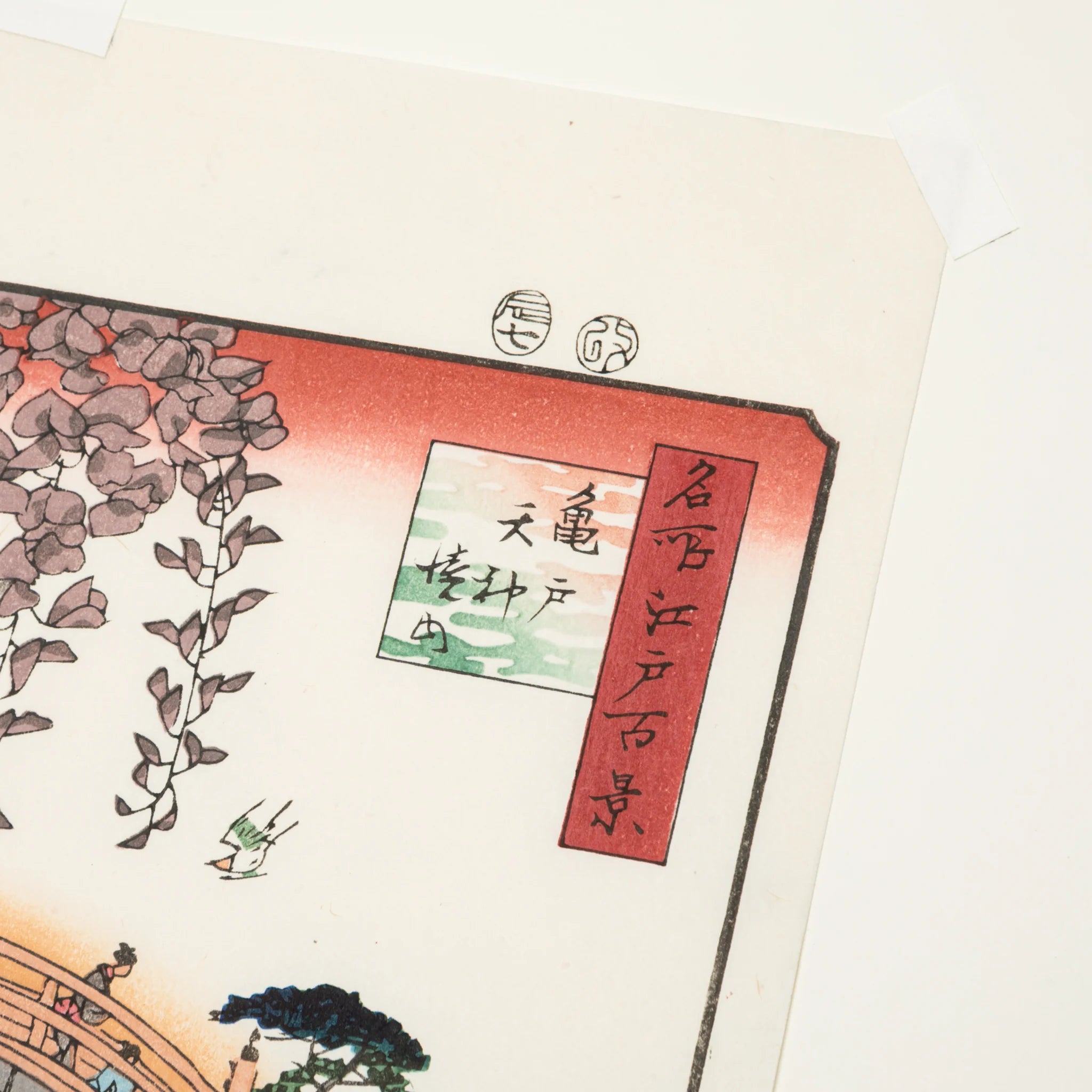
Kameido Tenjin Shrine was established on the east bank of the Sumida River in the 1660s, dedicated to Sugawara Michizane, the deified patron of scholarship, on land said to have been donated by the shogun Ietsuna himself. It was long known for its wisteria and its arched drum bridge — one of 2 in Edo noted for that shape — and the view of the bridge framed by hanging wisteria was considered one of the city's famous prospects long before Hiroshige included it in his series. In this 1856 print, he places the viewer directly beneath the clusters, looking through them toward the bridge and the pond beyond. The composition works in 3 planes: wisteria curtain in front, bridge and water in the middle, far bank behind. A mother and child can be seen descending the steep bridge together. In 1856, the year this print was published, the wisteria at Kameido was among the most visited seasonal sights in Edo. This reproduction is produced by Takahashi Kobo, founded in Bunkyo, Tokyo between 1854 and 1860, the oldest ukiyo-e woodblock studio in continuous operation in Japan, now in its sixth generation. Every print is hand-carved, hand-pigmented, and pressed onto washi by hand with a baren.

Hiroshige Woodblock Print Kameido Tenjin Shrine (One Hundred Famous Views of Edo)
Hiroshige Woodblock Print Kameido Tenjin Shrine (One Hundred Famous Views of Edo) Sale price$220.00

Meet the Artisan

Takahashi Kobo

Takahashi Kobo was founded during the Ansei era, between 1854 and 1860, in what is now Bunkyo City, Tokyo, making it the oldest continuously operating ukiyo-e woodblock print studio in Japan. The Takahashi family entered the craft as surishi, the printers who translate a carver's blocks into finished images through precise control of pigment, pressure, and washi. In 1877, the second-generation Kuranosuke Takahashi exhibited at Japan's first National Industrial Exhibition and received recognition from the Minister of Home Affairs. In 1890, the third generation demonstrated the technique before Prince Arthur, Duke of Connaught. From the fourth generation onward, the studio expanded into the role of hanmoto, or publisher, overseeing the full process from planning through production. The fifth-generation Shinjiro Takahashi introduced silk screen printing as a complementary technique in 1955. The current representative, Takahashi Yukiko, became the sixth-generation head in 2009 after training under her father. Under her direction, the studio has brought its techniques to institutions including the British Museum, the Pushkin Museum of Fine Arts, and the Detroit Institute of Arts, and has undertaken revival projects of significant historical works. She chairs the Tokyo Traditional Woodblock Print Association, and the studio has been selected for the Edo Tokyo Kirari Project, a Tokyo Metropolitan Government initiative recognizing traditional Tokyo brands of international significance.