Skip to content

Cart

Your cart is empty

Kamo Hamono VG10 Tsuchime Damascus Shizuku Petty Knife

Sale price$255.00

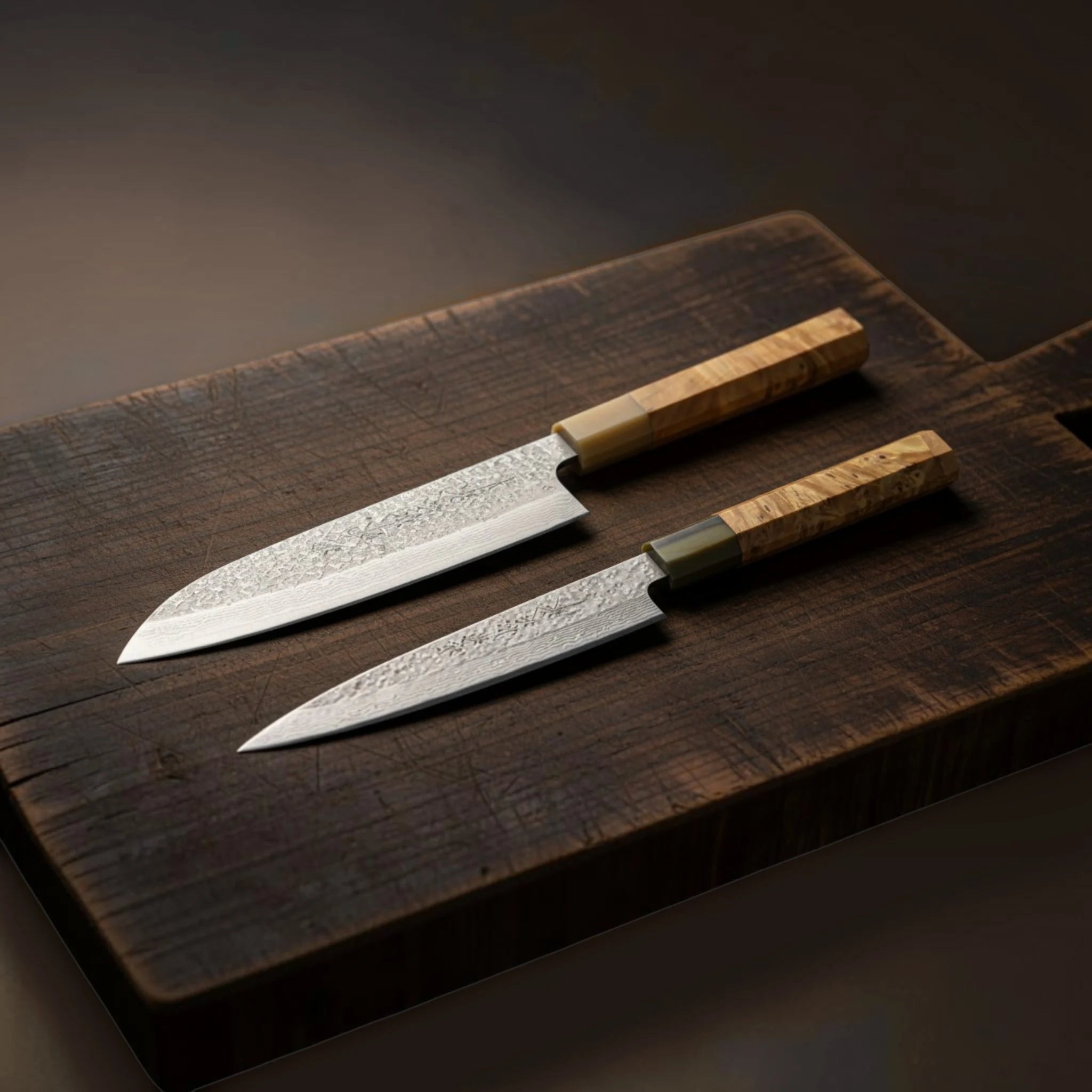
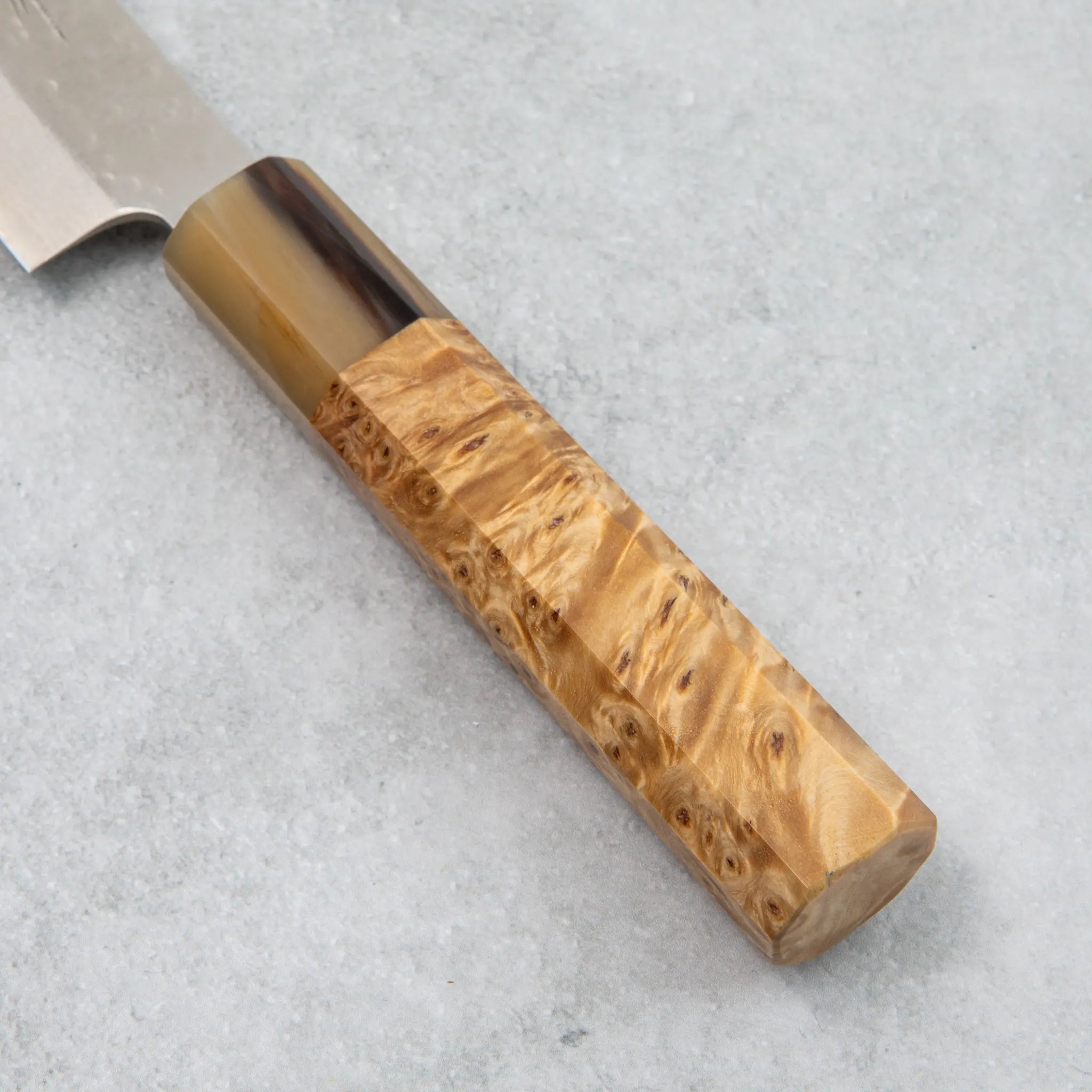
A petty knife occupies the space between a paring knife and a medium utility blade — precise enough for detailed work, long enough to handle tasks a shorter knife cannot. Kamo Hamono's Shizuku petty brings the same Damascus construction as the santoku in the series to a narrower, more pointed form suited to that range of work. The blade is built around a VG10 stainless core, layered in Damascus and finished with the tsuchime hammer marks that define the Shizuku series — rounded depressions across the upper surface that shift with the light and reference, in texture, the moment a water droplet forms before falling. Kamo Hamono forges at Takefu Knife Village in Echizen City, within a cutlery tradition the region has held for over 700 years. Katsuyasu Kamo, designated a traditional craftsman and the cooperative's founding chairman, built the workshop's reputation on advancing Echizen's forging methods without abandoning their foundation. The handle is stabilized karin burl wood with a water buffalo horn bolster, the figured grain running the full length.

Side view of the Kamo Hamono Shizuku petty knife, showing a narrow pointed VG10 Damascus blade with rounded tsuchime hammer marks, a water buffalo horn bolster, and a stabilized burl wood handle with pronounced figured grain.
Kamo Hamono VG10 Tsuchime Damascus Shizuku Petty Knife Sale price$255.00

Meet the Artisan

Kamo Hamono

Kamo Hamono was established in Echizen City, Fukui Prefecture, in 1936, when Kamo Shintaro founded the studio as a kitchen knife forge within the Echizen Uchihamono tradition. His son Kamo Katsuyasu joined the forge in 1956, beginning with the technique of dual-bevel blade forging, and has led the studio as its second generation. In 1975, Katsuyasu co-developed a vegetable harvesting knife with a highland farmer in Nagano's Sugadaira plateau, producing a dual-bevel blade suited to the demands of harvesting leafy vegetables at scale. The knife spread to farming communities across Japan and became one of the pieces that established Echizen's reputation in agricultural blade-making. Katsuyasu has also been central to the institutional survival of the tradition. In 1973, as the forge-based industry faced declining demand and an aging workforce, he was among the craftsmen who formed the Takefu Forged Blade Industry Study Society. In 1991, he established the Takefu Knife Village Cooperative and served as its inaugural director, working to bring younger makers into the craft at a moment when continuity was genuinely at risk. In 2016, he received the Order of the Sacred Treasure for this body of work. He was certified as a Traditional Craft Artisan in 2008. The studio is now in its third generation under Kamo Shinsuke, born in 1981.