Skip to content

Cart

Your cart is empty

Kamo Hamono VG10 Tsuchime Damascus Shizuku Santoku Knife Purple Handle

Sale price$325.00

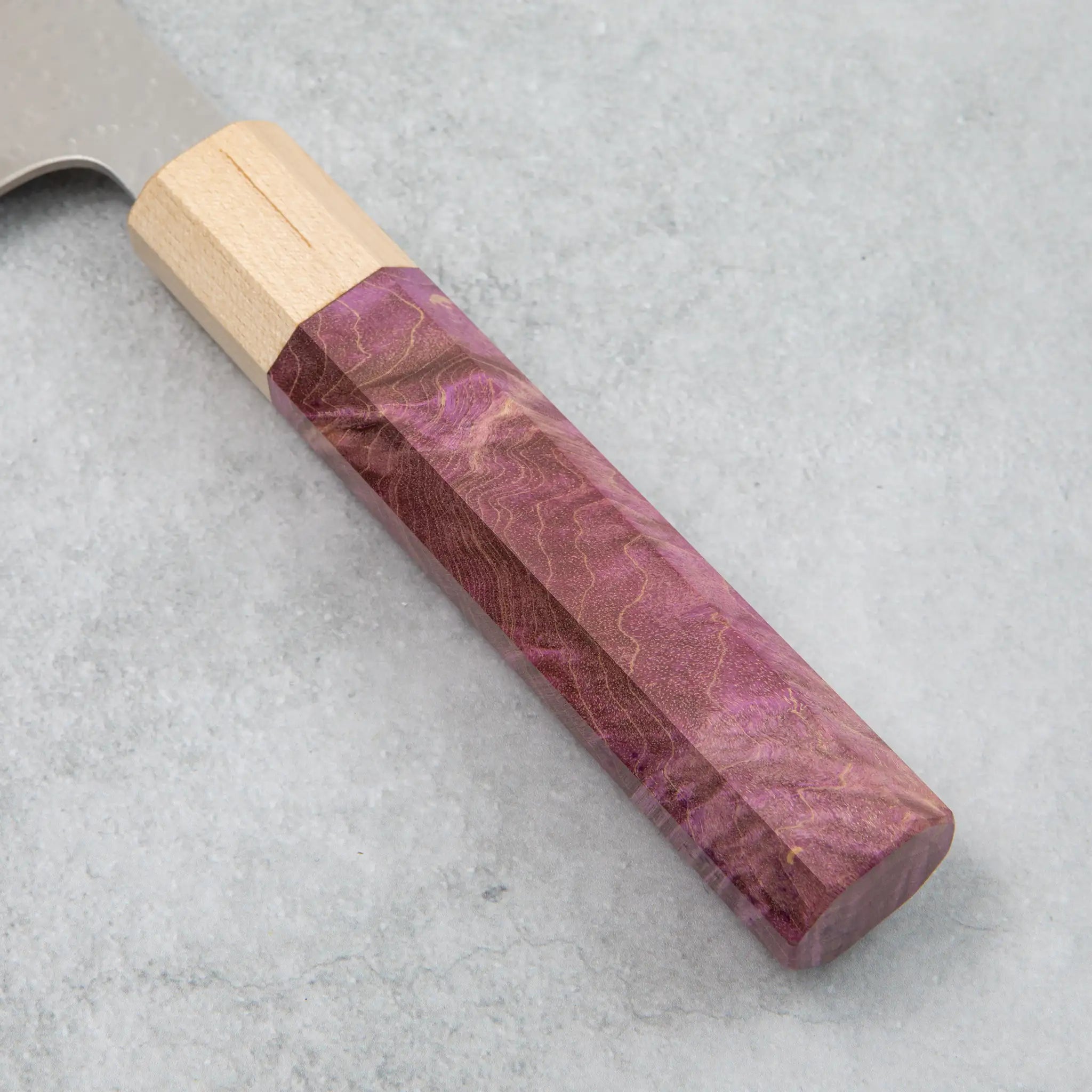
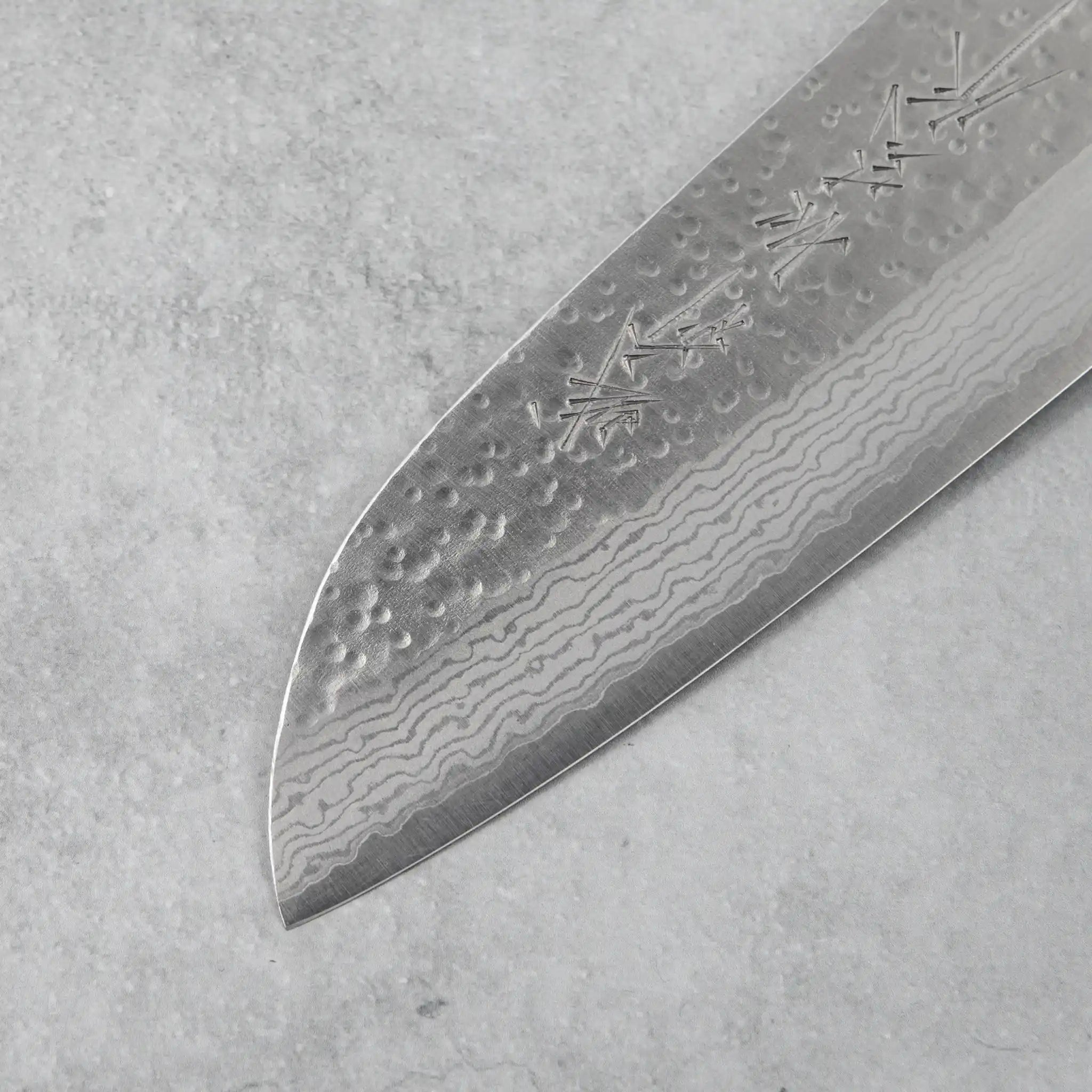
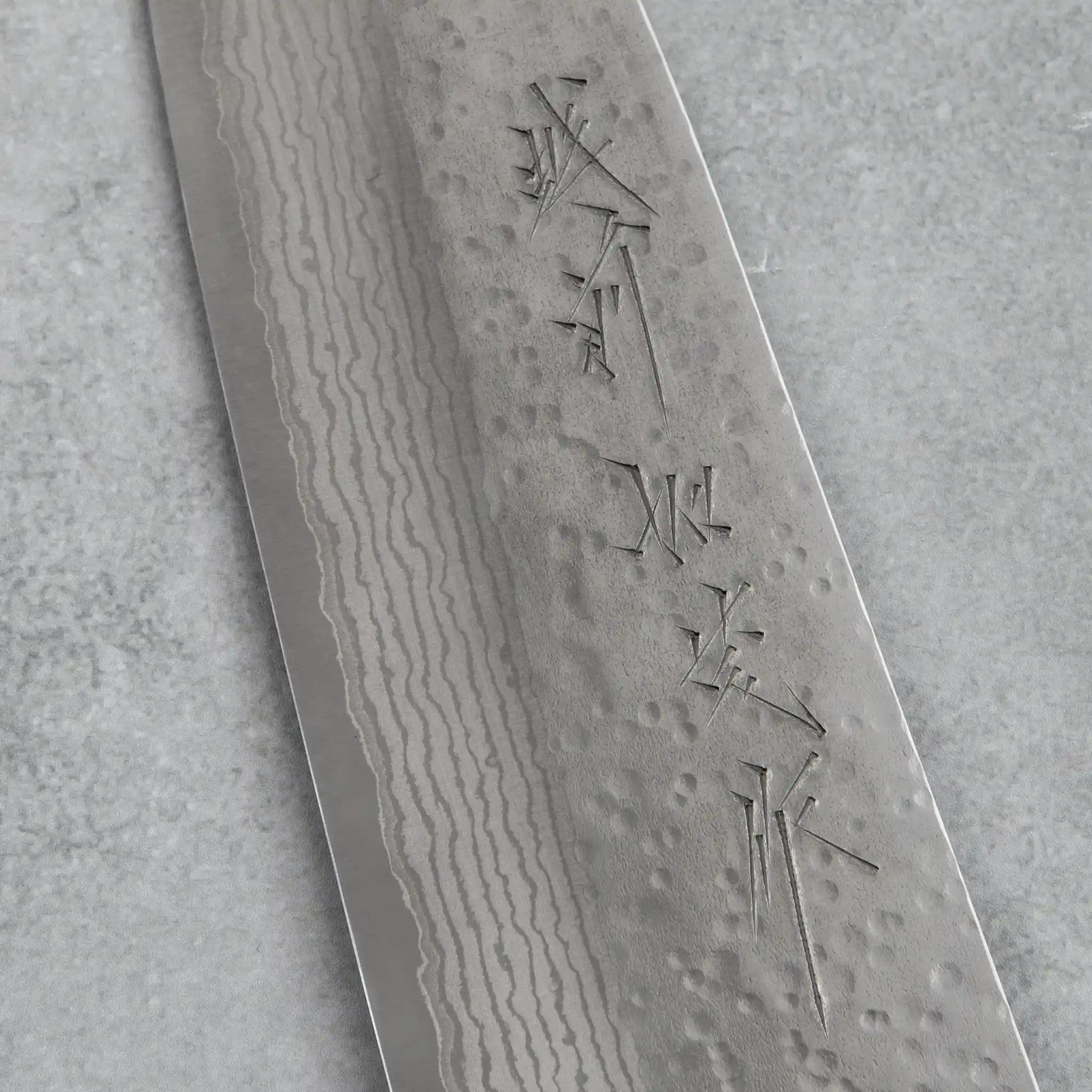
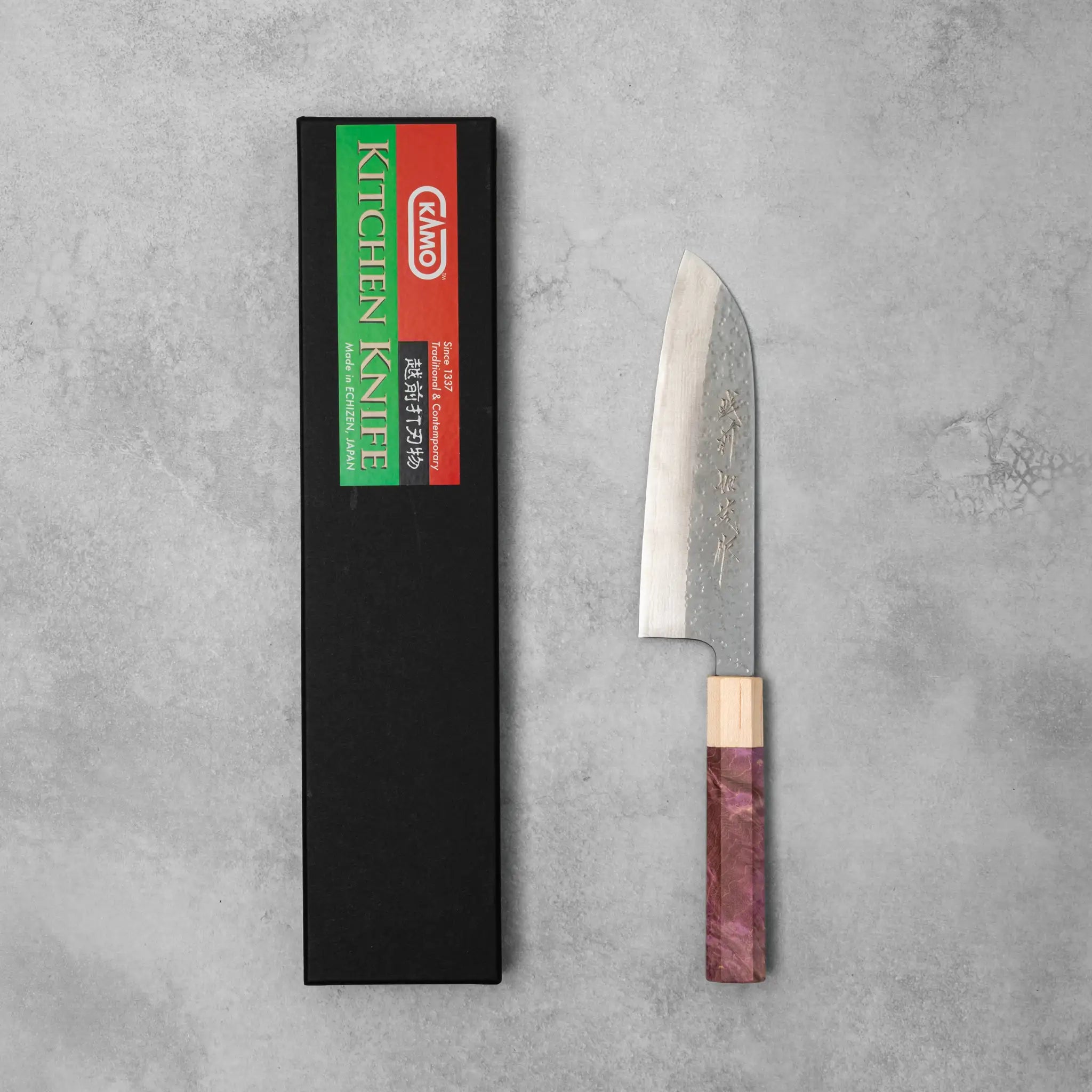
Echizen has produced edged tools since the 14th century, when a sword smith from Kyoto settled in the region and found its water ideal for hardening steel. Kamo Hamono works within that tradition at Takefu Knife Village in Echizen City, where Katsuyasu Kamo — designated a traditional craftsman and founding chairman of the cooperative — built a reputation across decades for advancing Echizen's forging methods while holding to their foundation. Shizuku names a single moment: a water droplet at the instant it forms and falls. The tsuchime hammer marks distributed across the Damascus cladding carry that reference in texture — rounded, evenly spaced depressions that catch and hold light rather than reflecting it flat. The core is VG10 stainless steel, chosen for its edge retention and resistance to corrosion, layered within Damascus and ground to a double-bevel edge. The handle on this version is purple stabilized maple with a pale maple bolster, the dye saturating deep into the figured grain without obscuring the wood's own movement. Each knife in the Shizuku series shares the same blade. The handle is where they diverge.

Side view of the Kamo Hamono Shizuku santoku knife with purple stabilized maple handle, pale maple bolster, and a VG10 Damascus blade with rounded tsuchime hammer marks across the upper surface.
Kamo Hamono VG10 Tsuchime Damascus Shizuku Santoku Knife Purple Handle Sale price$325.00

Meet the Artisan

Kamo Hamono

Kamo Hamono was established in Echizen City, Fukui Prefecture, in 1936, when Kamo Shintaro founded the studio as a kitchen knife forge within the Echizen Uchihamono tradition. His son Kamo Katsuyasu joined the forge in 1956, beginning with the technique of dual-bevel blade forging, and has led the studio as its second generation. In 1975, Katsuyasu co-developed a vegetable harvesting knife with a highland farmer in Nagano's Sugadaira plateau, producing a dual-bevel blade suited to the demands of harvesting leafy vegetables at scale. The knife spread to farming communities across Japan and became one of the pieces that established Echizen's reputation in agricultural blade-making. Katsuyasu has also been central to the institutional survival of the tradition. In 1973, as the forge-based industry faced declining demand and an aging workforce, he was among the craftsmen who formed the Takefu Forged Blade Industry Study Society. In 1991, he established the Takefu Knife Village Cooperative and served as its inaugural director, working to bring younger makers into the craft at a moment when continuity was genuinely at risk. In 2016, he received the Order of the Sacred Treasure for this body of work. He was certified as a Traditional Craft Artisan in 2008. The studio is now in its third generation under Kamo Shinsuke, born in 1981.