
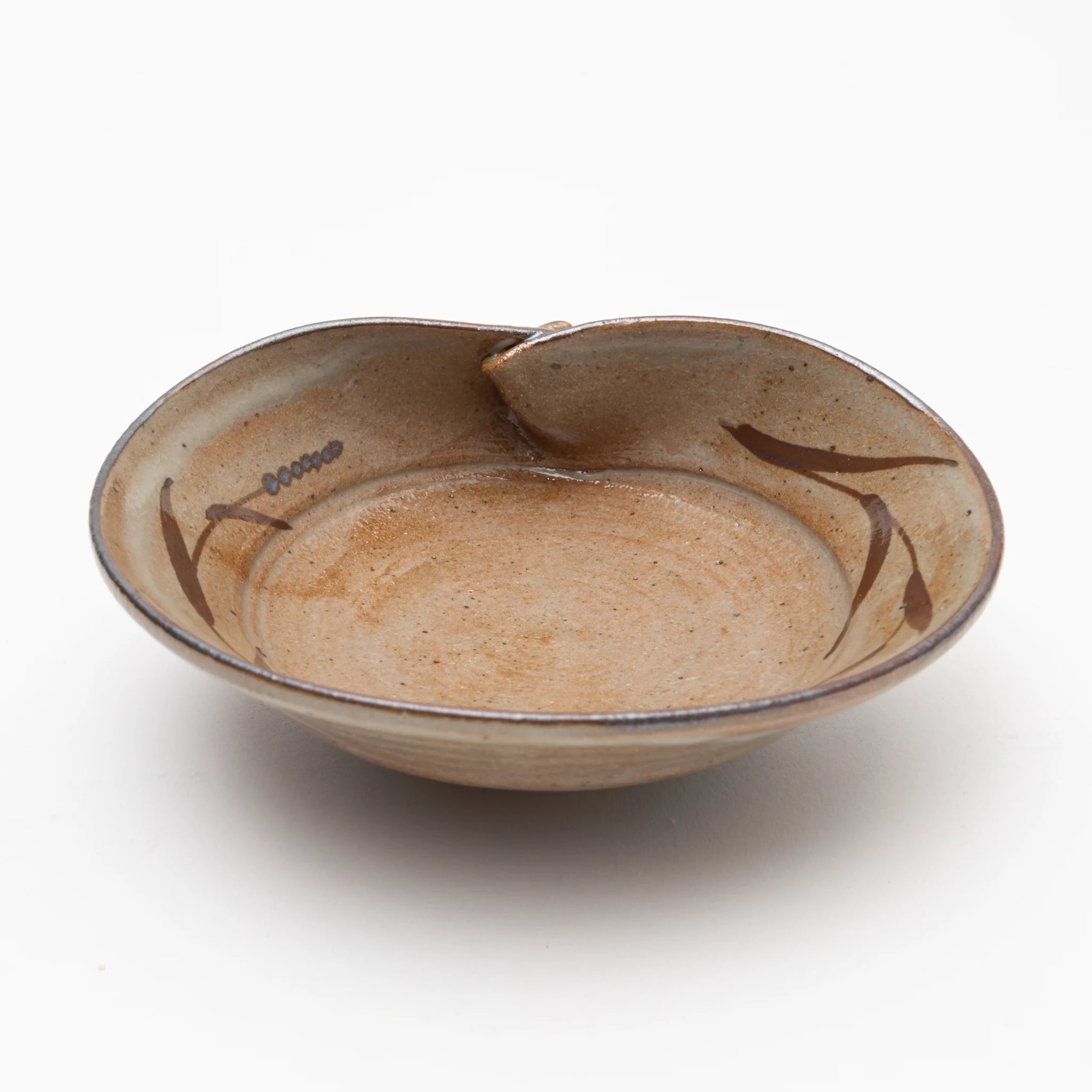
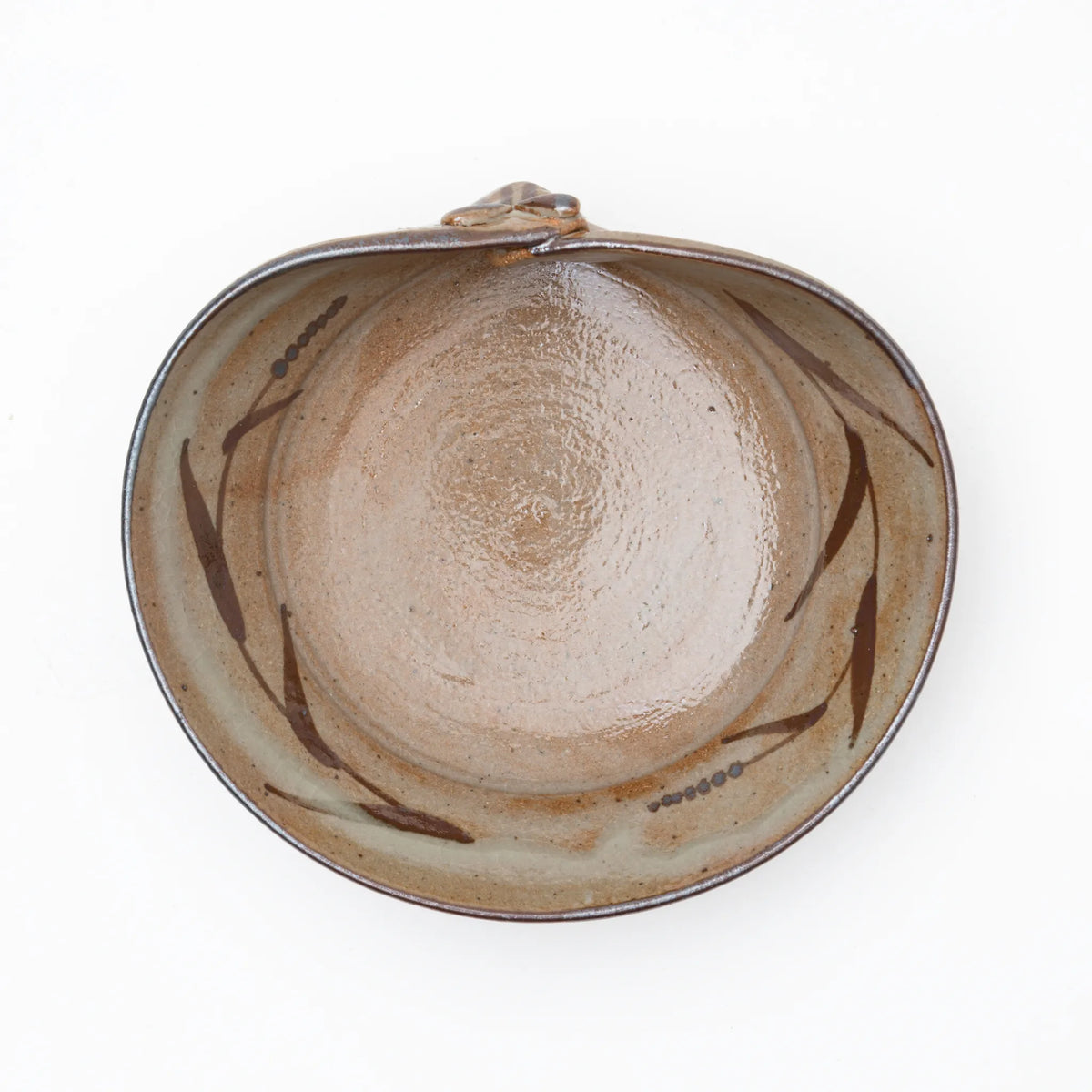
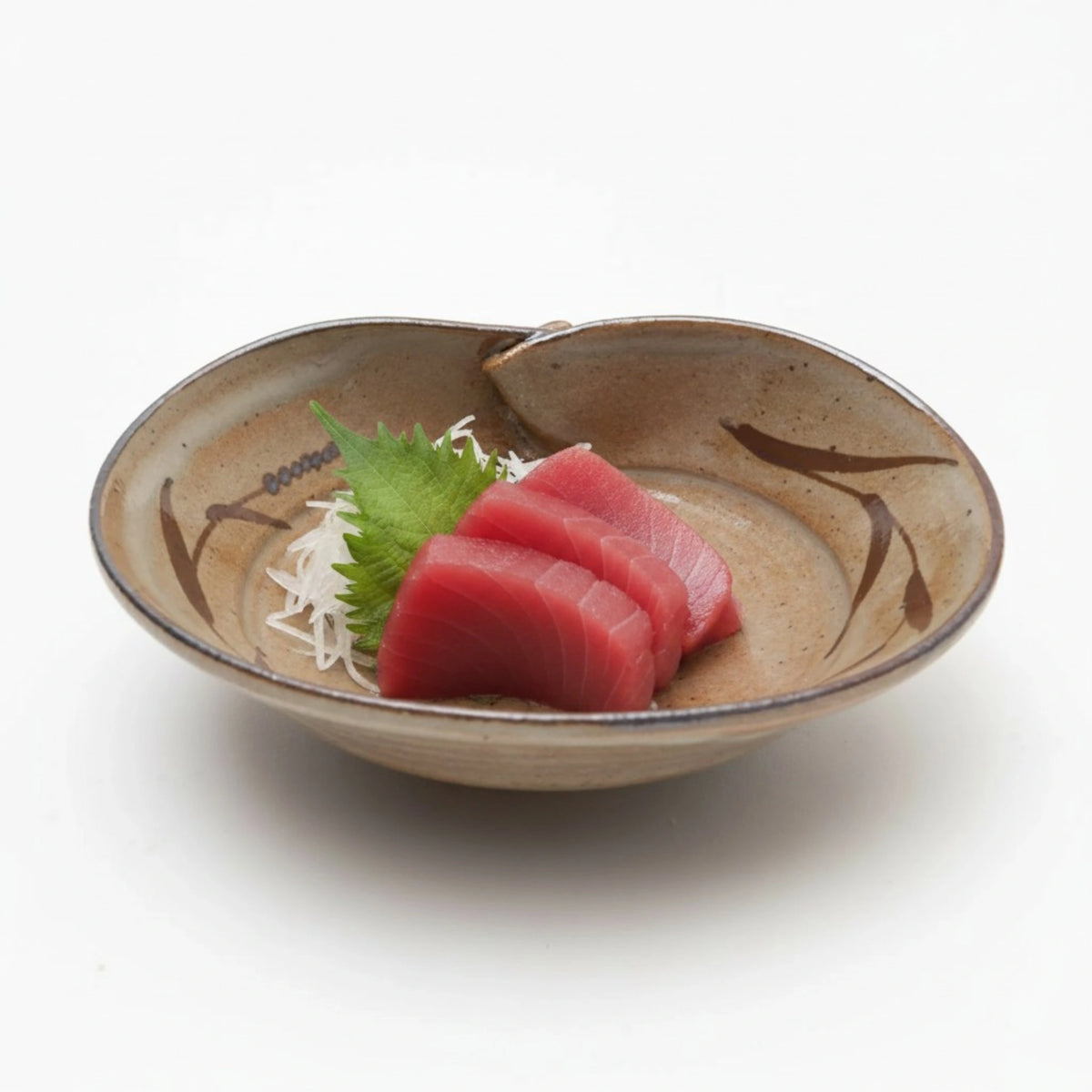
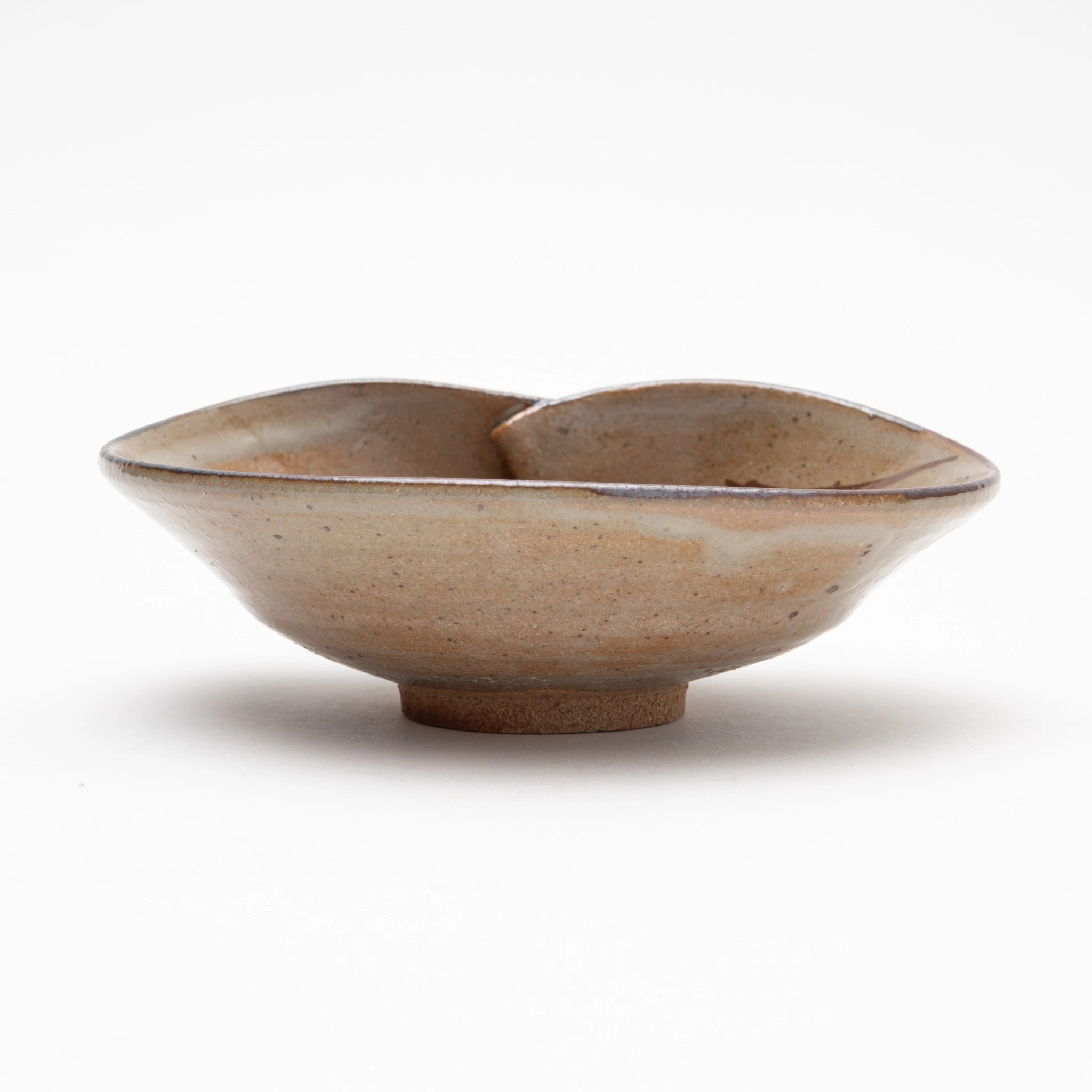
Nakazato Tarouemon E-Karatsu Clam Shape Mukozuke Serving Dish
Karatsu ware traces its origin to Korean potters brought to Saga Prefecture in the late 16th century following Toyotomi Hideyoshi's invasions of the Korean peninsula. The techniques those potters introduced — the kick-wheel, the climbing kiln, and the iron-oxide brushwork tradition that became E-Karatsu — remained the foundation of Karatsu ceramics for the 400 years that followed. The Nakazato family has worked within that tradition since 1615, when the family was appointed as the official kiln of the Karatsu clan. The 14th generation, Tadahiro Nakazato, continues that lineage today. E-Karatsu is defined by its restraint: iron-oxide brushwork of grasses, plants, and spare natural forms drawn with economy onto a warm, coarse stoneware ground. This mukozuke — the small serving dish placed at the far side of the tray in kaiseki — is formed in a clam shape, the rim pinched at one point to suggest the shell's natural edge. Inside, 3 iron-oxide strokes and a row of dotted marks sit against the sandy ground without crowding it. Each piece is hand-formed and individually painted, the variation between them a condition of how it is made.
Check our tips for Care Information.
Choose options
Meet the Artisan
Nakazato Tarouemon