Skip to content

Cart

Your cart is empty

Ryumonji Yaki Pottery Rectangular Plate Sansai Glaze

Sale price$99.00

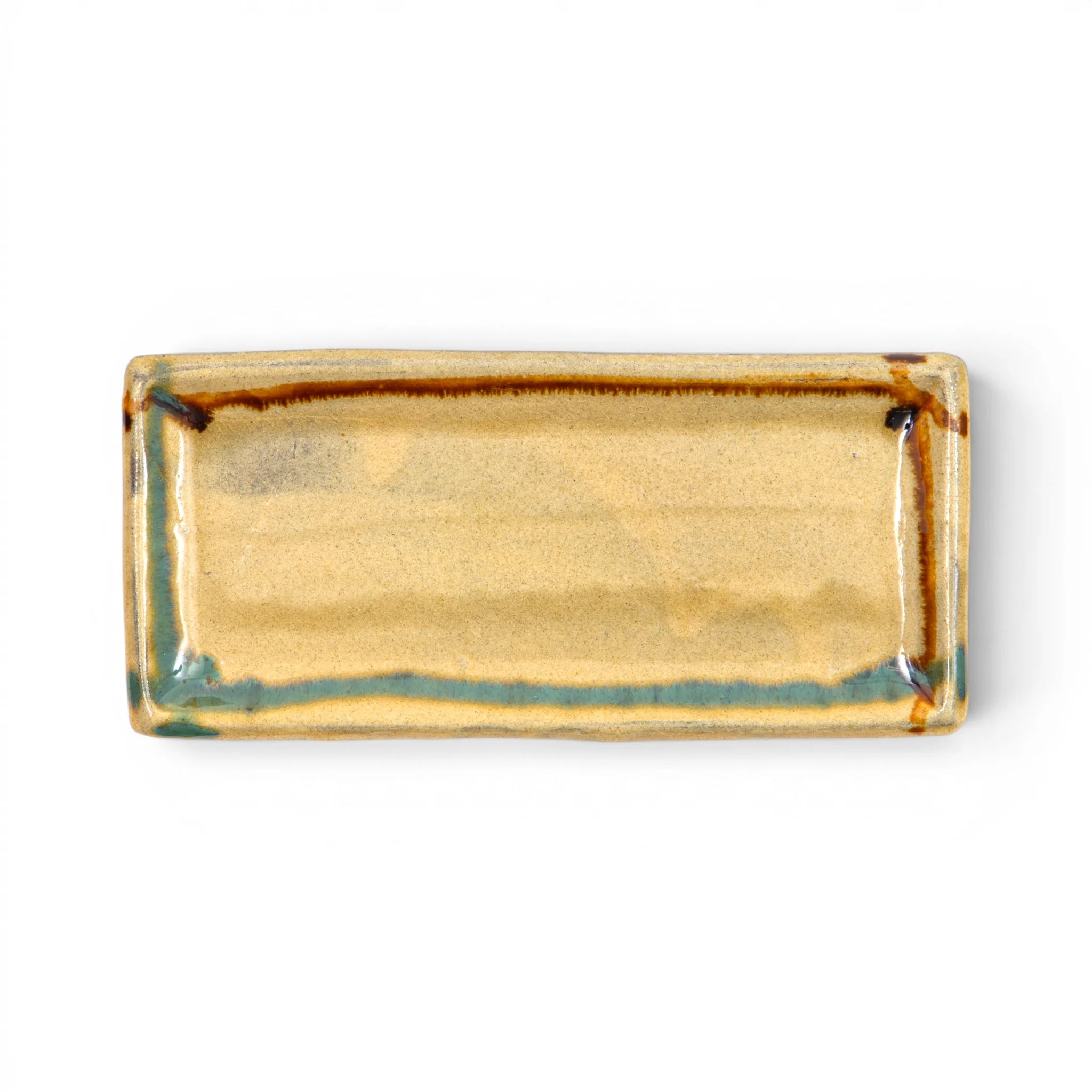
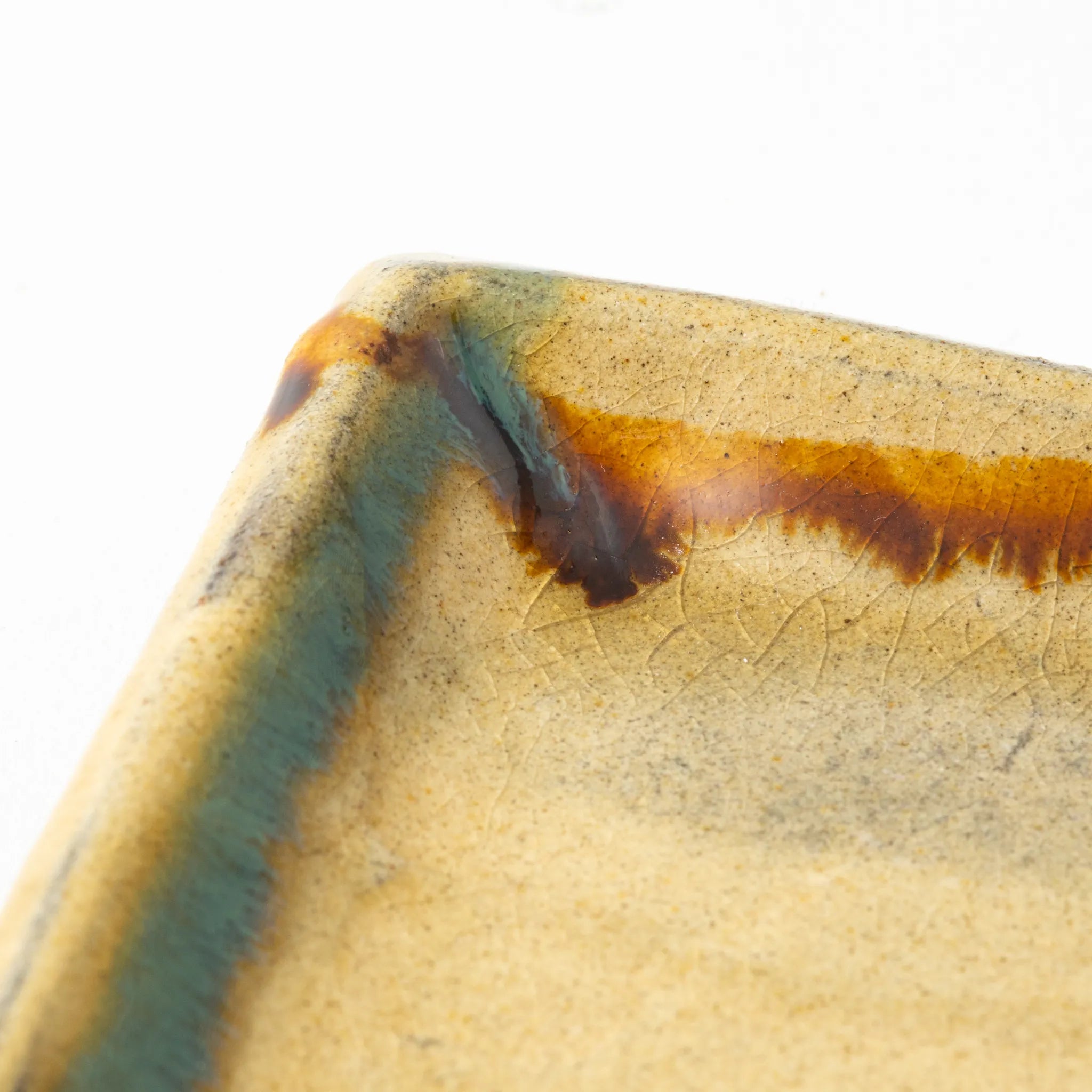
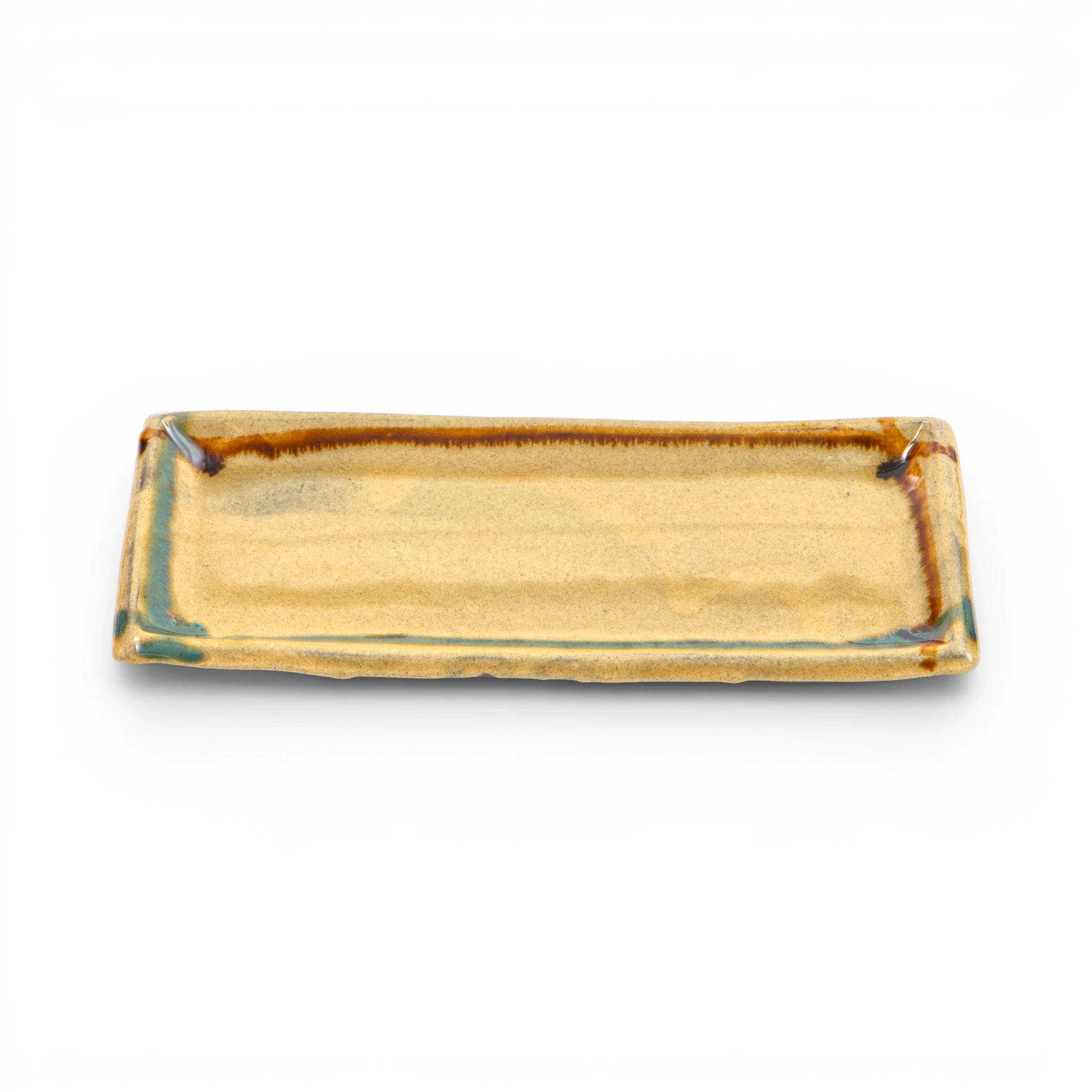
Most kilns source clay and glaze materials through suppliers. Ryumonji does not. Since the kiln was established in 1688 in the mountains of Kagoshima Prefecture, the clay and every glaze ingredient have been collected from the surrounding hills and processed within the workshop itself. That practice is the foundation of what makes Ryumonji ware distinct within the Black Satsuma tradition — the materials are inseparable from the place, and the place has not changed. The sansai glaze is one of the kiln's signature finishes, a three-color combination that cannot be fully controlled in the firing. Amber, teal, and dark iron interact across the surface as the temperature shifts inside the ascending kiln, pooling and breaking at the rim and corners differently on every piece. The rectangular form is low and resolved, with a gently raised rim that frames whatever is placed on it without drawing attention to itself. No 2 plates fire identically. The variation is the point.

Top view of a Ryumonji Yaki rectangular pottery plate showing an amber sansai glaze field with teal accumulation along the rim and dark iron runs at the corners and edges.
Ryumonji Yaki Pottery Rectangular Plate Sansai Glaze Sale price$99.00

Meet the Artisan

RYUMONJI-YAKI POTTERY

Ryumonji ware was established in 1688 when Yamamoto Wan'emon, grandson of the Korean-born potter Hochin, discovered suitable raw materials in Kajiki, in what is now Aira City, Kagoshima Prefecture, and built a kiln there. The settlement that grew around it came to be known as the Chawan-ya hamlet, a community organized around the making and passing down of ceramic knowledge. Over more than 300 years, the kiln produced everyday vessels for ordinary life and gave rise to a succession of accomplished craftsmen, among them Kawahara Yoshiku. In 1948, the potters reorganized the existing shared-kiln structure into a formal cooperative, the foundation of today's Ryumonji Ware Pottery Union. The Union manages the full process from raw material gathering through to sales, a model rare in Japan and central to how the tradition has survived intact. Potters still go into the mountains within 3 kilometers of the kiln to collect the clays, stones, shirasu, rice-hull ash, and hearth ash that compose the glazes. Everything is refined on site. The kiln is currently led by Kawahara Shiro, a certified Contemporary Master Craftsperson, alongside his son Ryohei and fellow Union members. Work is fired in an ascending kiln at up to 1,250 degrees Celsius, the same method used throughout the Edo period and essential to developing the textured surfaces that define Ryumonji ware.