Skip to content

Cart

Your cart is empty

Tsukamoto Mashiko Ware SABI Flat Bowl Large Amber

Sale price$89.00

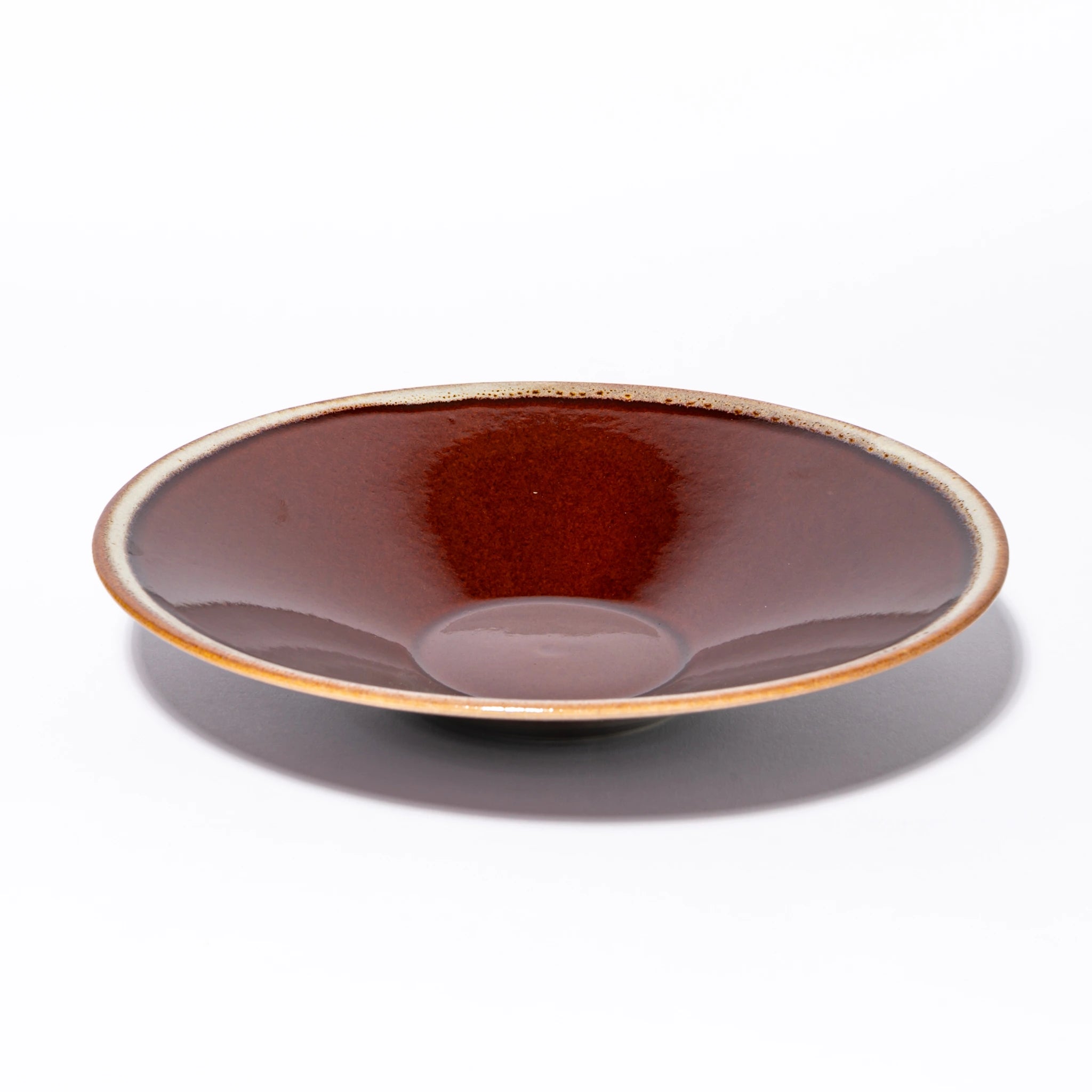
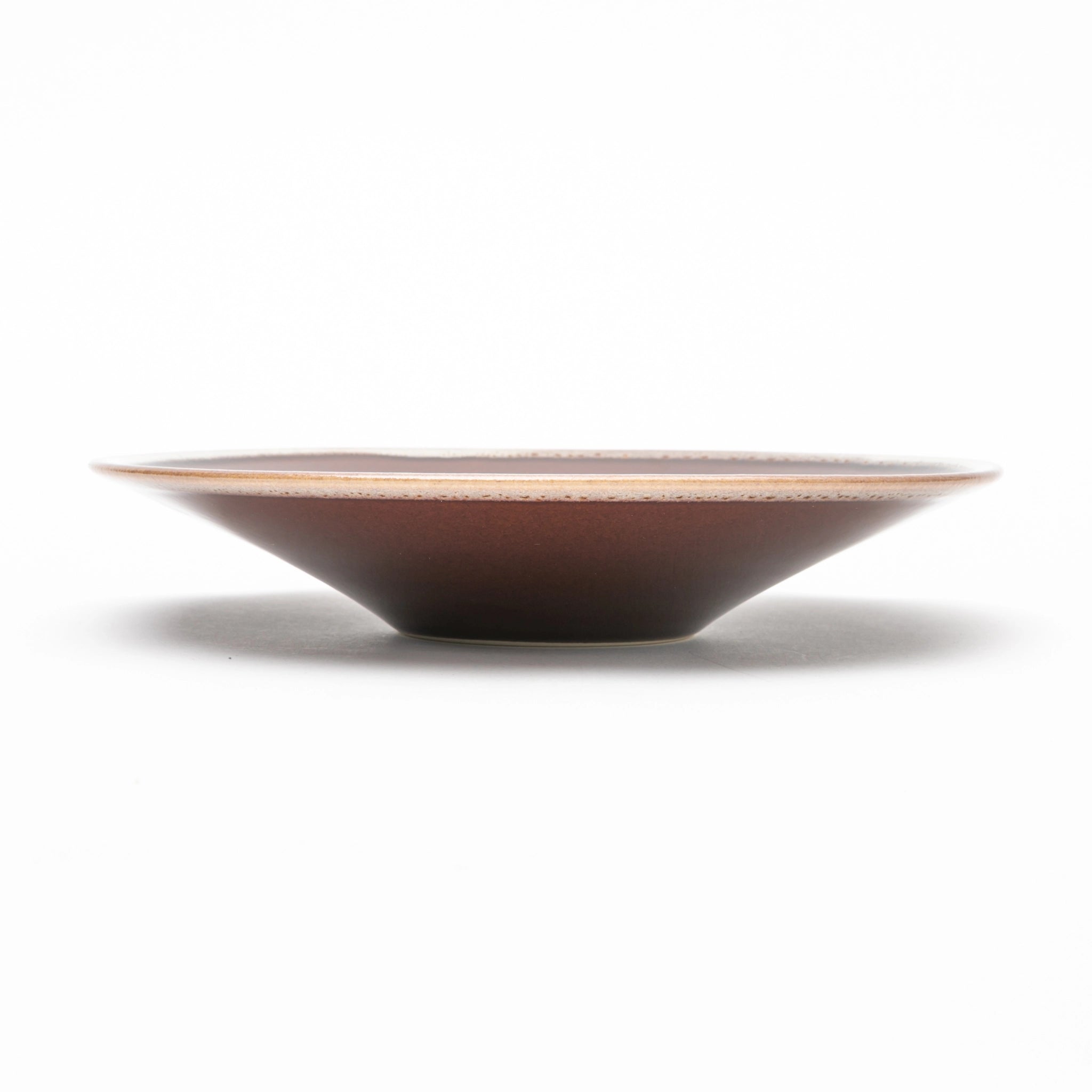
Amber glaze in Mashiko is one of the tradition's most enduring finishes — an iron-rich glaze that deepens and shifts in the kiln depending on how it pools and where the heat concentrates. On the wide shallow form of this SABI series bowl, the glaze gathers toward the center, firing to a deep iron red that softens as it climbs the curved interior wall and thins to pale grey-cream at the rim, where amber iron spotting marks the edge. The surface reflects light differently across those zones — glossy and dense at the center, quieter toward the rim. Tsukamoto has worked in Mashiko since 1864, when first-generation Rihei Tsukamoto established what became the town's largest kiln. The SABI series applies traditional Mashiko glazes to forms suited to the contemporary table. Wide and low, with a broad flat well — a bowl that presents food as much as it contains it.

Three-quarter view of the Tsukamoto Mashiko ware SABI flat bowl large in amber glaze, showing a wide shallow form with deep iron red glaze at the center transitioning to pale grey-cream at the rim with amber iron spotting at the edge.
Tsukamoto Mashiko Ware SABI Flat Bowl Large Amber Sale price$89.00

Meet the Artisan

Tsukamoto

Tsukamoto was founded in March 1864 by Tsukamoto Rihei, just 11 years after Otsuka Keisaburo established the first Mashiko kiln, making it one of the oldest continuously operating kilns in the tradition. The 2nd generation organized the first trade association among Mashiko potters, secured rights to clay-bearing land essential for regional production, and extended distribution into the Tokyo and Tohoku markets. The 3rd generation expanded further during the 1928 transition, and when the 4th generation Tsukamoto Takeshi founded the Tochigi Prefecture Ceramic Cooperative in 1950, his wife Shige proved decisive at a moment of postwar crisis. As demand for ceramic household goods collapsed in the 1950s, she developed a single-serve ceramic vessel for cooking rice and pursued its adoption until 1958, when it was taken up by Oginoya, the bento vendor at Yokokawa Station in Gunma Prefecture, as the container for their Toge no Kamameshi box lunch. The product became nationally famous and is credited with rescuing Mashiko's postwar ceramic industry. In 1955, Tsukamoto also established a residency program for apprentice potters that ran until 1993, training many of the independent ceramic artists who went on to define Mashiko as a town of individual makers. The kiln has been producing Mashiko ware continuously for over 160 years and remains one of the tradition's most significant kilns.