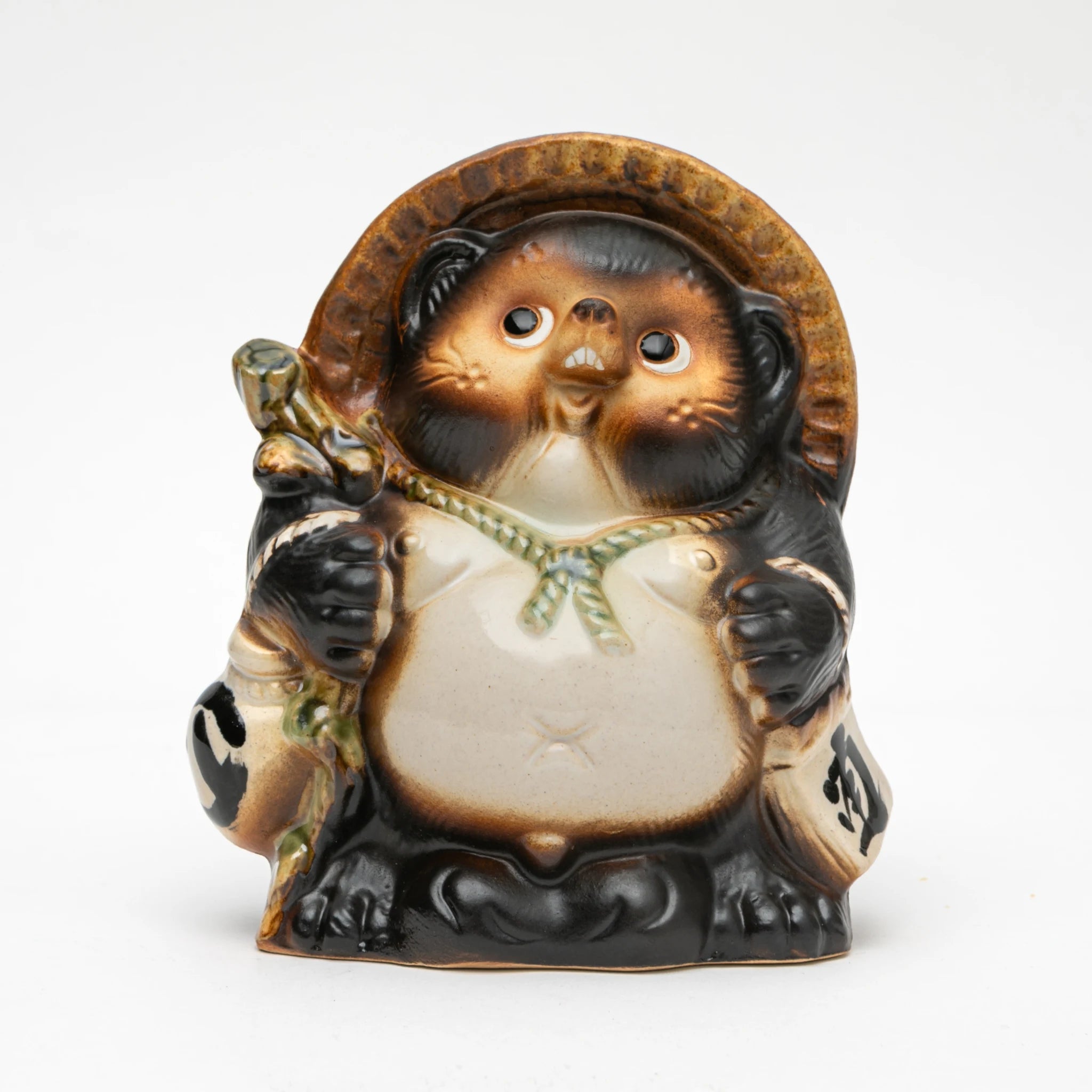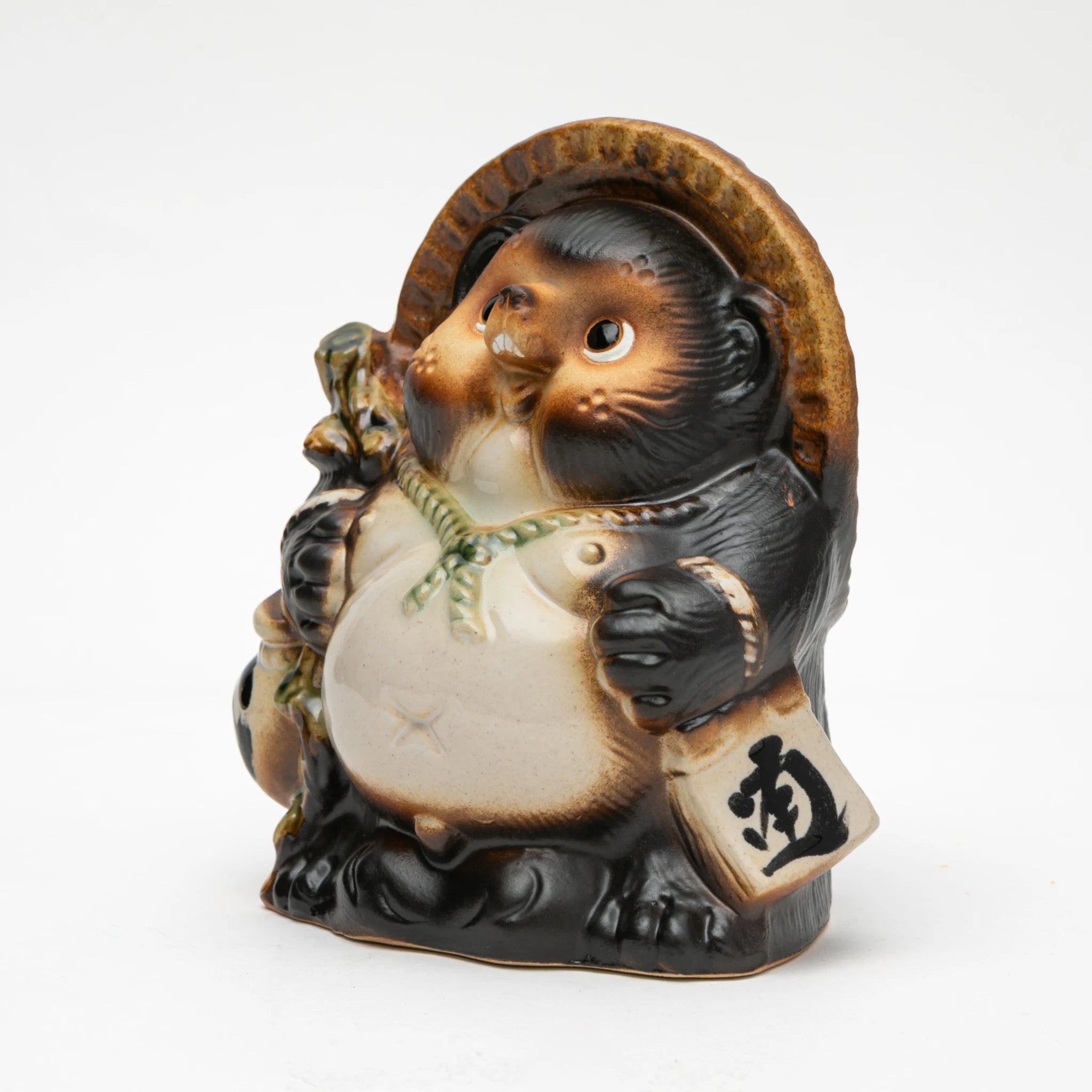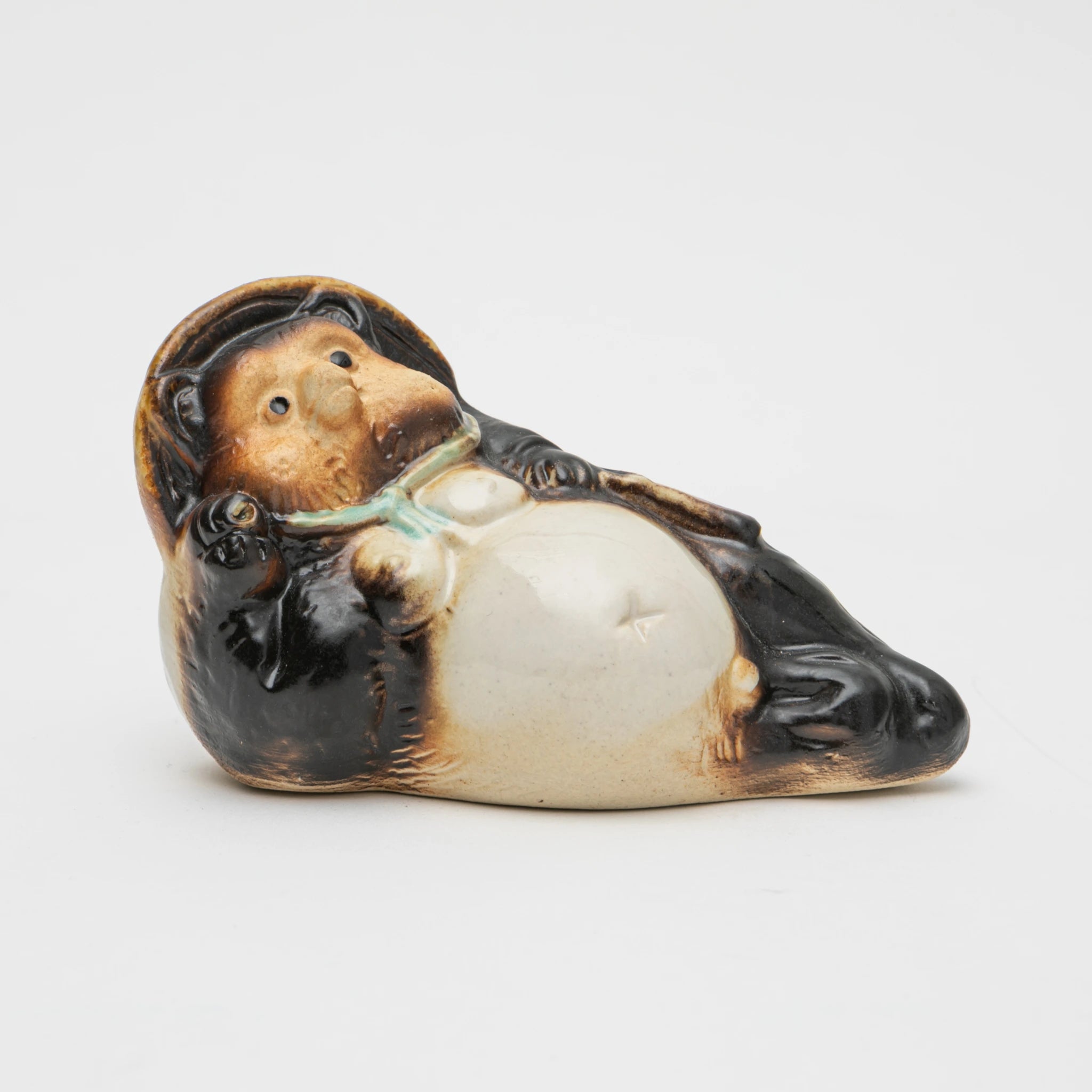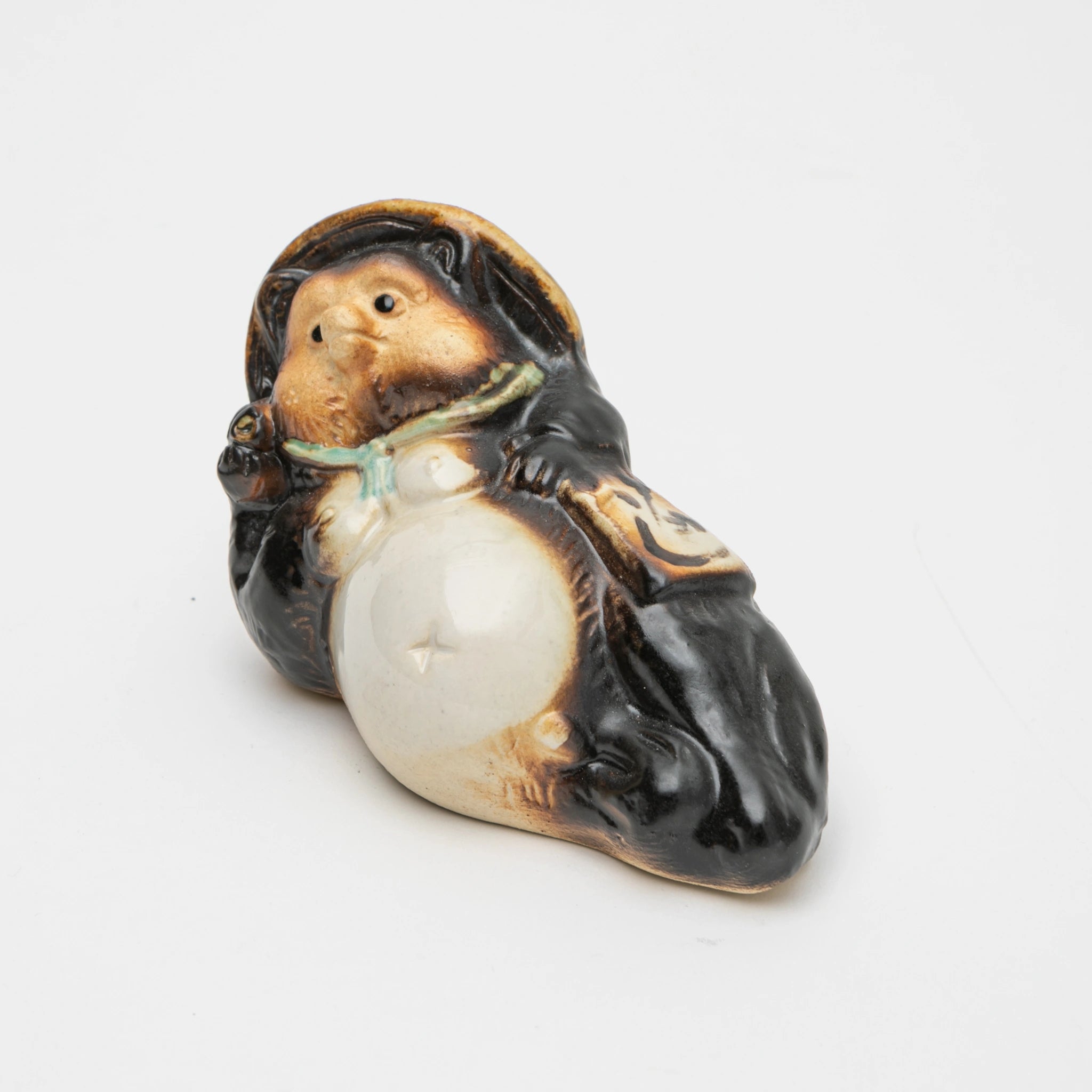
Nothing About That Tanuki Is Random
Most people walk past a tanuki without really looking at it. It's a fixture outside noodle shops and inns across Japan, reproduced by the thousands, the kind of object that reads as decoration and gets treated that way, a bit of roadside kitsch nobody examines too closely.
Every part of it is doing something specific.

A Shape Built to Be Read
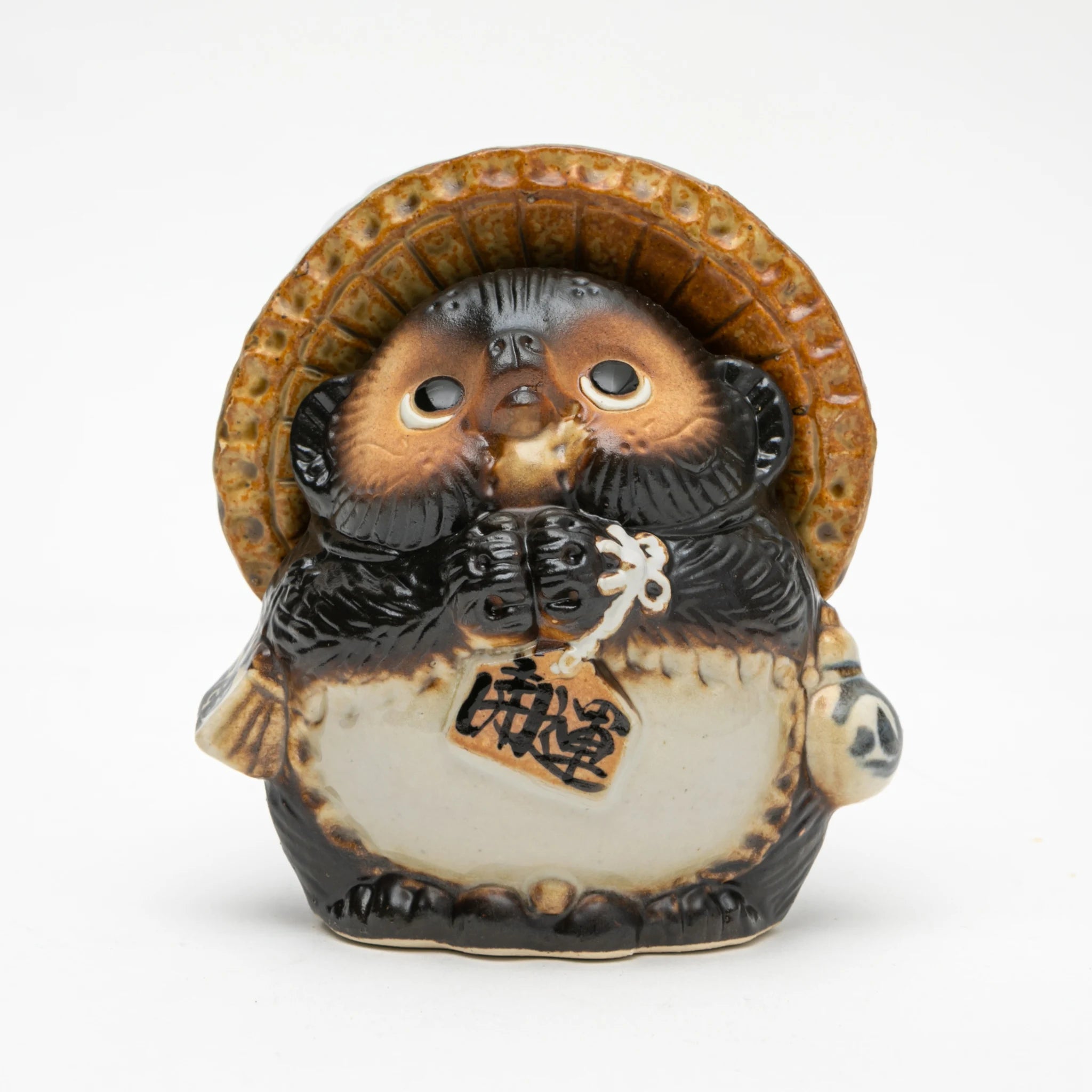
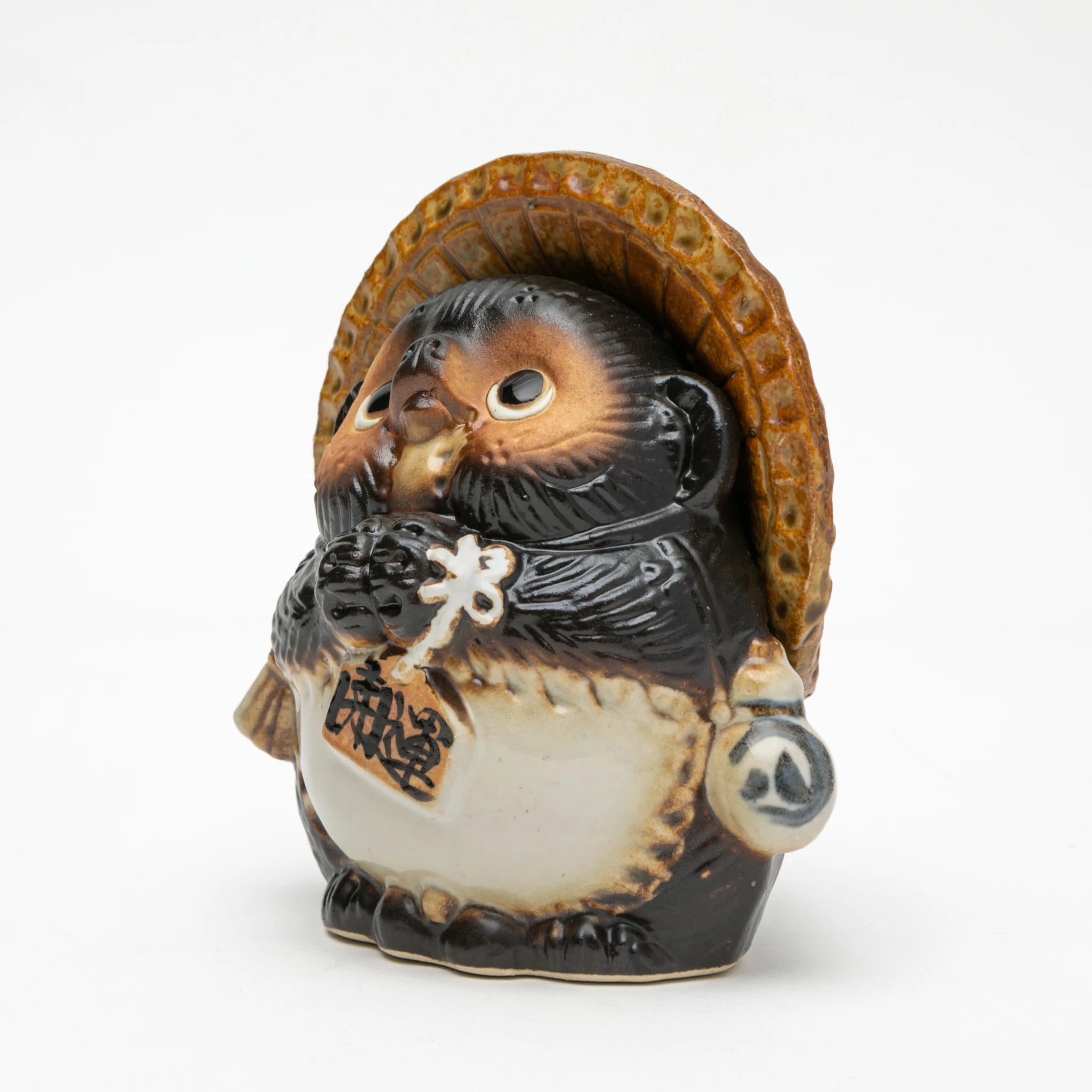
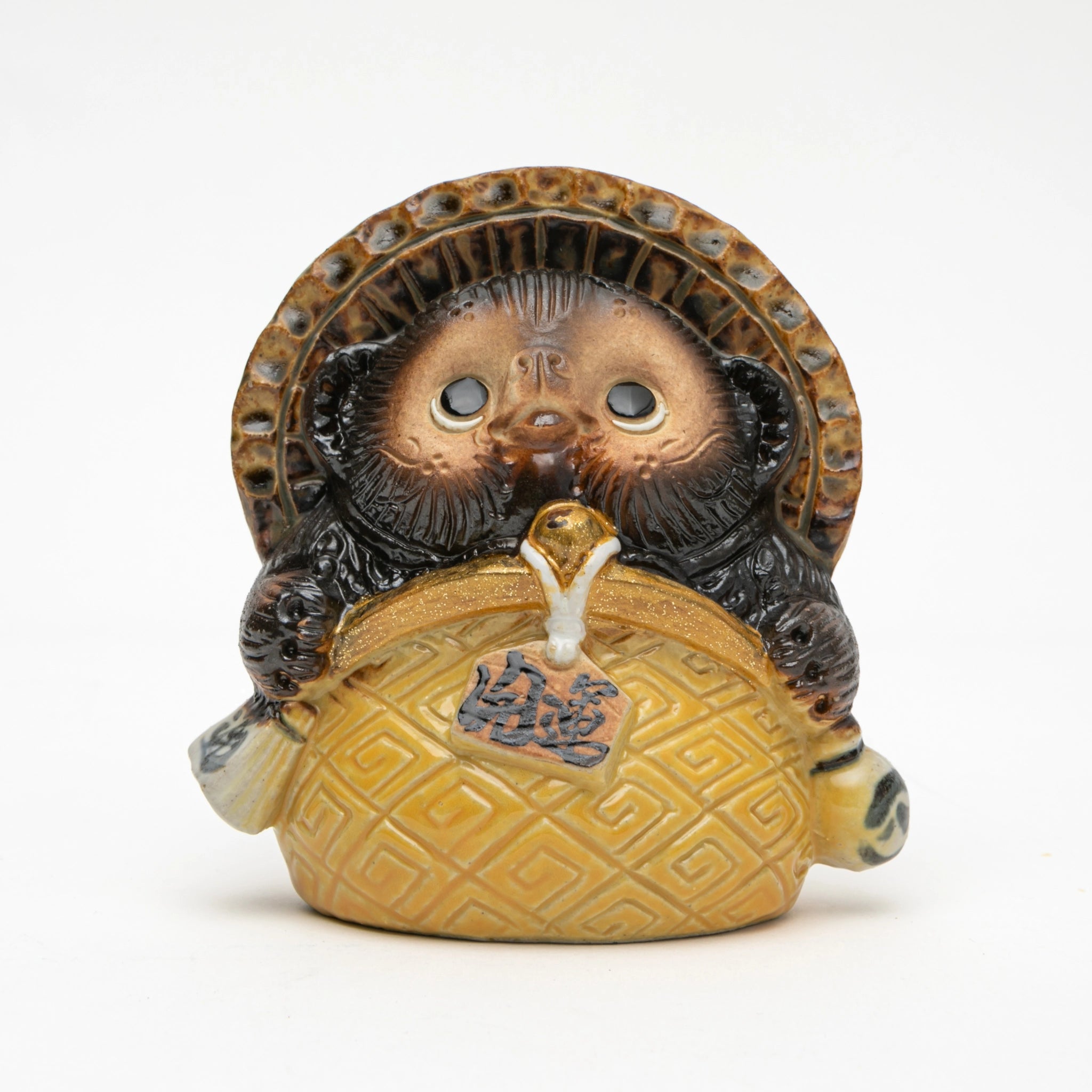
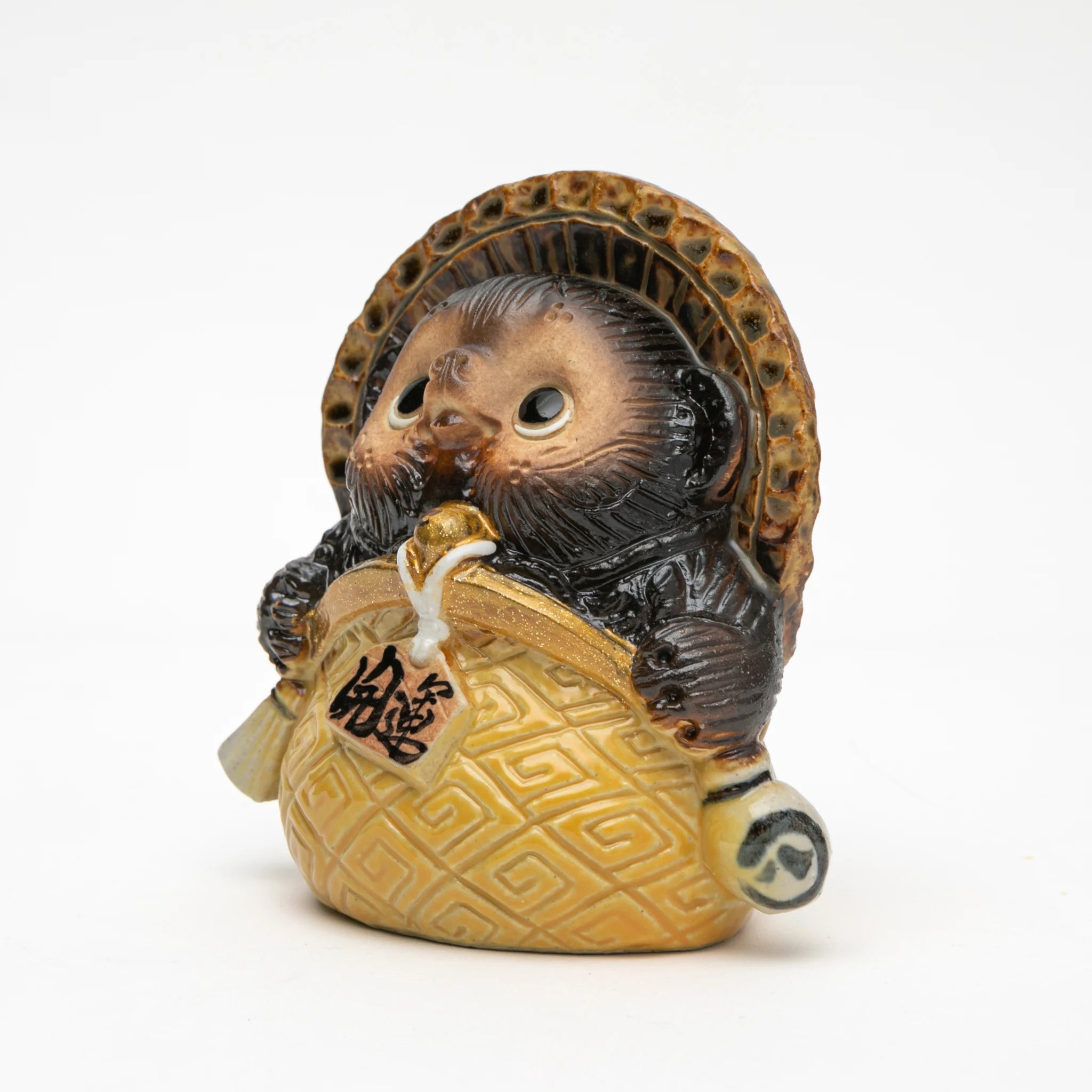
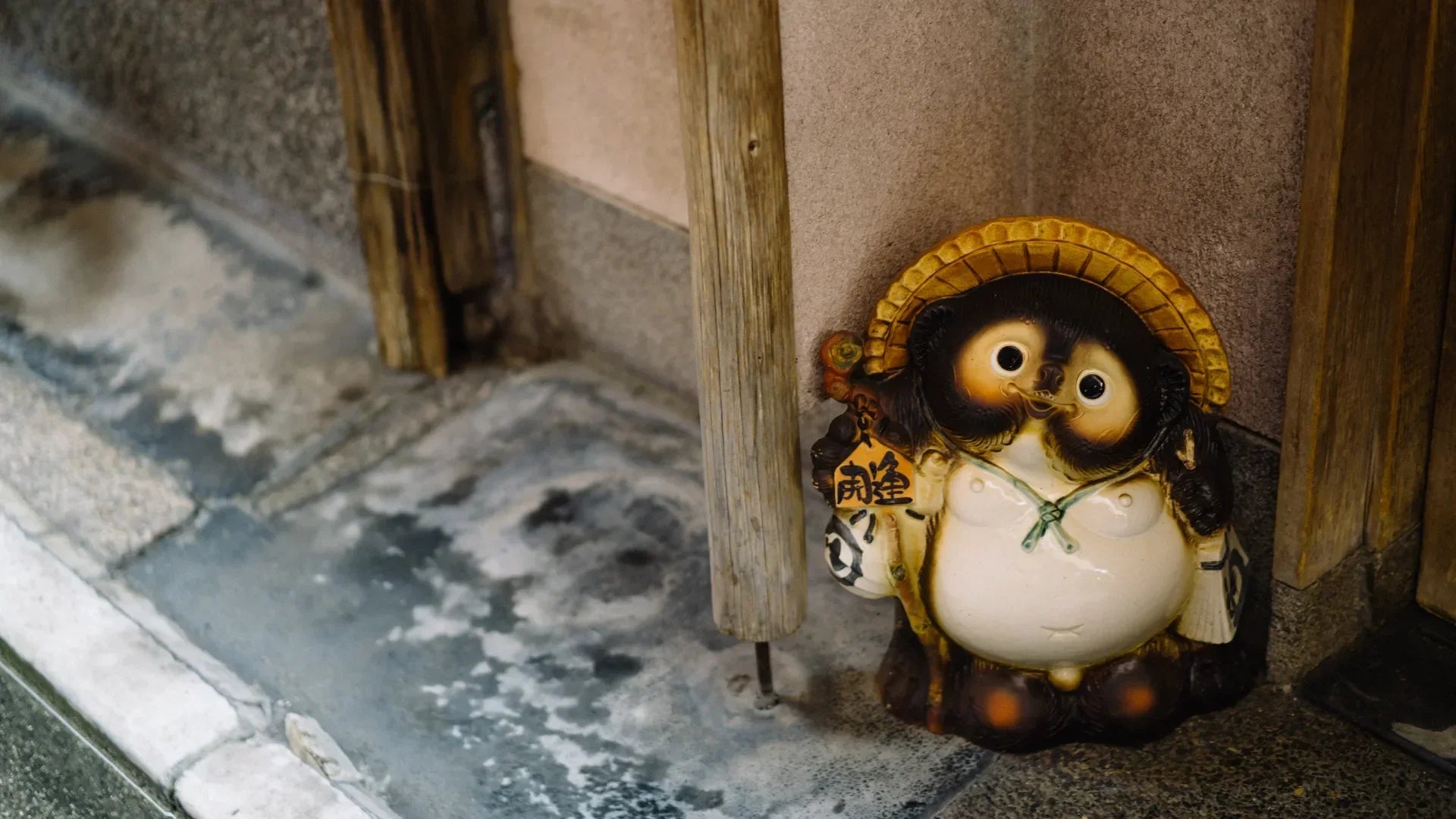
Start with what the animal actually is. In English, the figure is often called a raccoon statue. It isn't one. The tanuki is a raccoon dog, a canid related to foxes and dogs, and the resemblance to a raccoon stops at the mask around its eyes. But the biology is almost beside the point, because the figure was never meant to look like a raccoon dog in the wild. The pose, the belly, the hat, the flask, none of it is decorative. It's eight fortune symbols, a system called hassō engi, built onto a body that happened to lend itself to the joke.

A Pun in the Name
Some of that fortune starts with the name itself. Said aloud, tanuki leans toward ta wo nuku, "to surpass others," a phrase no shop owner would mind hanging over their door. That's why the figures gather at entrances instead of gardens or shrines. They're a wish aimed at business, specifically, not general good luck for the home.
It's a narrower kind of charm than Japan's other famous lucky animal, the beckoning cat. Maneki-neko has its own set of stories, and no single pun behind it. Omakase's guide to maneki-neko covers that ground separately.

Eight Signs Worked Into One Figure
The pun explains the doorway. It doesn't explain the hat, the belly, or the flask. That took a second step, in 1952, when a folklore researcher named Ishida Gōchō took the loose beliefs surrounding the tanuki and gave them structure: eight fortunes, each tied to one part of the figure. Shigaraki's potters started including a card explaining the symbolism with every figure sold. The system stuck. It's still how the shape is read today.
- Hat – protection from trouble that arrives without warning
- Wide eyes – watchfulness, sound judgment
- Smiling face – friendliness toward customers
- Sake flask – enjoying food and drink, not being ruled by it
- Belly – calm and boldness together
- Money pouch – money that circulates, that gets used
- Passbook, tucked under one arm – credit and trust
- Tail – a strong finish
The pouch is why almost every tanuki sold as a fortune charm is male. There's no version of the symbol that works without it.

How a Kiln Town Became Tanuki Town
Shigaraki, in Shiga Prefecture, was a pottery town first. The tanuki came later. The upright, comic figure now tied to the place traces to a potter working under the name Rian, born Fujiwara Tetsuzō, who left Kyoto for Shigaraki in the early Meiji era and built a kiln around nothing but tanuki.
For decades, the association stayed local. Then, on November 15, 1951, Emperor Shōwa visited Shigaraki and found the road lined with tanuki figures, each holding a small paper flag. He had collected the figures since childhood. By most accounts, the sight moved him enough to write a short poem on the spot. Newspapers ran the story, the image spread across the country, and Shigaraki became, almost overnight, the tanuki town. A stone at Shingū Shrine still carries the poem.

Not the Trickster From the Movies
None of this has anything to do with the tanuki most people already know, the shape-shifter from Japanese folklore, bake-danuki, said to transform into people, objects, and sounds to confuse travelers, a tradition with deep roots on Shikoku. It's this version that shows up in Isao Takahata's 1994 film 平成狸合戦ぽんぽこ (Heisei Tanuki Gassen Ponpoko, released internationally as Pom Poko). The two traditions share an animal and a face. They don't share a meaning. One is a story about mischief. The other is a fixed, specific wish, and it's the one standing by the door.

A Shigaraki Tanuki for the Home
Omakase now carries tanuki figures made by Maurichi in Shigaraki, in the same tradition described above. Set one by an entrance and it's not decoration, exactly. It's a specific, readable wish, one a Japanese visitor would likely recognize down to the individual details.