The Four People It Took to Make One Ukiyo-e Print
A single-sheet ukiyo-e print in Edo-period Tokyo sold for somewhere between eight and twenty mon, the small copper coins people used for everyday purchases. A bowl of soba noodles from a street stall cost about sixteen mon. Do the conversion into modern yen and the two prices land within shouting distance of each other, a few hundred yen either way. An actor portrait, the cheapest and most disposable category, ran closer to eight mon, about the price of a quick lunch and not much more. Nobody in Edo was saving up for a print. They were buying it the way someone today buys a magazine off a rack, glances at once, and probably throws away within the week.
Ukiyo-e's Western reputation rarely accounts for this. Accounting for it changes what these objects were.

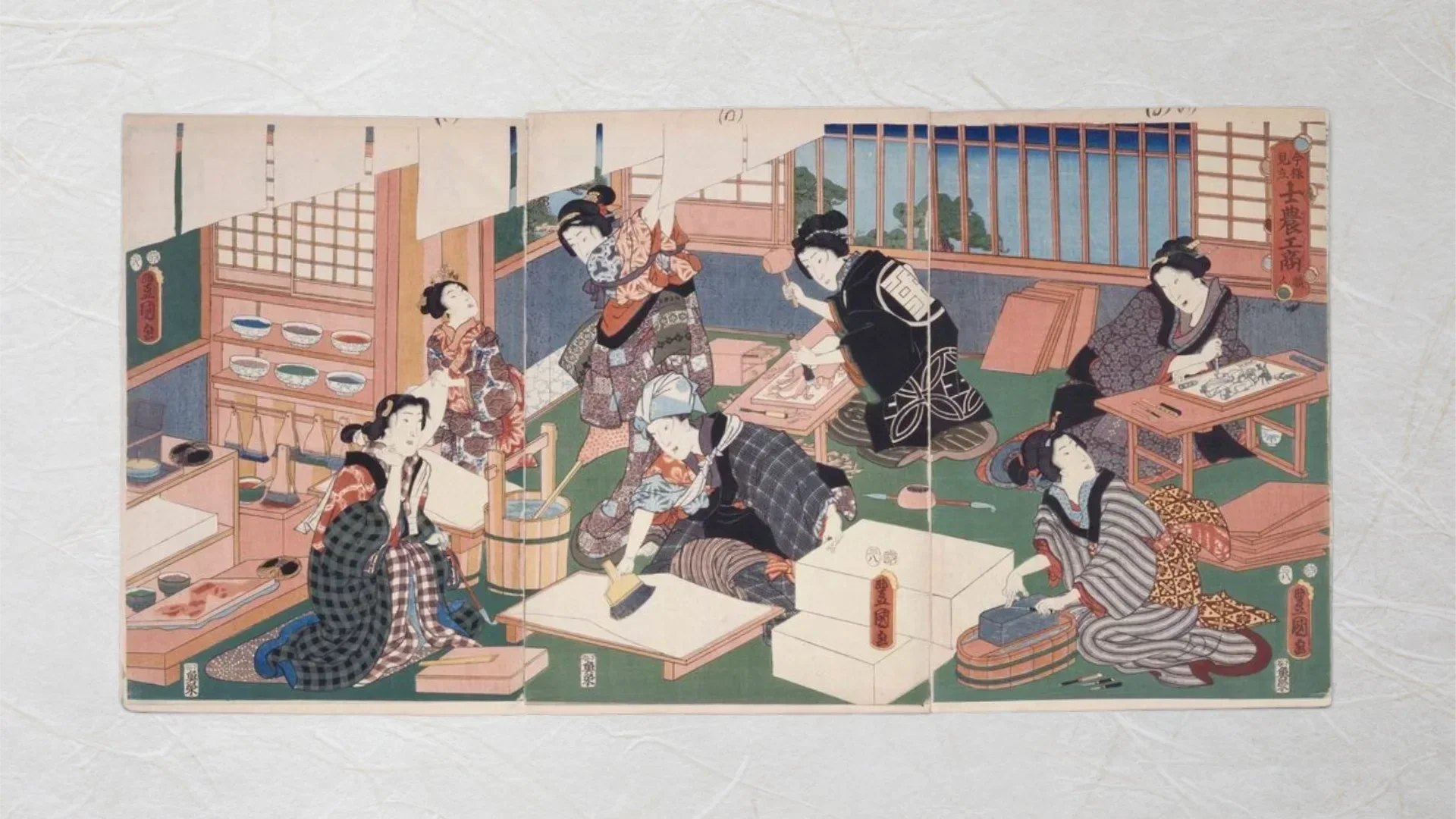
A Modern Parody of the Hierarchy of Samurai, Farmers, Artisans, and Merchants : Merchants by Utagawa Kunisada (1857)
News Before Newspapers
Ukiyo-e didn't function as art in the sense the word carries today. Before Japan had newspapers, prints carried the job newspapers would later take over: the death of a well-known kabuki actor, a fire, a crime, a natural disaster, all of it got printed and sold within days, sometimes as fast as the carver and printer could work. Ghost stories and famous monsters got their own prints too, less news than entertainment, but printed and circulated the same way, quickly and cheaply, meant to be seen once and replaced by whatever came out next. An actor print worked almost exactly like a modern celebrity photo card: bought, admired, sometimes collected in stacks, rarely treated as something that needed protecting for the next century.
Four people made every sheet. Only one name usually survives on it. A finished print passed through a publisher who financed and directed the project, an artist who supplied the design, a carver who translated that design into wood, and a printer who applied ink and pigment by hand, pass after pass, sometimes twenty or more layers for a single image. The signature belongs to the artist. The object belongs to all four of them, and arguably to the market that consumed and discarded it fast enough to keep the whole system running.

A Trade That Ended Almost Overnight
That system collapsed quickly once photography and postcards arrived. A Tokyo newspaper in 1907 described the nishiki-e trade as having faded almost without a trace. No one was left, it said, who still drew the portraits or carved them. That's a contemporary account, not a later historian's nostalgia. A craft that had been Edo's dominant visual medium became, within a single generation, something nobody under a certain age still knew how to make.

One Sketchbook, Used Once, By Accident
The West's idea of ukiyo-e as fine art crystallized during roughly the same years Japan was quietly walking away from it, the same years Monet, Van Gogh, and Degas were absorbing its flattened perspective and bold color into what became Impressionism. The most-told version of how that discovery began involves ukiyo-e sheets used as wrapping paper for exported Japanese ceramics, discovered by startled French artists unwrapping their pottery. It's a good story. Research from Tokyo's Ota Memorial Museum of Art suggests it isn't quite what happened.
The documented version is narrower and stranger: a bound volume of Hokusai's sketchbook series, not loose prints, appears to have been used once as packing material or a divider between pieces of ceramic, most likely by accident during shipping rather than as any kind of routine practice. It passed through a Paris print dealer and a printer before reaching the etcher Félix Bracquemond, who was struck enough by it to show it to other painters. Even the year usually given for this, 1856, is probably too early, since formal contact between Japan and the West had barely begun by then. What's documented is smaller than the legend: one book, used once, by someone who likely had no idea what it was.
That gap between the story and the record matters. The version that travels, prints as packing material, artists as unrecognized geniuses, everything Japan supposedly threw away, flattens a documented craft economy into a folk tale about Western discovery. The real version is smaller. A mass medium, run by four people working in sequence, priced close to lunch, that Japan itself let fade just as it was quietly reshaping painting on the other side of the world.

What the Price Includes Now
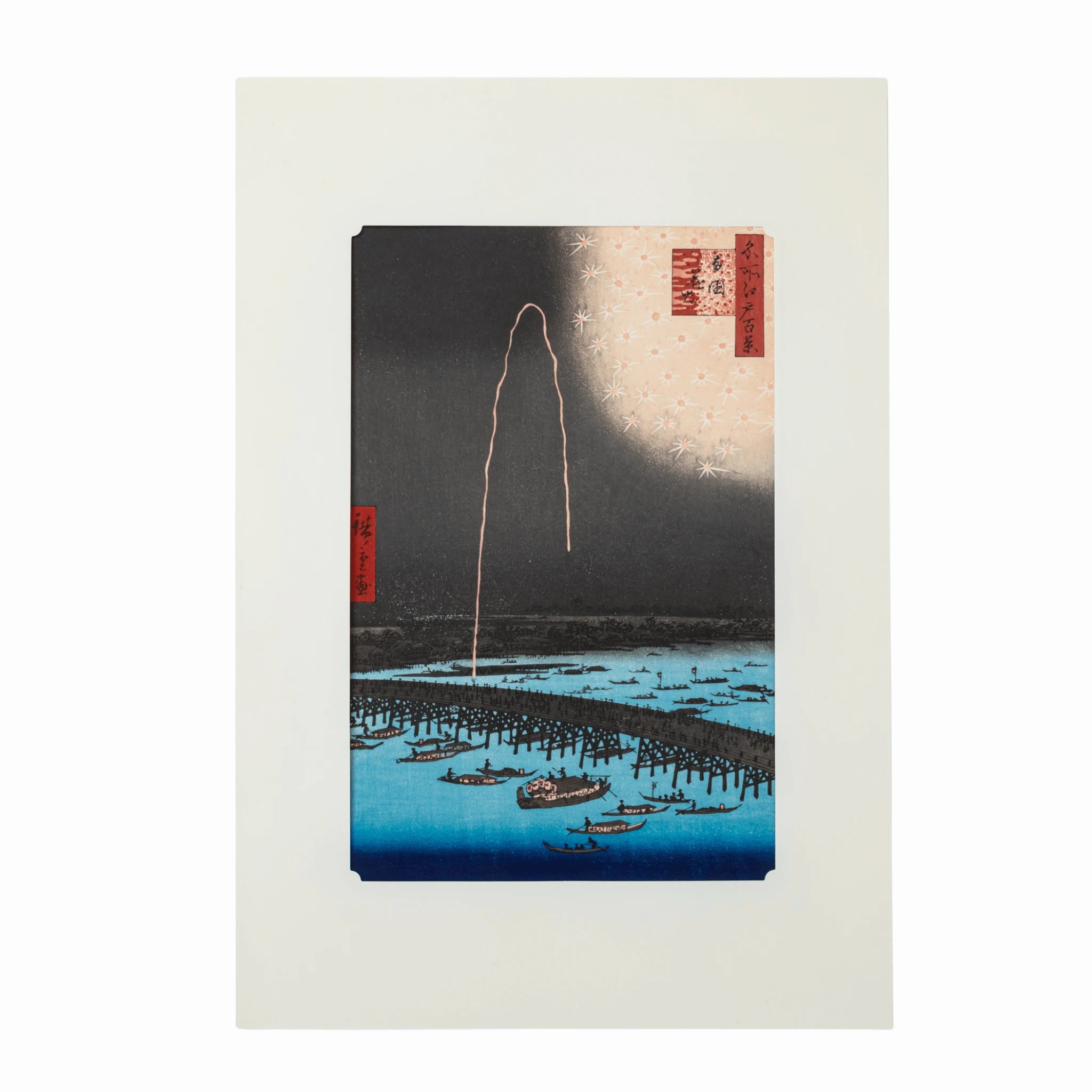
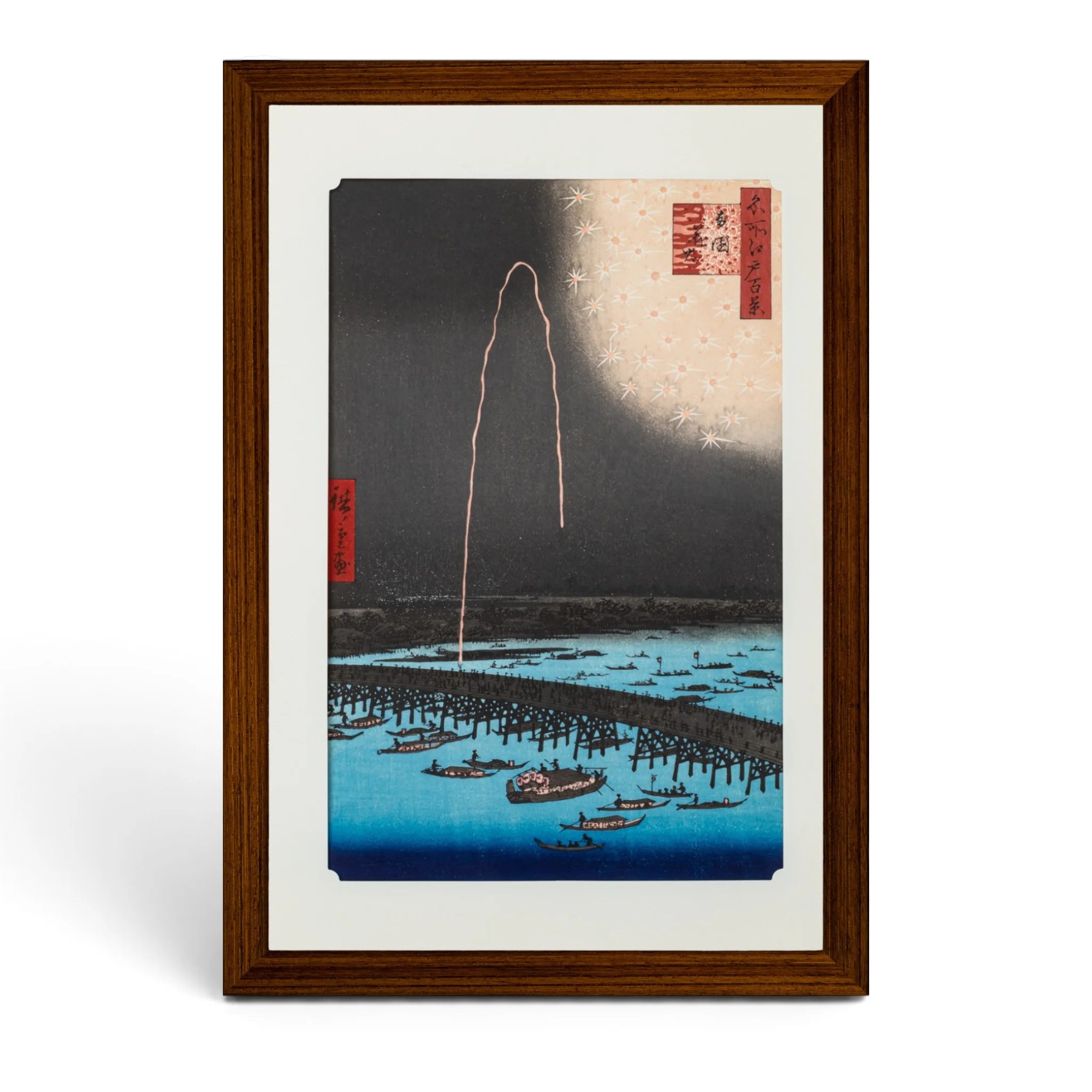
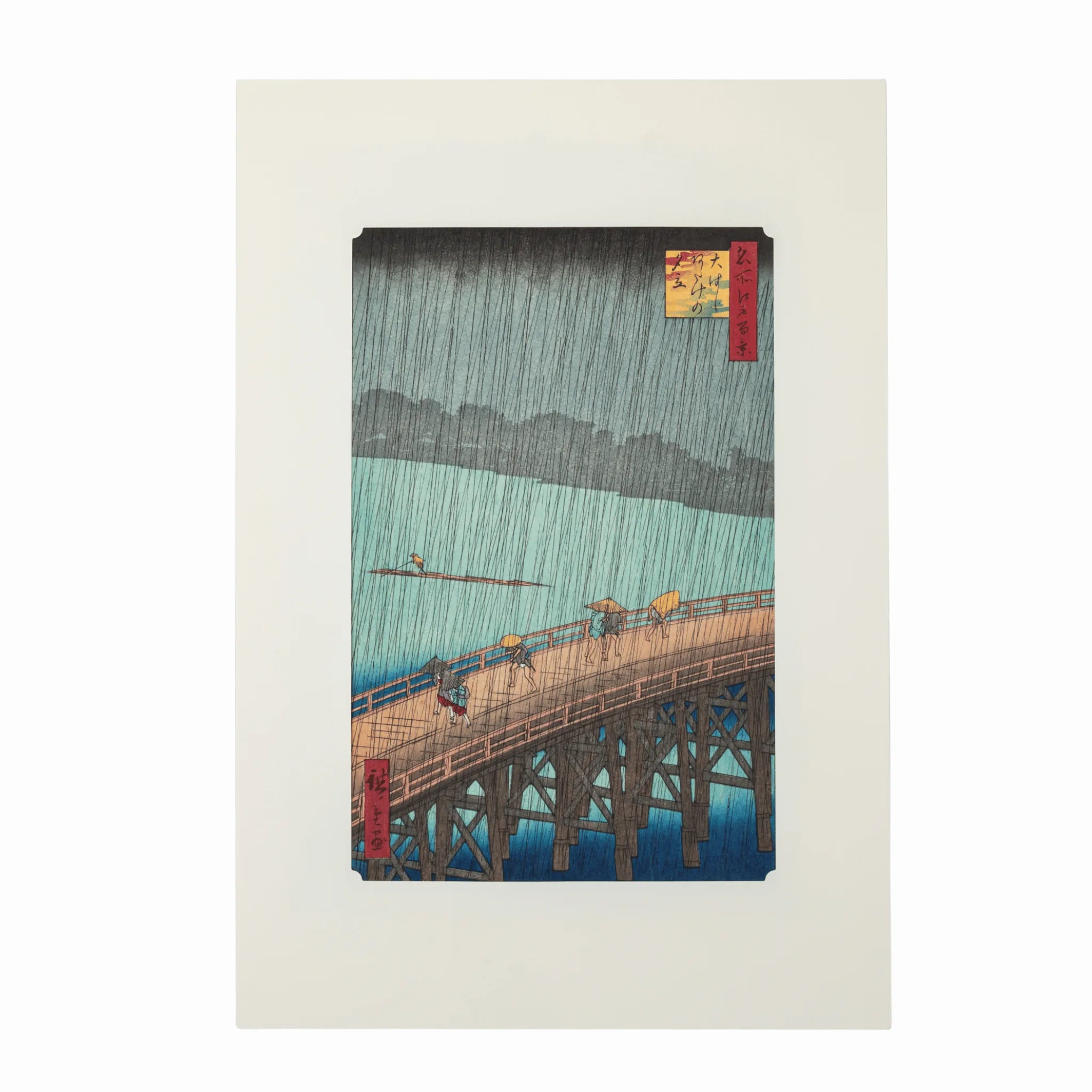
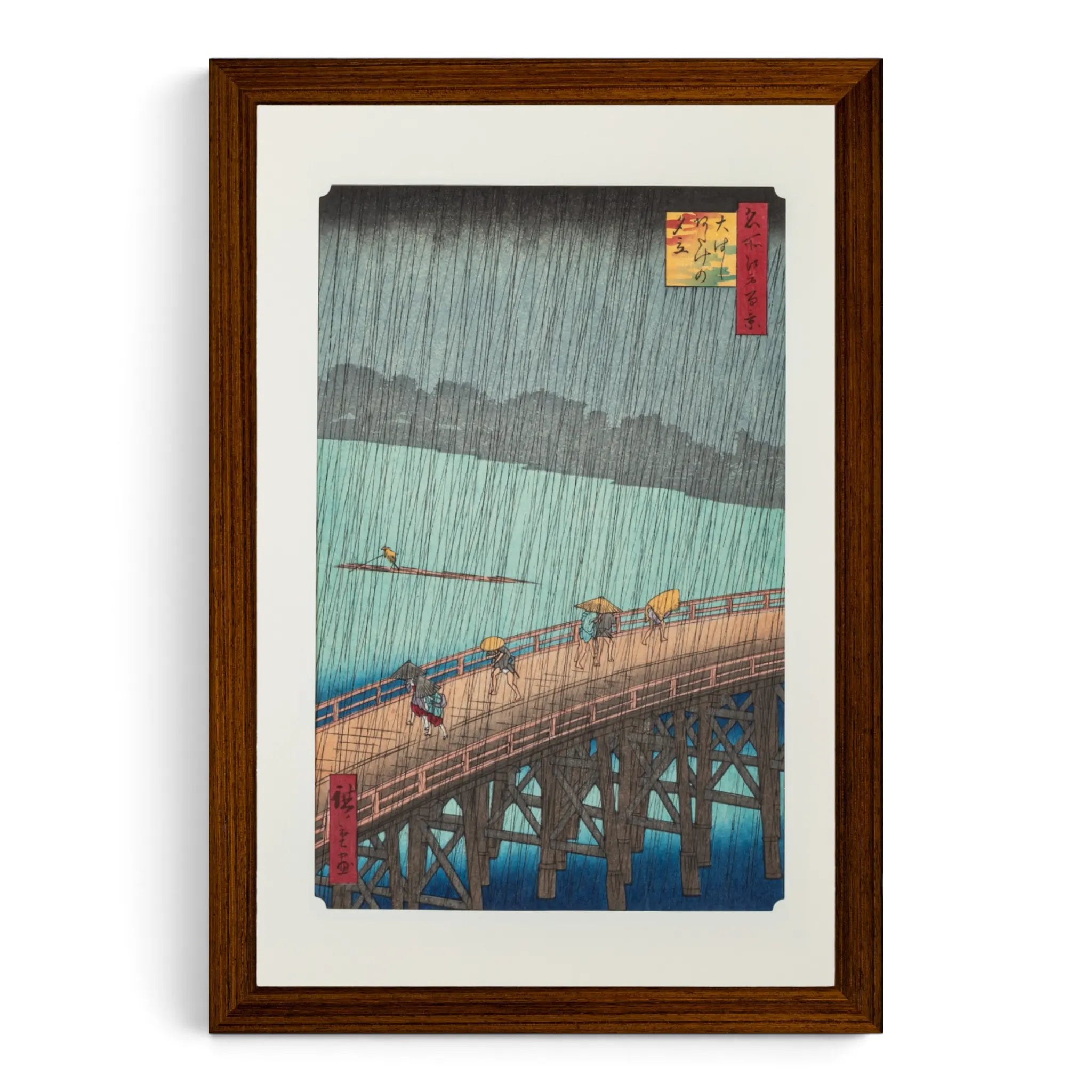
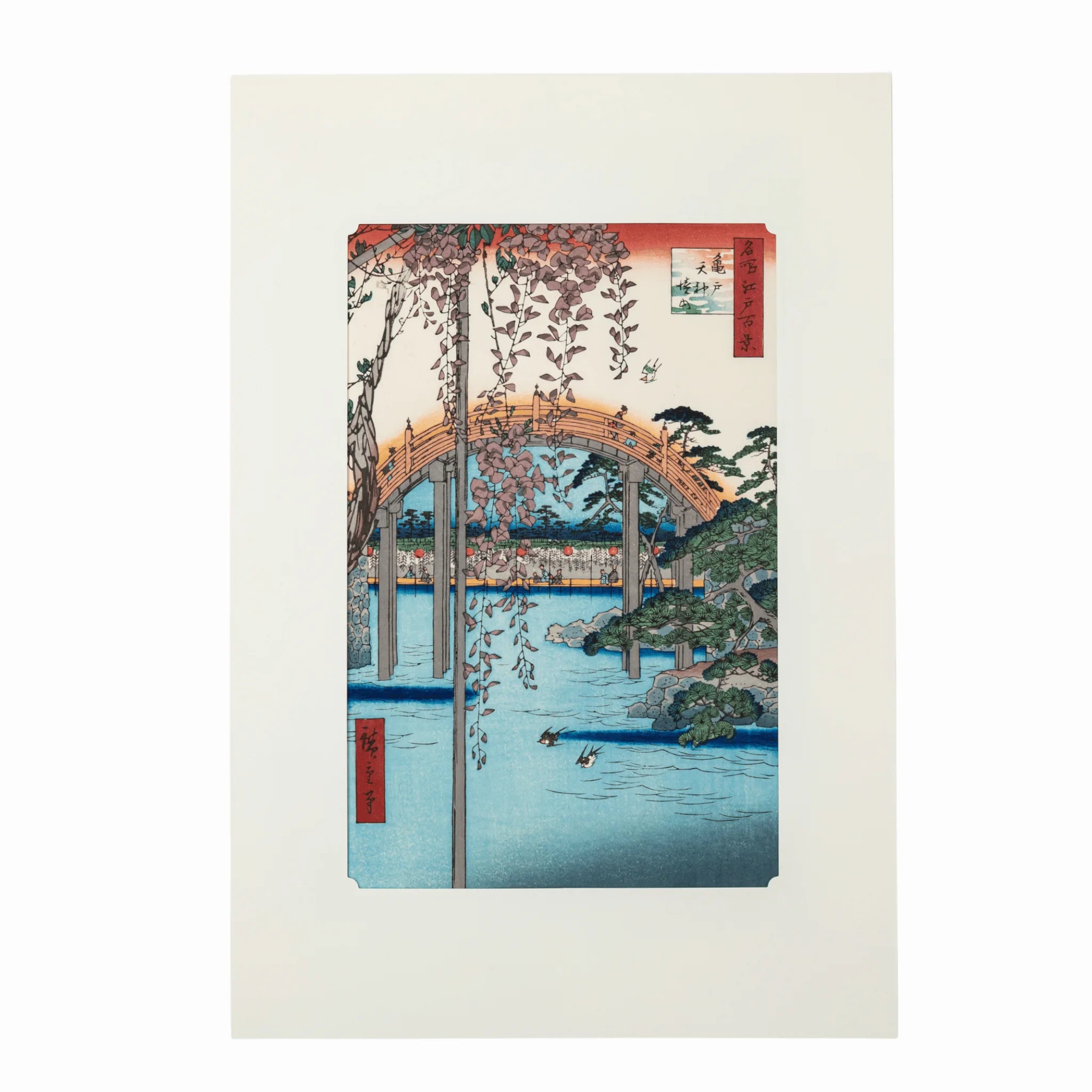
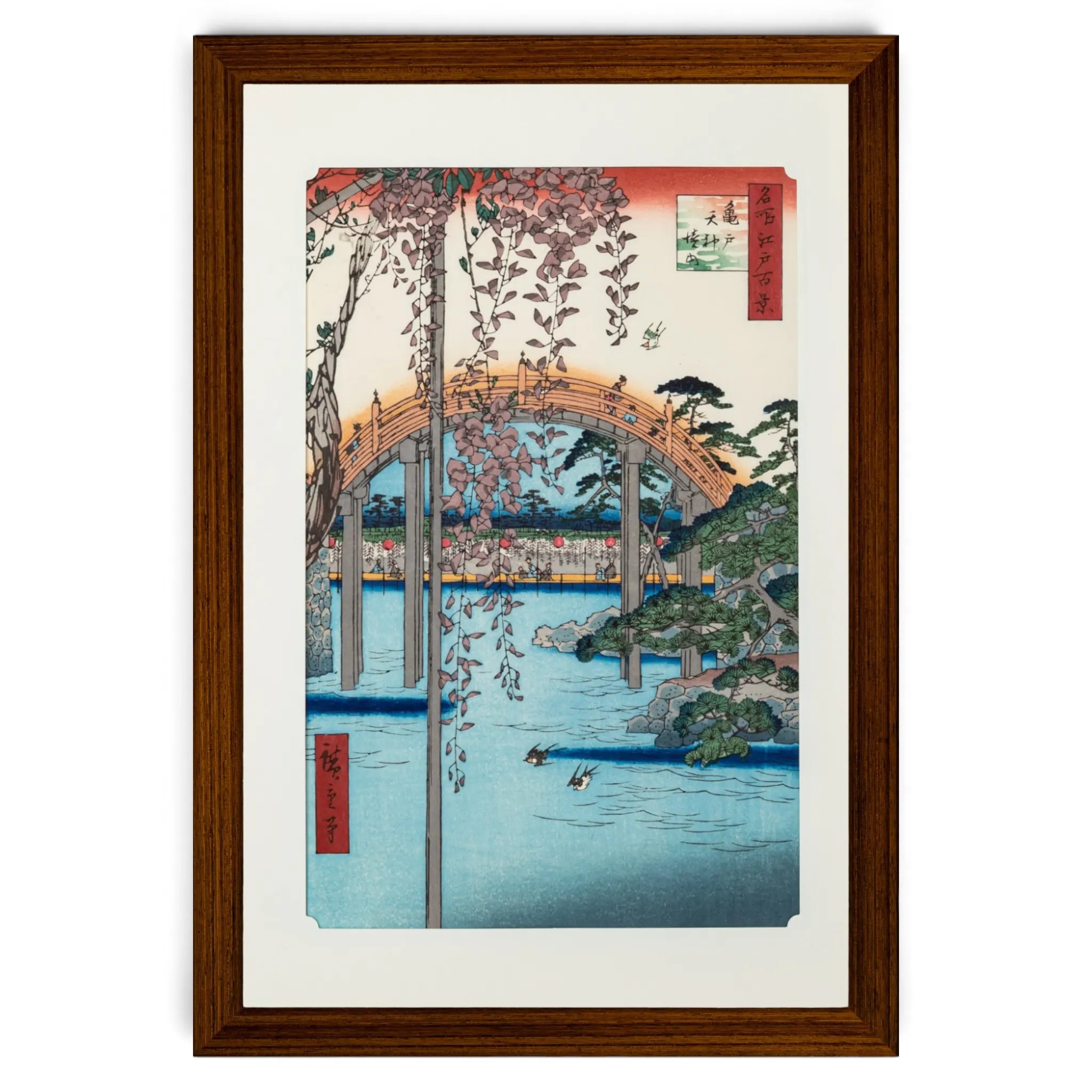
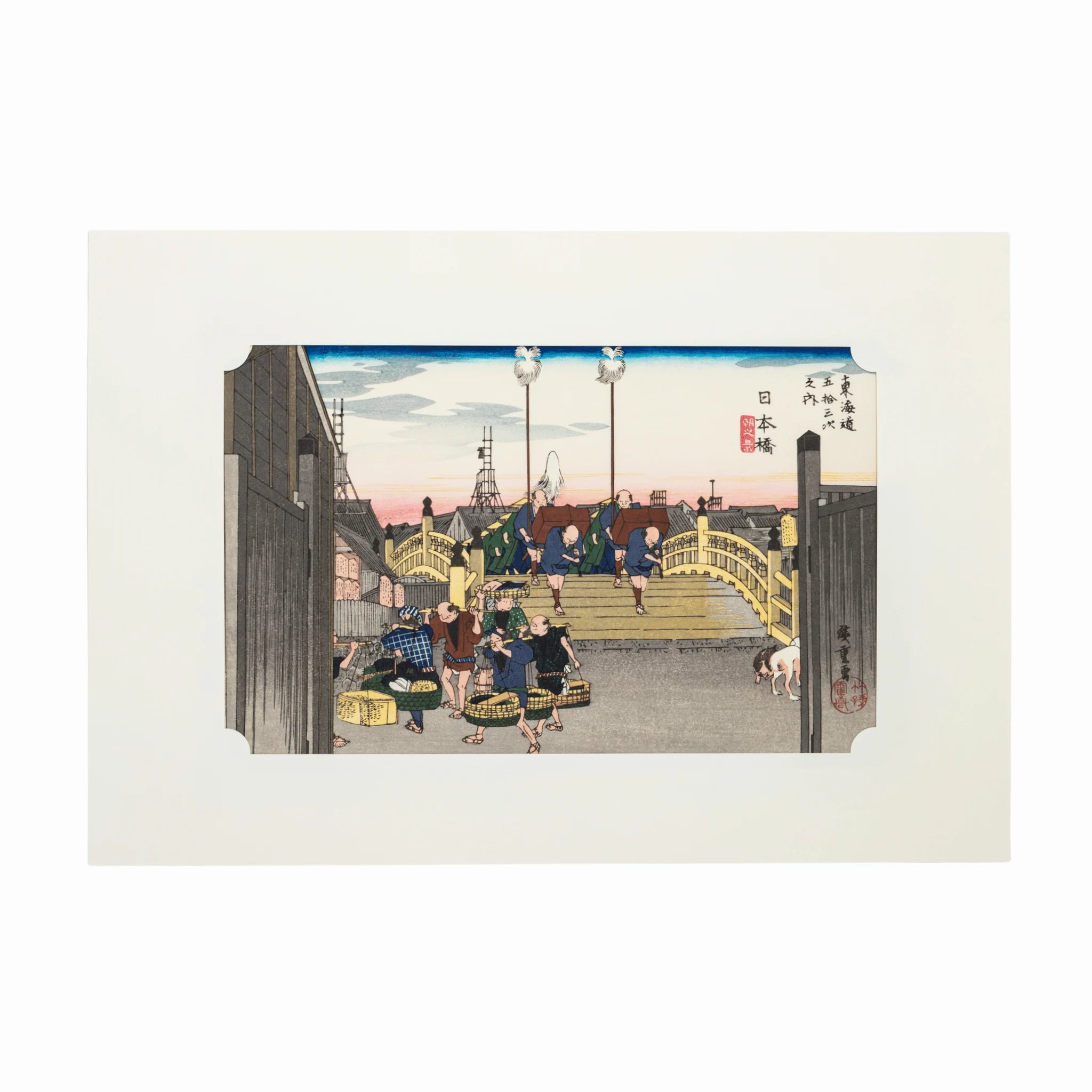
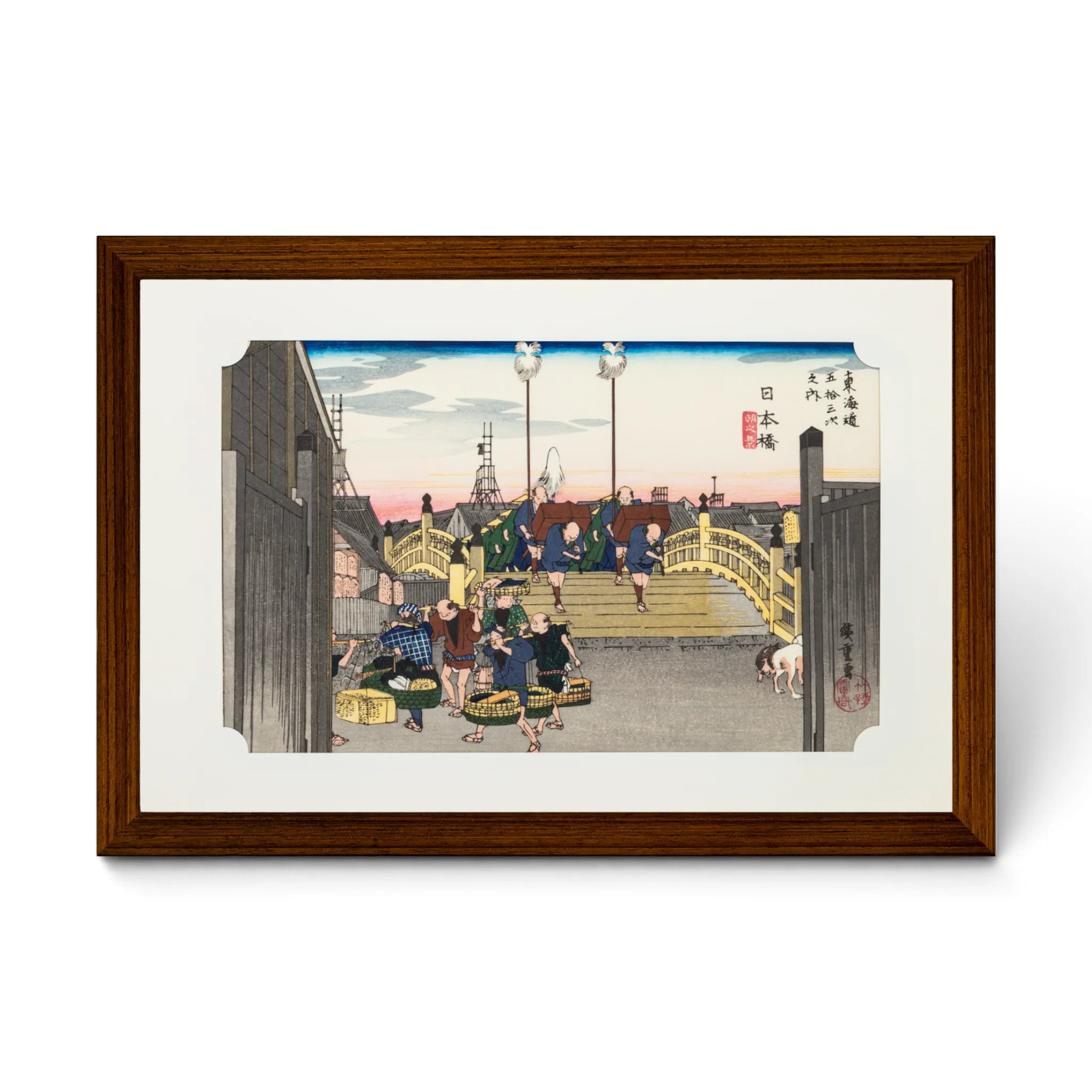
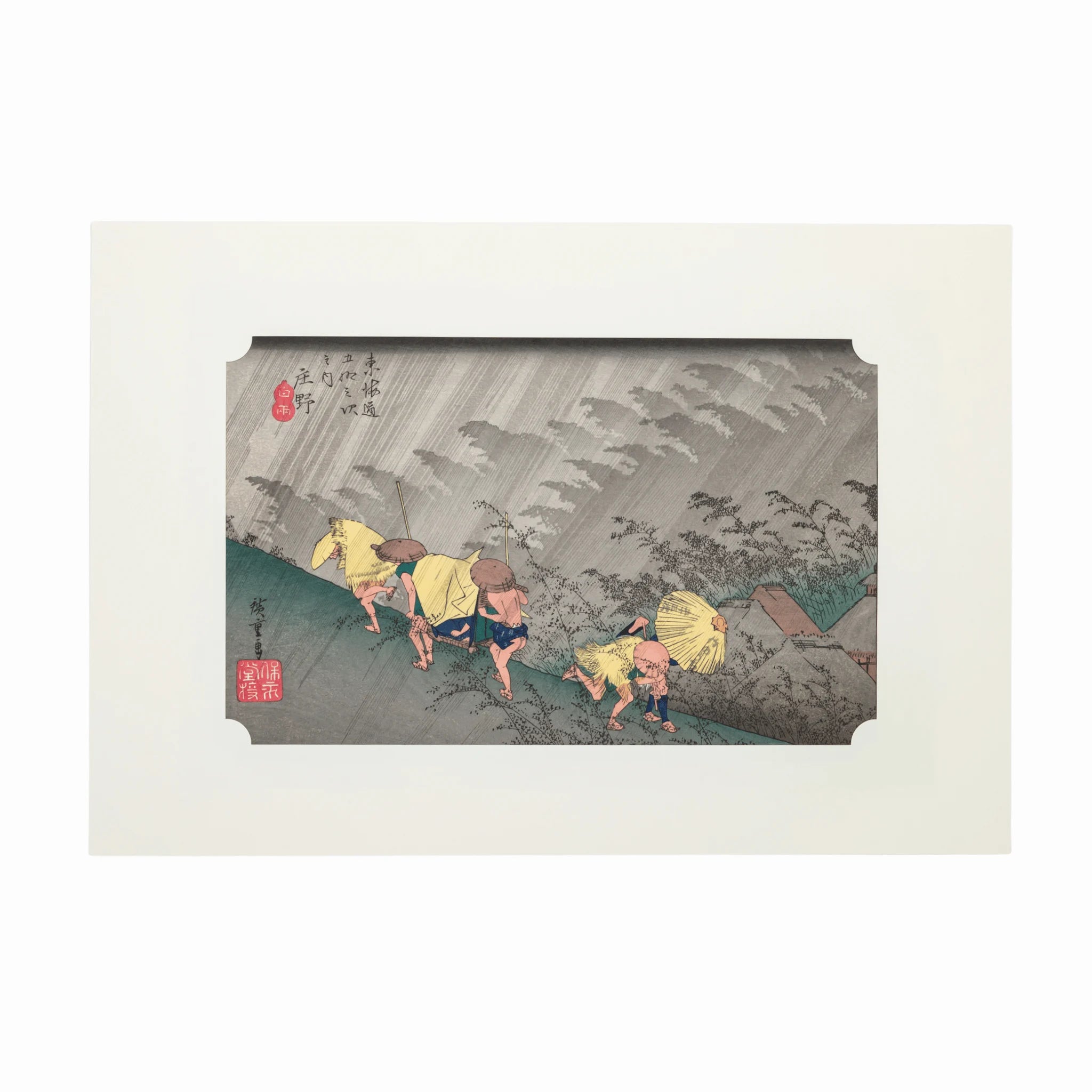
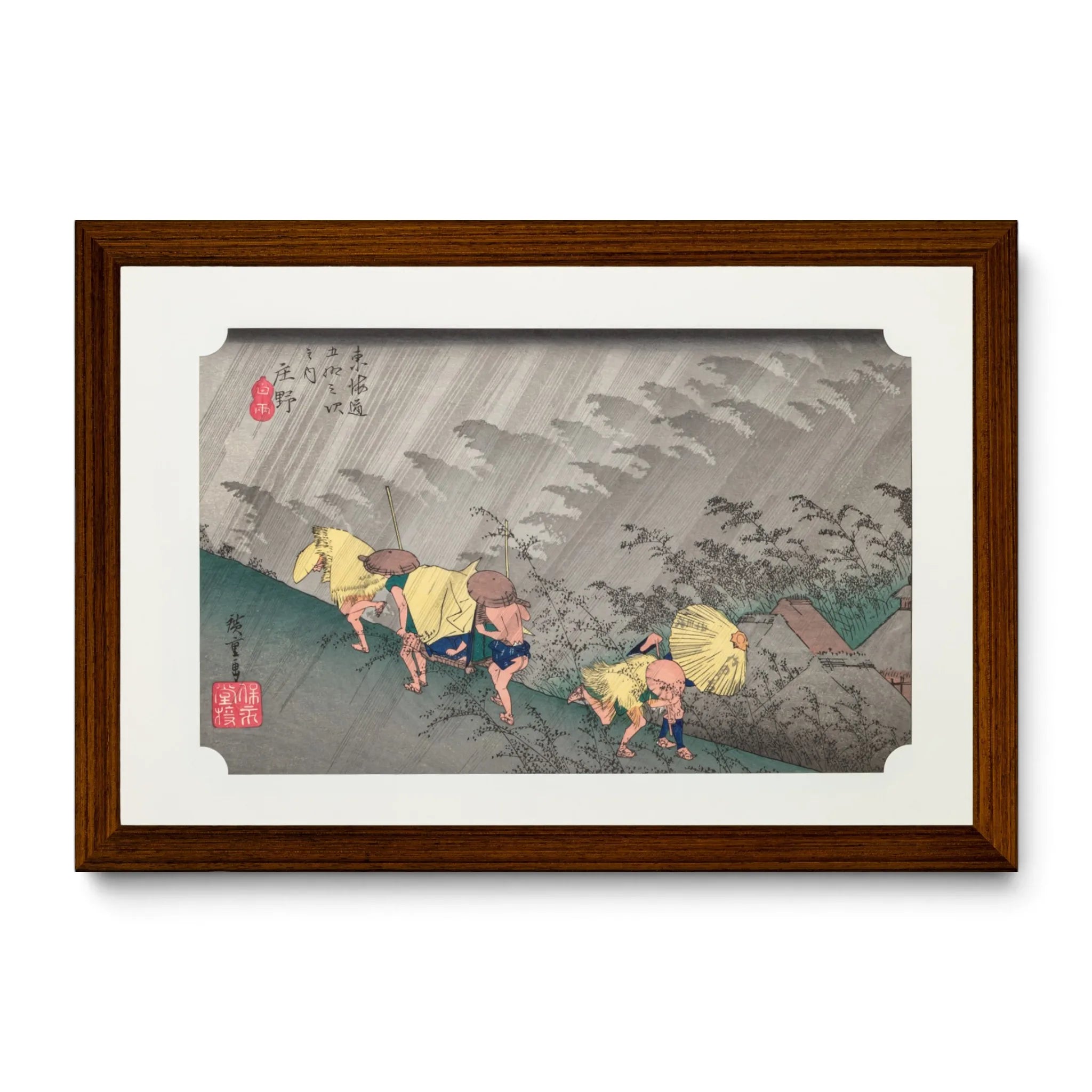
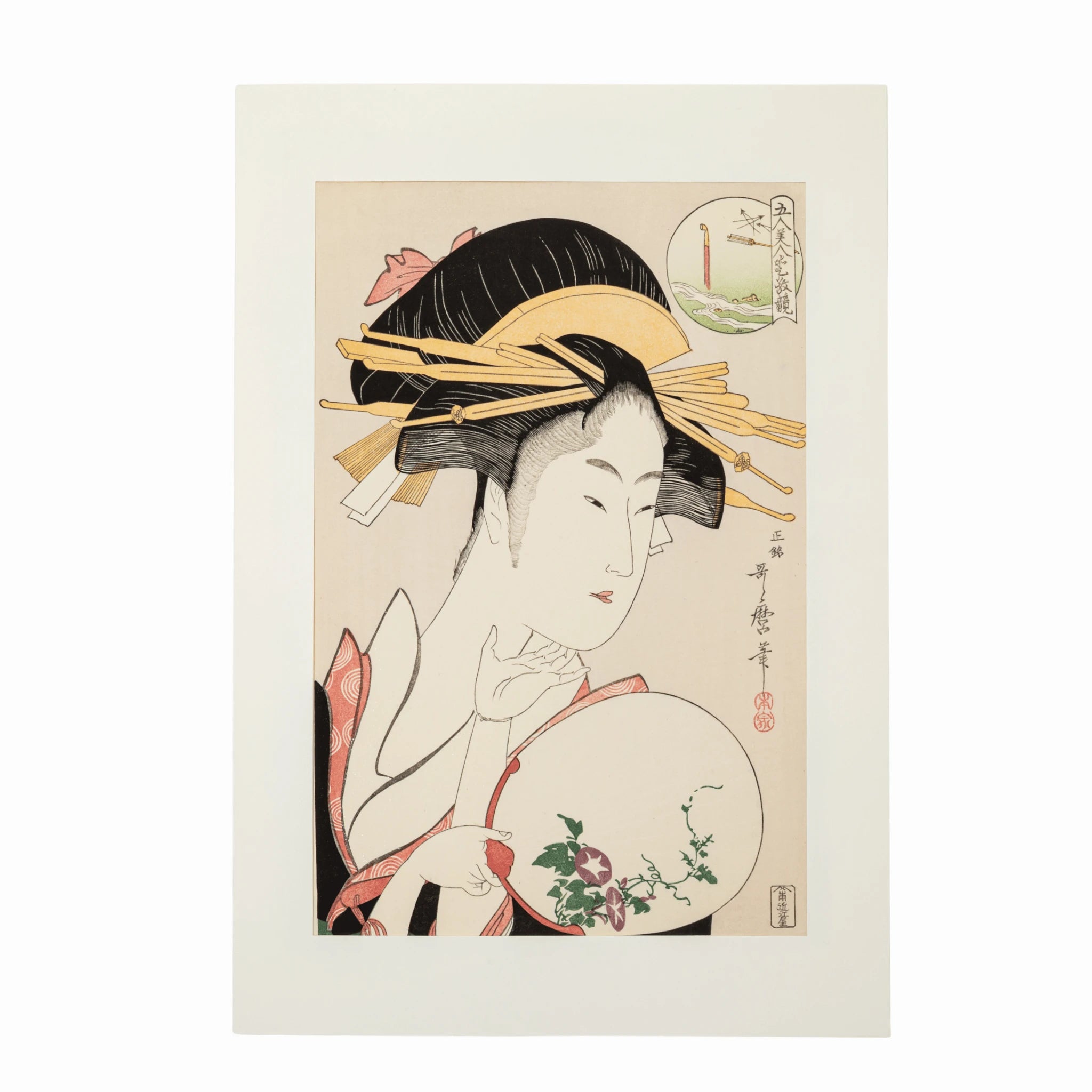
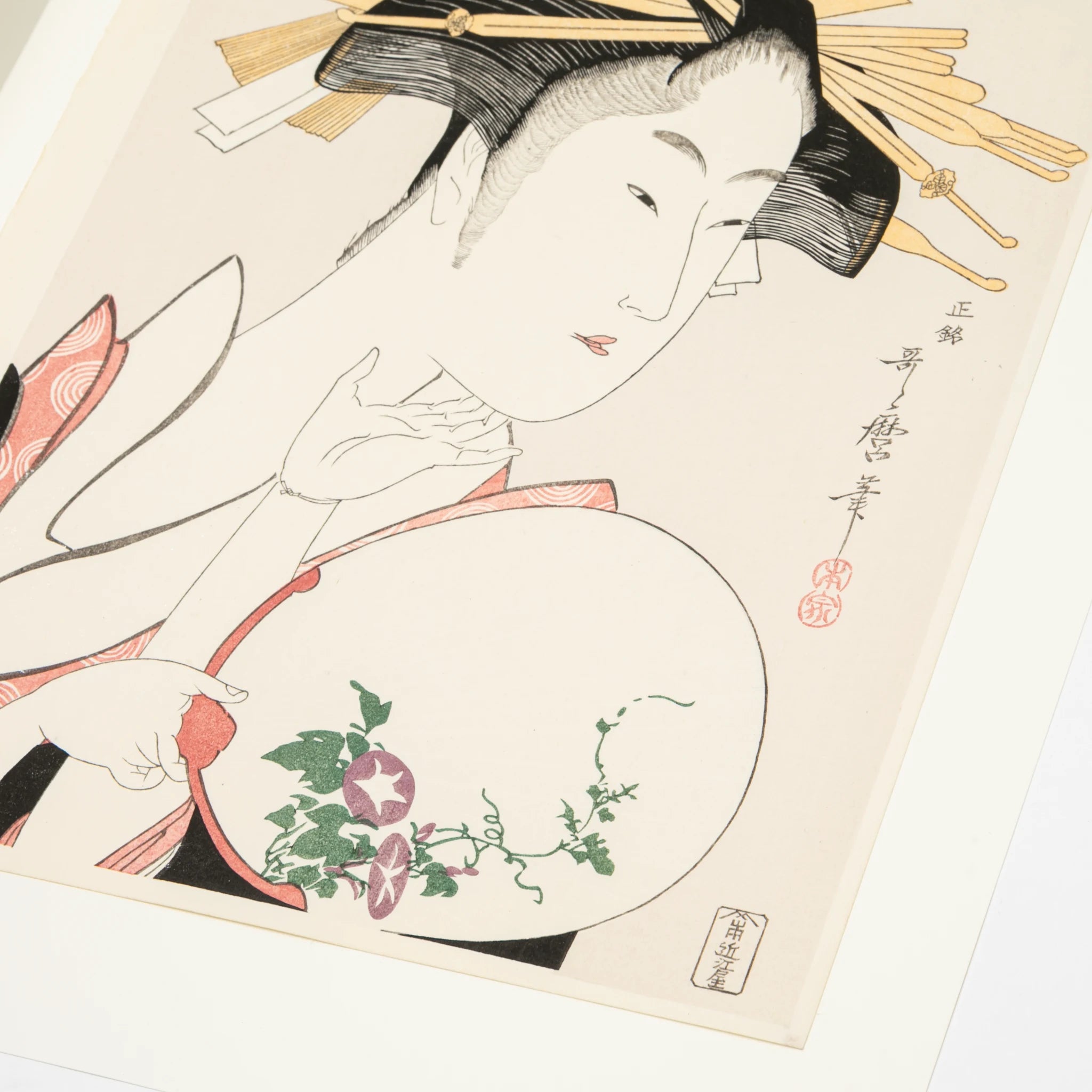
A Takahashi Kobo print bought through Omakase today runs through the same line this piece has been describing. A publisher's judgment. An artist's design. A carver's blocks. A printer's hand, laying twenty to thirty layers of pigment by hand, in the same Bunkyo neighborhood the studio has worked from since the 1850s, now under its sixth generation, Yukiko Takahashi. Omakase carries six of the studio's prints, five Hiroshige scenes and one Utamaro portrait.
Some of what makes that hand different is measurable. The paper is echizen kizuki hōsho, a handmade washi chosen because it can take twenty or more passes of pigment without warping, made by a papermaker recognized by the Japanese government as a Living National Treasure. The pigment is mixed fresh for each printing rather than manufactured ahead of time. Printers judge whether a layer has seated correctly partly by the sound the baren makes against the paper, a check with no mechanical equivalent.
That kind of process only made economic sense in Edo because of volume: thousands of nearly identical pulls off the same blocks, sold cheaply and quickly enough to pay four people for their work. The volume is what disappeared, not the skill. A workshop still carving new blocks and pulling each layer by hand today isn't competing with mechanical reproduction. It's continuing something that stopped paying for itself commercially a century ago, one print at a time.
The process never got cheaper. The audience did.