Article: Thinking About Gifting a Knife?
Thinking About Gifting a Knife?
Selecting a knife as a gift is an exercise in quiet intimacy. Three details determine its destiny: what they cook, how the handle will age in their hand, and whether they are the sort of person who respects high-maintenance steel. Master these, and you give a daily ritual, not a display piece. Mind the occasion, too. A wedding knife can inadvertently whisper of severed ties—always consult the couple first—but a new home or a career milestone invites the gesture. In Sakai City, where knife-making is elevated to an art form, a blade given for a fresh start carries the ultimate compliment: it cuts open the future.
What do they cut?
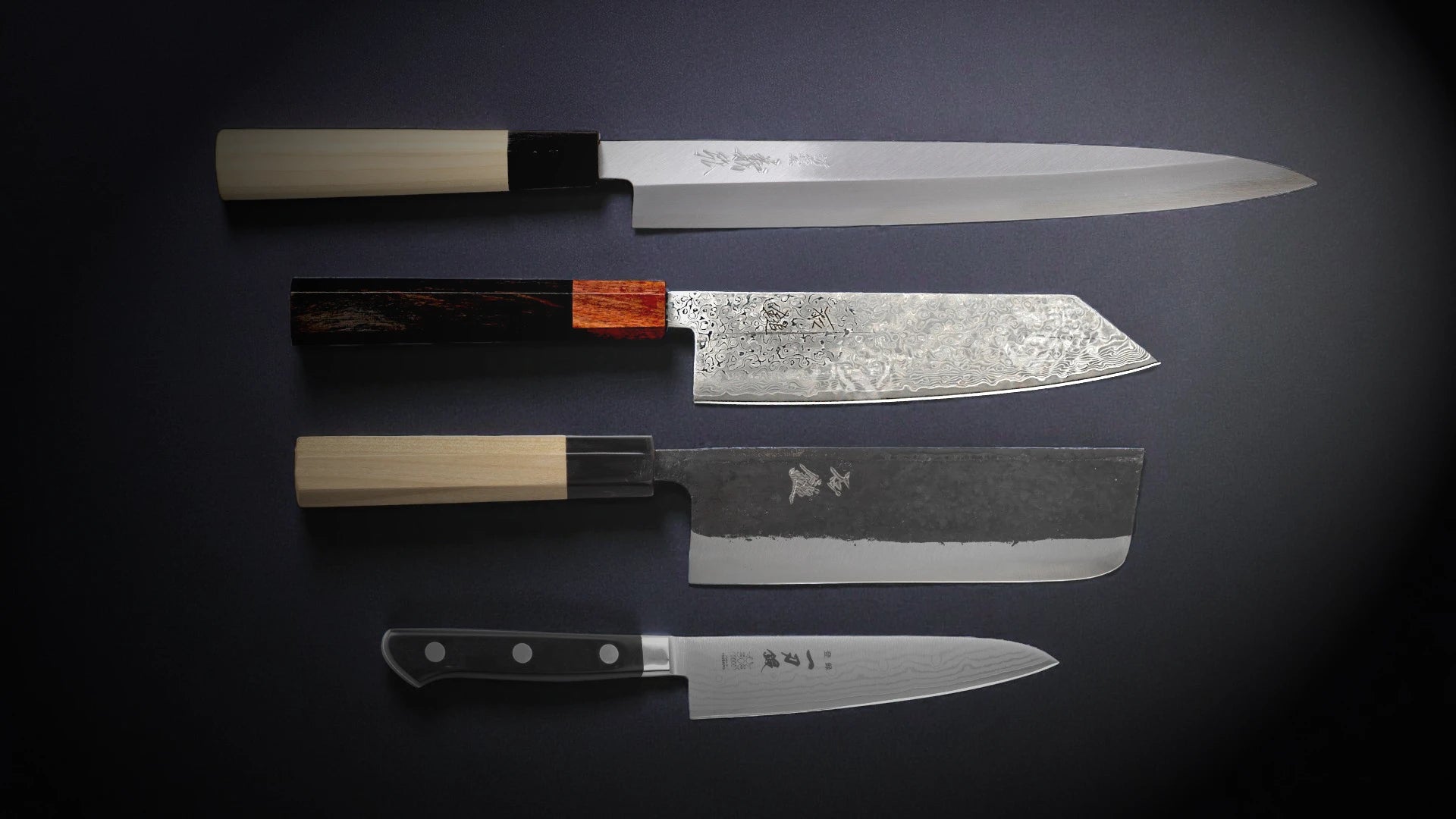
If you are unsure of their daily rhythms, begin with a santoku. As the makers at Yamawaki note of their MO-V santoku model, its very name translates to a blade that performs three tasks with grace: slicing meat, fish, and vegetables effortlessly. For the dedicated vegetarian whose board is dominated by produce, a nakiri is the thoughtful choice, its flat edge designed specifically for push-cutting greens. For delicate, precise tasks—peeling a pear or trimming an artichoke—a nimble petty knife becomes an indispensable pleasure.
Reserve the kiritsuke for the experienced enthusiast already accustomed to Japanese steel. Its dramatically tapered tip offers breathtaking precision, but it demands respect; as Omakase’s own product care cautions, damage from heavy-handed use is simply non-refundable.

How will the handle feel in five years?
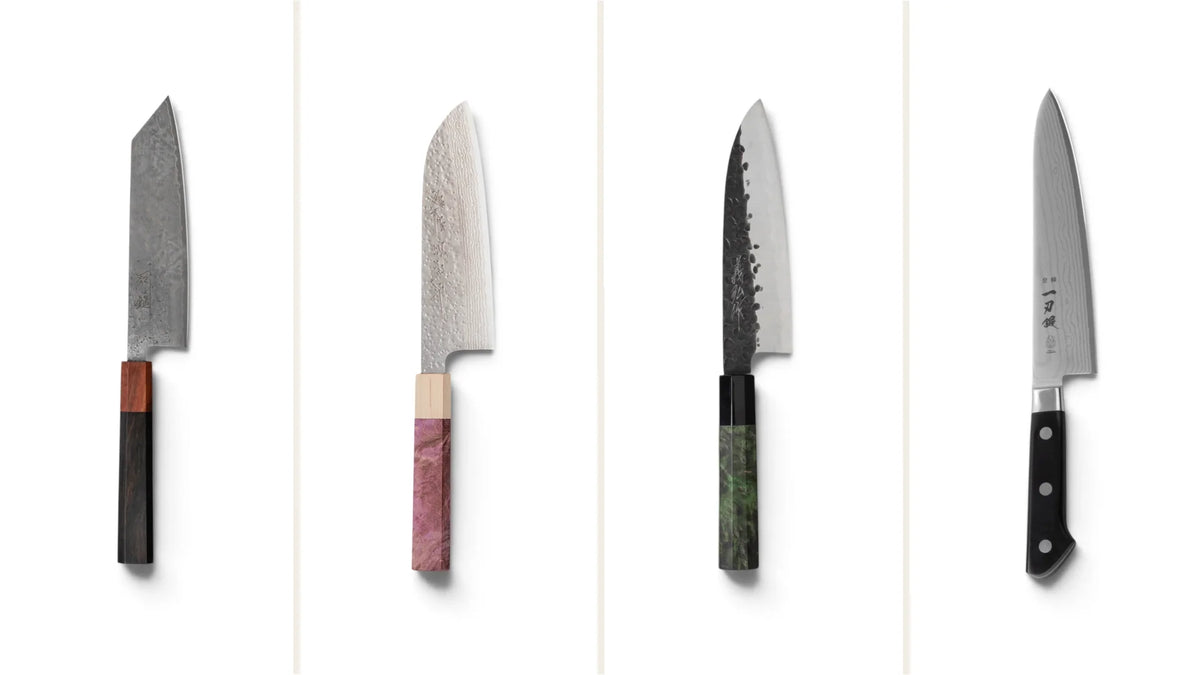
Consider the handle of Kamo Hamono’s Shizuku santoku, which illustrates why this single detail dictates how a knife is cherished. Every version features the same exquisite blade, yet the character transforms entirely with the handle: one pairs a rich, stabilized karin burl with a dark water-buffalo horn bolster; another features deep-dyed purple maple set against a pale wood accent, highlighting every wave of the figured grain. Choose not just for utility, but for the personality of the person holding it.

For the design conscious: Look to color. The romantic violet of the Shizuku, or Yamawaki’s MO-V—which offsets a hammered black-skin blade with a striking green octagonal handle—feels deeply intentional. It signals a piece chosen specifically for them, never pulled casually from a retail shelf.
For the serious home chef: Opt for ebony. While traditional magnolia wood is soft and slowly molds itself to the palm over time, ebony is dense, resilient, and beautifully impervious to water. It retains its tailored geometry for decades, softening only at the very edges. If gifting ebony, share the artisan wisdom from Sakai’s heritage makers: the wood disdains sudden temperature shifts and can crack if mistreated, making it a rare luxury as master woodworkers become increasingly scarce. Ishizuchi mounts ebony onto an octagonal silhouette—a classic contour usually reserved for top-tier blades. A 16 cm nakiri in ebony is an effortless home run; an ebony kiritsuke is an homage to a cook who has already mastered the art.

For those who prefer intuitive comfort: Choose a Western-style grip. The Ittoutan Kiageha santoku offers a familiar triple-riveted composite handle set against a shimmering 17 cm VG10 Damascus blade. Alternatively, Mitsuboshi Cutlery’s NAGOMI set—crafted in the historic city of Seki—arrives boxed with warm pakka wood grips that feel instantly natural in the hand. (Note that ease of grip does not mean low maintenance: every knife in this class demands gentle hand-washing and immediate drying.)

Will they look after the steel?
Every stainless-steel blade mentioned above requires little more than a prompt wipe after use. Carbon steel, however, is a gift of a different spirit. As Omakase’s care guide reminds us, high-carbon blue steel naturally evolves over time, acquiring a soft, slate-gray patina that reflects its usage—though reddish rust requires swift, attentive care. Reserve carbon steel strictly for the culinary purist who finds genuine pleasure in the ritual of maintenance. Our guide to Japanese knife steel explains the difference in more depth.
Finally, complete the gesture by giving them a way to honor the edge. Sakai’s master smiths suggest professional sharpening once a year. For those who prefer the quiet meditation of care at home, the Shoma Ceramic Iyo whetstone—a versatile medium grit (#1000 to #2000) requiring just a brief ten-minute soak before use—ensures the blade remains as effortless as the day it was unwrapped.
A knife cuts open the future only when it finds its place in the hand. Match the silhouette to their kitchen, the handle to their touch, and the steel to their devotion, and you give a tool that will endure for a lifetime of meals.